
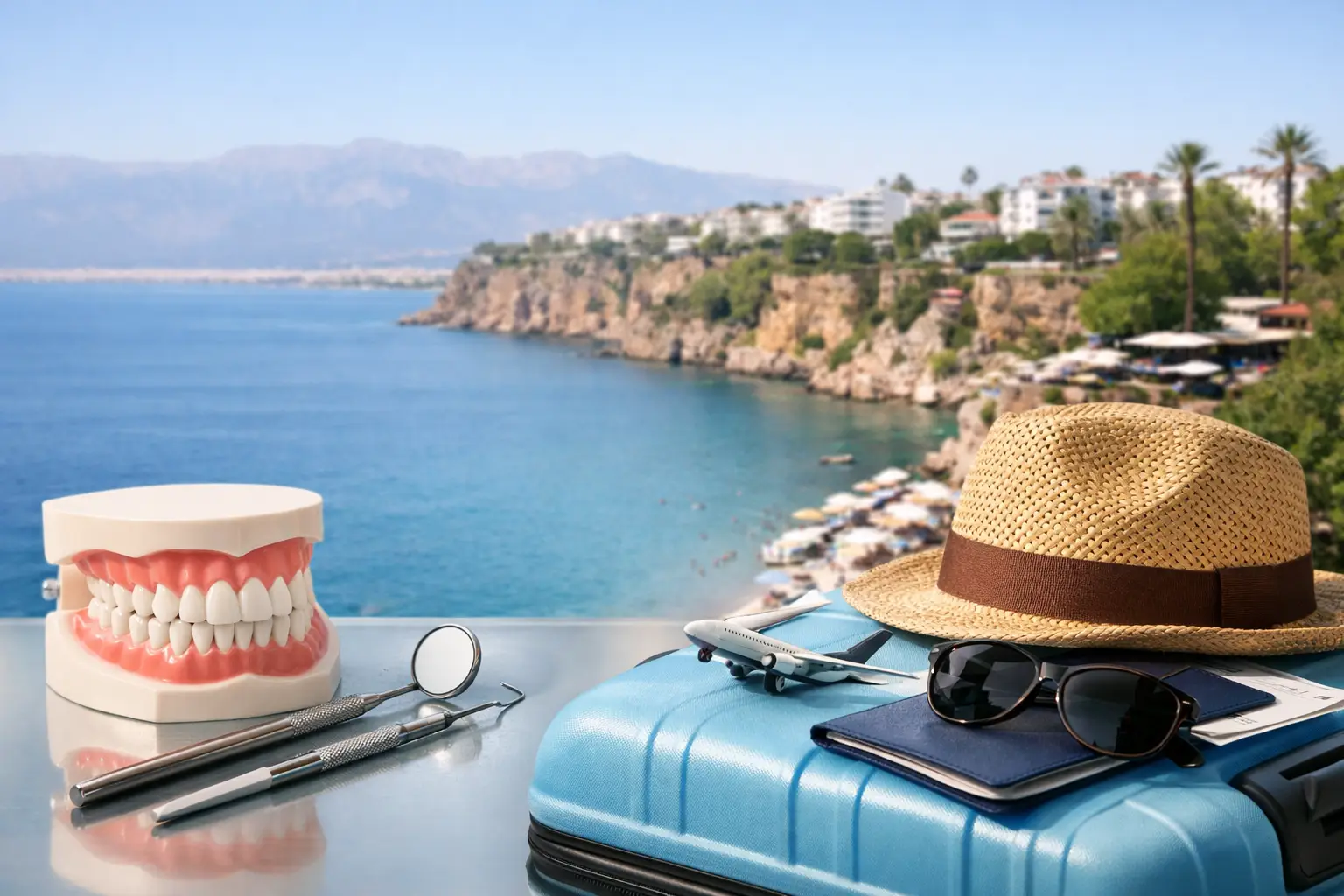
A £3,000 veneer quote in the UK and a £1,500 package in Antalya can look like an obvious decision. It is not. Dental travel can be excellent value when the treatment plan is sound and the clinic is properly accountable. It can also turn a manageable dental problem into an expensive repair job at home when patients book based on a smile makeover video and a hotel photo.
I have spent enough time looking at Turkish clinic offers to be blunt about this: the flight is not the risky part. The risk is agreeing to irreversible treatment before you know who is doing it, why it is needed, and what happens if the result is poor.
What dental travel to Turkey is really for
Turkey is particularly competitive for treatments that combine high laboratory costs, multiple appointments and private dentistry fees in the UK. Veneers, crowns, implant-supported bridges, full-mouth rehabilitation and cosmetic bonding are often considerably cheaper than comparable private treatment in Britain.
That does not mean every treatment is a bargain. A single filling or hygienist appointment rarely justifies travelling. Neither does a complex case requiring months of orthodontics, gum stabilisation, repeated review or uncertain healing. Dental work is not a product you collect abroad. It is healthcare with a follow-up requirement.
For a straightforward, well-planned case, a trip can make sense. For a patient who has active gum disease, unstable bite problems or no clear diagnosis, I would slow down. The cheapest treatment is not cheap if a UK dentist has to rebuild it two years later.
Start with the diagnosis, not the package
The first quote you receive is often based on photographs, a short video call and a panoramic X-ray, if one is supplied. That is useful for a preliminary estimate, but it is not a final diagnosis. Anyone claiming they can definitively prescribe 20 veneers, extractions or implants from selfies is working far too quickly.
A credible clinic should explain what will be confirmed after an in-person examination. For implant cases, this normally means a CBCT scan to assess bone volume, sinus position and nerve location. For cosmetic cases, it should include a gum assessment, bite assessment, photographs and discussion of how much natural tooth structure would need to be altered.
Ask a simple question: what could change once I arrive, and what would that cost? If the answer is vague, you have a problem. I would want the clinic to set out whether the quoted figure includes scans, temporary teeth, anaesthesia, laboratory work, medicines, transfers and any extra treatment that is reasonably foreseeable.
There is a hard truth here. Some patients travel expecting a specific number of crowns because an agent told them that was the plan. The treating dentist then finds decay, gum inflammation or teeth that could have been preserved. A good dentist will change course. A sales-led clinic may carry on because changing the plan threatens the package price.
Check the person treating you
Large, polished clinics can employ excellent dentists. They can also operate like production lines, with a coordinator handling nearly every conversation and a different clinician appearing at each appointment. The building tells you very little on its own.
Before paying a deposit, ask for the full name and speciality of the dentist who will lead your treatment. For implants, I would ask who plans the surgery, who places the implants and who restores the final crowns. These may be different people, which is not automatically bad, but you should know it beforehand.
Also ask how many cases similar to yours the dentist completes each year. A clinician who mainly provides routine fillings is not necessarily the right choice for a full-arch implant restoration, however persuasive the clinic’s social media is.
Look for evidence beyond perfect after photos. Proper clinical cases show the starting condition, X-rays where relevant, preparation or surgical stages, temporary work and the final result. A row of ultra-white smiles tells me almost nothing about bite function, gum health or longevity.
The red flags I would not ignore
I would walk away from a clinic that pressures you to pay immediately, refuses to name the treating dentist, or offers a fixed plan without appropriate imaging. I would also be cautious of promises that every procedure can be completed in three days.
Fast dentistry is sometimes legitimate. A short veneer case may fit into five to seven days. Same-day teeth can be appropriate in selected implant cases. But bone grafting, infection, major extractions and complicated bite changes do not become biologically simple because a patient has a return flight.
Be especially wary of language such as “no shaving”, “guaranteed Hollywood smile” or “lifetime warranty” without clear clinical detail. No responsible dentist can guarantee living teeth, gum stability or patient habits for life. Warranties can be useful, but read what they actually cover: laboratory failure is different from biological complications.
Budget for the whole trip, not just the teeth
Dental travel to Turkey is usually cheaper than UK private dentistry, but the headline treatment quote is only one part of the calculation. Flights, hotel stays, food, travel insurance, time off work and a possible return visit all matter.
As a broad guide, a porcelain crown or veneer in Turkey may be quoted around £180 to £350, depending on material, laboratory and clinic. A single implant with an abutment and crown can range roughly from £650 to £1,200. Full-mouth cases can vary wildly because the number of implants, temporary teeth, grafting, sedation and final material make a huge difference.
I do not recommend choosing on price alone. A quote that is far below the market often leaves something out, uses a lower-cost component, or assumes every tooth can be treated without complications. Ask for the implant brand, the crown material and the number of appointments in writing. “German implant” is marketing, not a brand name.
It is also sensible to keep a contingency fund. If a scan reveals a need for grafting or an extra hotel night, you should be able to decide based on clinical need rather than financial panic.
Give the timetable the respect it deserves
A cosmetic crown or veneer case often requires an initial assessment and preparation appointment, time for the laboratory, a fitting visit and a review. Clinics commonly schedule this within a week, though more complex aesthetic work may need longer. Do not book a late-night fitting the day before an early flight home. You need time for adjustments.
Implants demand more patience. If implants are placed and left to integrate, the final restoration may happen three to six months later. Immediate loading can reduce that interval for suitable patients, but it is not a universal shortcut. Bone quality, infection, bite forces and general health all affect the decision.
Arrange a check-up with your home dentist or hygienist after you return, particularly following extensive work. Some UK practices may be reluctant to take on another clinic’s complex case, and that is understandable. Ask before you travel whether your local dentist can provide routine monitoring or emergency care if needed.
Protect yourself before paying
Get the treatment plan, itemised costs and cancellation terms in writing. Keep copies of X-rays, scans, consent forms, implant information and laboratory details. These records are not bureaucracy for its own sake. If you need future care in the UK, another dentist will need to know precisely what was done.
Do not confuse a friendly patient coordinator with clinical advice. Coordinators can be helpful with transfers and communication, but treatment decisions should come from the dentist. If you feel you are being sold a procedure rather than assessed for one, trust that instinct.
Finally, check whether the clinic offers a realistic aftercare process. A meaningful policy explains how you report a problem, what evidence is needed, who pays for return travel, and what happens if a repair is required. A blanket promise to “look after you” is not a policy.
The best dental travel experience is usually the least dramatic one: a clinic explains the limits, gives you room to think, treats only what needs treating and leaves you with records you can use for years. If a provider makes that standard feel inconvenient, keep looking.