
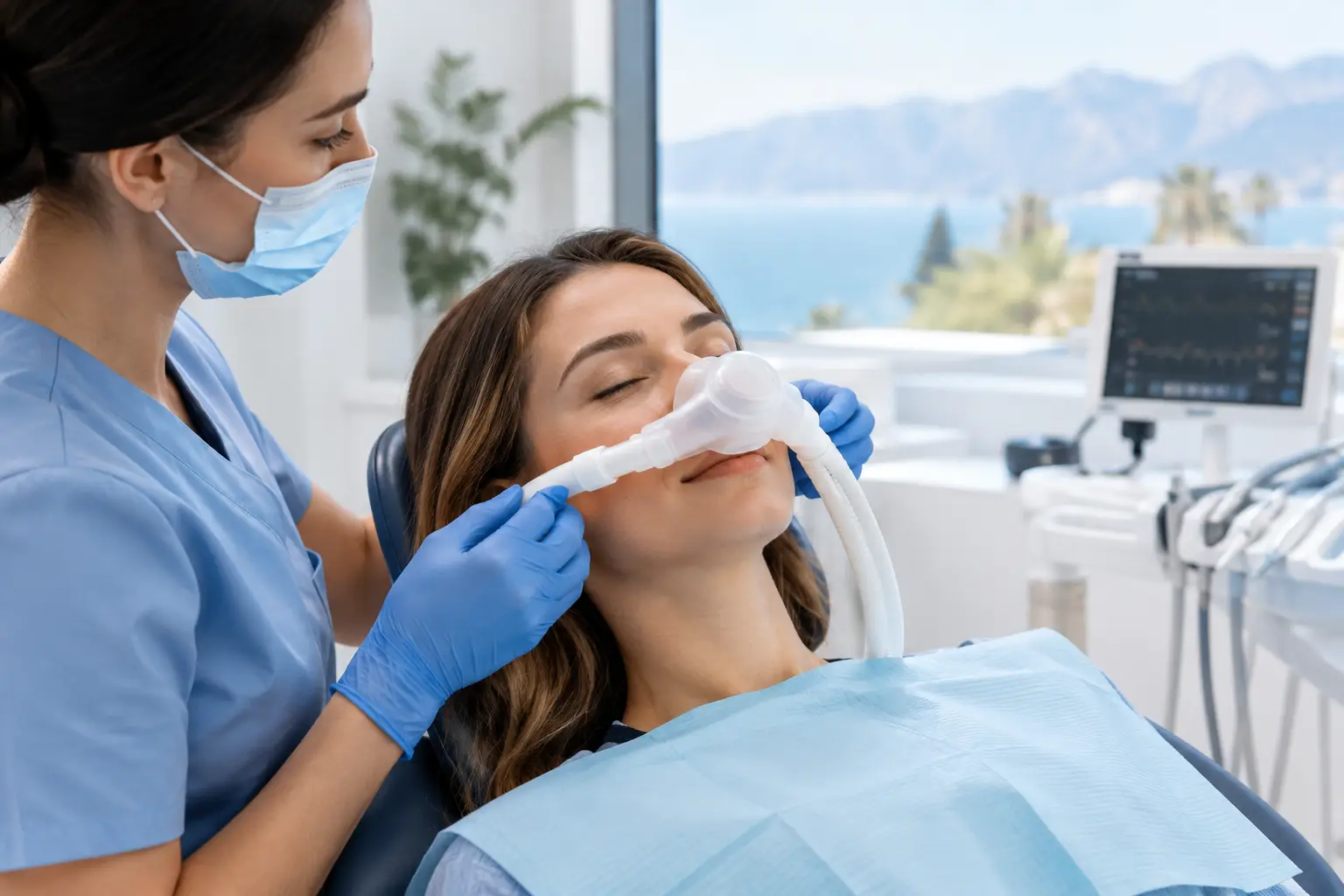
A full-mouth implant appointment is very different from having two veneers fitted. Yet many clinics market both with the same reassuring line: “sedation available”. If you are wondering, do Turkey dentists offer sedation? The straight answer is yes, many do – but the type, safety standards, provider and price vary far more than the adverts suggest.
I would not choose a clinic simply because it promises “pain-free dentistry” or shows a patient asleep in a promotional video. Sedation is useful when it is properly assessed and delivered. It is also one of the clearest areas where a glossy dental tourism package can hide important details.
Do Turkey dentists offer sedation for all procedures?
Most established Turkish clinics can offer some form of anxiety management, but that does not mean every procedure needs sedation or that every clinic provides intravenous sedation in-house. For routine fillings, crowns and veneer preparation, local anaesthetic is normally enough. Good local anaesthetic should stop pain, although you may still feel pressure, vibration and the unfamiliar sensation of dental work.
For more involved treatment – especially several implants, bone grafting, sinus lifts or a full-arch restoration – clinics may offer oral sedation, IV conscious sedation, or treatment under general anaesthesia in a hospital setting. Some larger practices employ or work regularly with an anaesthetist. Others refer patients to a hospital for anything beyond local anaesthetic.
That distinction matters. A clinic saying “we offer sedation” could mean a calming tablet before treatment. It could mean monitored IV sedation with a qualified anaesthetist. Those are not interchangeable services.
The sedation options you are most likely to find
Local anaesthetic
This is the standard option and remains the right choice for most cosmetic work. A dentist numbs the treatment area with injections, and you remain fully awake. It is inexpensive, predictable and does not interfere much with your flight home or ability to eat afterwards.
For veneers, I would usually question the need for IV sedation. If a clinic presents sedation as essential for a straightforward veneer case, ask why. It may be responding to genuine anxiety, but it can also be a way to make an intensive treatment plan sound less daunting.
Oral sedation
Oral sedation usually involves taking prescribed medication before the appointment. It can reduce anxiety and make time feel less sharp, but you are still conscious. You will need someone to accompany you afterwards and should not drive, drink alcohol or make major decisions that day.
It is often suitable for mildly nervous patients having longer sessions. The downside is that it is less controllable than IV sedation and may not be enough for someone with severe dental phobia or a major surgical procedure.
IV conscious sedation
IV sedation is what many anxious implant patients are actually looking for. Medication is given through a cannula, making you deeply relaxed and often drowsy. Most patients remember little of the appointment, but they are not under general anaesthetic and can usually respond to instructions.
Done properly, IV sedation involves continuous monitoring of oxygen levels, pulse and blood pressure, plus appropriate recovery arrangements. It should not be treated as an add-on administered by whoever happens to be available that morning. Ask who gives the sedation, what qualification they hold, and whether they stay dedicated to monitoring you throughout the procedure.
General anaesthesia
General anaesthesia means you are fully unconscious. It is usually reserved for complex surgical cases, extreme phobia, special clinical needs or patients unable to tolerate treatment otherwise. In Turkey, it should take place in a properly equipped hospital or licensed surgical facility, with an anaesthetist responsible for your care.
It is not the convenient shortcut some clinics imply. General anaesthesia brings higher cost, more pre-treatment checks and a longer recovery period. You should expect to stay locally afterwards rather than flying out the next day.
What sedation should cost in Turkey
Prices are rarely as transparent as they should be. As a broad guide, oral sedation may be included in a package or charged modestly, while IV conscious sedation commonly adds around £150 to £400, depending on appointment length, medication and the anaesthetist’s fee. Hospital-based general anaesthesia can add £800 to £1,500 or more.
These figures are not a quote, and Istanbul can be pricier than other cities. A very low figure is not automatically a bargain if it leaves out the anaesthetist, monitoring, recovery room or hospital charge. Equally, a clinic charging several hundred pounds for sedation during two simple veneers needs to justify it.
Ask for the sedation cost separately from the dental treatment quote. If it is presented only as part of a vague VIP package, I would push for a written breakdown.
Questions I would ask before paying a deposit
The quality of the answers matters as much as the answers themselves. A serious clinic should be able to explain its process without dodging, rushing you or handing everything to a sales coordinator.
Ask whether your planned procedure will be carried out under local anaesthetic, oral sedation, IV sedation or general anaesthesia. Then ask who administers the sedation and whether that person is an anaesthetist or a dentist with recognised sedation training. For IV sedation and general anaesthesia, ask where the treatment takes place, what monitoring equipment is used, and what emergency arrangements are in place.
You should also ask whether you need a pre-operative medical assessment. Your medical history matters. Sleep apnoea, heart or lung disease, liver or kidney problems, pregnancy, allergies, a high BMI, previous anaesthetic complications and certain medications can change whether sedation is appropriate. Do not downplay anything to avoid being told no.
Finally, ask what happens after treatment. Who stays with you in recovery? How long before you can leave? Can you return to your hotel by taxi, or must someone accompany you? When are you fit to fly? A clinic that cannot give clear aftercare instructions is not one I would trust with sedation.
Red flags I would not ignore
The biggest red flag is a clinic recommending sedation before it has reviewed your health questionnaire, X-rays and treatment plan. Sedation is not a menu upgrade. It is a medical service that needs an individual assessment.
I would also be cautious if the person selling the treatment says you will be “completely asleep” but cannot confirm whether they mean IV sedation or general anaesthesia. These terms are often blurred in marketing, and they should not be. Another concern is a promise that you can have a lengthy surgical appointment under sedation and catch an evening flight. That is poor planning, not efficient care.
Watch for pressure, too. Some clinics use a patient’s anxiety to upsell extensive treatment. Sedation may make a long appointment tolerable, but it does not make unnecessary tooth preparation, excessive implants or rushed dentistry sensible.
Is sedation worth it for dental treatment in Turkey?
For a genuinely nervous patient having multiple implants or surgical extractions, properly managed IV sedation can be worth every penny. It can turn an appointment you would otherwise avoid into one you can get through calmly. For routine crown or veneer work, local anaesthetic and a clinician who communicates well are often enough.
Your priority should be the right treatment plan and a properly qualified team, not the strongest sedative on offer. A clinic willing to say, “you do not need this”, is often giving you a better sign than one promising to make every procedure disappear.