
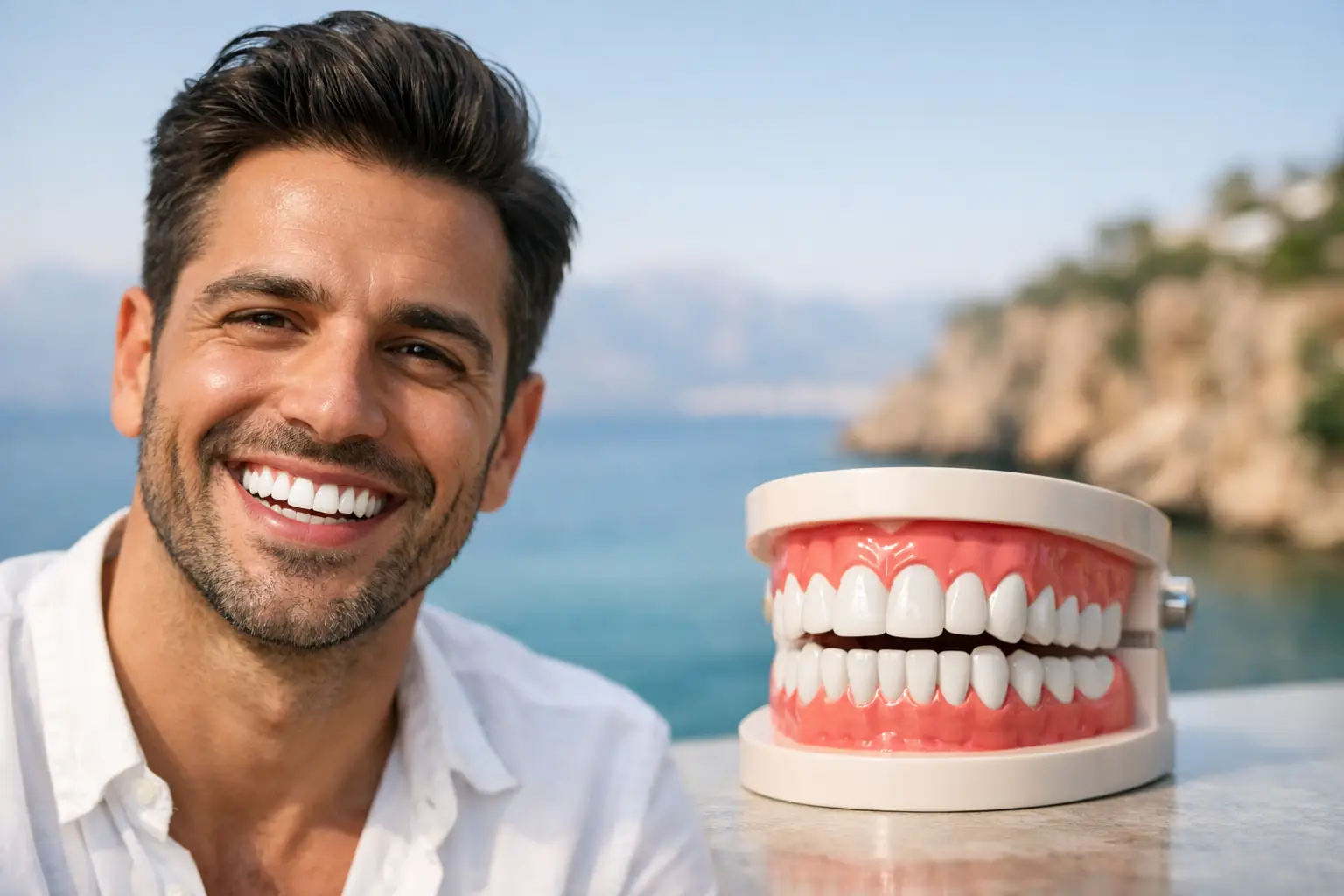
If you’ve spent more than five minutes researching cosmetic dentistry abroad, you’ve probably seen the phrase what are turkey teeth thrown around like it’s a real treatment. It isn’t. It’s a loaded internet label, usually used to describe very white, very uniform, often oversized crowns or veneers linked with dental tourism in Turkey.
That distinction matters. Turkey teeth are not a recognised dental procedure. They’re a look – and usually not a good one. The term became shorthand for dental work that appears obviously artificial, often because too much healthy tooth was removed and the final result was designed for Instagram rather than long-term oral health.
What are turkey teeth actually referring to?
When people ask what are turkey teeth, they’re usually talking about one of two things. Either they mean a full set of crowns placed for a dramatic smile makeover, or they mean veneers and crowns that are too big, too opaque and too white for the person’s face.
In the worst cases, natural teeth are heavily drilled down into small pegs so crowns can be fitted across most or all visible teeth. You’ve probably seen the viral photos. Freshly shaved teeth, huge white crowns, and a patient smiling in a clinic chair. That image has done enormous damage to Turkey’s dental reputation, and frankly some clinics brought it on themselves.
The key point is this: the problem is not that the work happened in Turkey. The problem is aggressive treatment planning and poor cosmetic judgement. Bad dentistry exists everywhere. Turkey just became the internet’s favourite target because it’s a major dental tourism hub and some clinics marketed unrealistic smile makeovers very aggressively.
Why the term became so popular
The phrase took off because it is catchy, slightly cruel and easy to share. British tabloids, TikTok clips and before-and-after reels did the rest. Once a few extreme cases went viral, the label stuck.
I think that has created two opposite problems. On one side, some people now assume any dental work done in Turkey is fake-looking or unsafe, which simply isn’t true. On the other, some clinics try to brush off all criticism as media snobbery, which also isn’t true. There are excellent dentists in Turkey, and there are clinics I would avoid completely.
The reality sits in the middle. Turkey offers strong value, modern clinics and highly experienced cosmetic dentists. But it also has a volume-driven side of the market where speed matters more than diagnosis. That’s where the turkey teeth stories usually come from.
What treatment are people usually getting?
Most so-called turkey teeth cases involve crowns rather than veneers. That’s a crucial difference.
A veneer is a thin layer bonded to the front of the tooth, usually with limited preparation. A crown covers the whole tooth and generally requires much more reduction. If someone has healthy teeth with only cosmetic concerns, jumping straight to multiple crowns is often far too destructive.
That doesn’t mean crowns are always wrong. If a patient has large fillings, broken teeth, root canal-treated teeth, severe wear or older failing dental work, crowns may be justified. But if the sales pitch is basically, “We’ll give you 20 crowns because that’s the quickest route to a Hollywood smile,” I would be cautious.
This is one of the biggest issues I see with overseas smile makeover marketing. Patients ask for a result. Some clinics sell a product. Good dentists start with a diagnosis.
Why some turkey teeth look so unnatural
The fake look usually comes down to a few predictable mistakes.
First, the teeth are often made too bulky or too long. Real smiles have variation. Natural central incisors do not look identical to canines, and not everyone suits a broad square shape. When every tooth is the same size and blindingly white, the result can look more like bathroom tiles than enamel.
Second, the shade choice is often unrealistic. Some patients ask for the whitest option available because they assume brighter means better. It usually doesn’t. A high-value white can work, but only if the shape, surface texture and translucency are handled well. Cheap monochrome ceramics tend to look flat.
Third, the bite may be ignored. Cosmetic dentistry that looks passable in photos can still be functionally poor. If the bite is off, crowns chip, jaw joints get irritated and the patient starts grinding. You can hide a lot in a social media reel. You can’t hide it six months later when someone can’t chew comfortably.
Are turkey teeth dangerous?
They can be. Not because of geography, but because of overtreatment.
If healthy teeth are aggressively prepared for crowns when minimal-prep veneers or orthodontics would have done the job, that loss of tooth structure is permanent. Once enamel is gone, it doesn’t grow back. Crowns also have a lifespan. Even good ones need maintenance and eventual replacement.
There are other risks too. Poor margin fit can irritate gums. Weak bonding or low-quality lab work can lead to breakage. Nerve damage from excessive reduction can mean root canal treatment later. And if 20 teeth are done at once without careful planning, fixing mistakes becomes expensive and difficult.
This is where I part company with the marketing language you sometimes see. A full smile makeover is not a beauty treatment in the same category as getting your hair done before a holiday. It is irreversible dentistry.
Not all smile makeovers in Turkey are turkey teeth
This is the part many articles miss. Plenty of cosmetic work in Turkey is conservative, well-designed and clinically sound. I have seen excellent cases where the dentist used a mix of whitening, gum contouring, a few veneers and maybe one or two crowns where structurally necessary. Those results don’t go viral because they look like better versions of the patient’s natural teeth.
Good cosmetic dentistry is usually quiet. It fits the face. It respects the bite. It avoids unnecessary drilling. It doesn’t need a dramatic reveal video to prove its value.
So if you’re researching treatment, don’t let the phrase itself make the decision for you. Focus on the treatment plan, not the meme.
How to avoid ending up with turkey teeth
Start by asking the right question. Not “How many veneers do I need?” but “Why is this treatment being recommended?” If a clinic can’t explain why crowns are necessary instead of veneers, composite bonding, orthodontics or whitening, that’s a problem.
You also want to see evidence of restraint. I look for clinics that discuss enamel preservation, bite analysis, gum health and temporary mock-ups. If the consultation jumps straight from your selfie to a package price, that’s not careful dentistry.
Ask what material is being used and why. Ask whether your natural teeth will be minimally prepared or heavily reduced. Ask to see healed cases after one or two years, not just same-day photos under clinic lighting. And ask what happens if something goes wrong once you’re back in the UK or Ireland.
One more red flag: if every patient gets the same smile shape and the same ultra-white shade, walk away. That’s a production line, not personalised treatment.
What good cosmetic dentistry in Turkey should look like
A decent clinic should start with diagnostics – X-rays, photographs, an examination of the bite, and a discussion of what bothers you functionally as well as aesthetically. The proposed treatment should make sense tooth by tooth.
Sometimes the best plan is not the most dramatic one. A patient might benefit more from orthodontics and whitening than 16 ceramic restorations. Another might need crowns on heavily damaged teeth but only veneers on the front four. It depends on the condition of the teeth you start with.
That is why blanket promises worry me. Any clinic claiming everyone can get the same celebrity smile in a few days is selling aspiration first and dentistry second. At Dental Guide Turkey, I tend to trust clinics that are willing to say no.
So, what are turkey teeth in plain English?
They’re not a procedure. They’re a nickname for overdone cosmetic dental work, usually associated with crowns or veneers that look unnaturally white, uniform and bulky.
Sometimes the label is unfairly used to mock perfectly decent treatment done in Turkey. But sometimes it points to a real problem: healthy teeth being cut down too aggressively for a fast, saleable makeover. If you’re considering treatment abroad, that’s the issue to focus on.
The smartest patients I see are not the ones chasing the whitest smile for the lowest price. They’re the ones asking how much tooth will be removed, whether the plan is reversible, and what their mouth will be like five years from now. That mindset will protect you far better than any marketing promise ever will.