
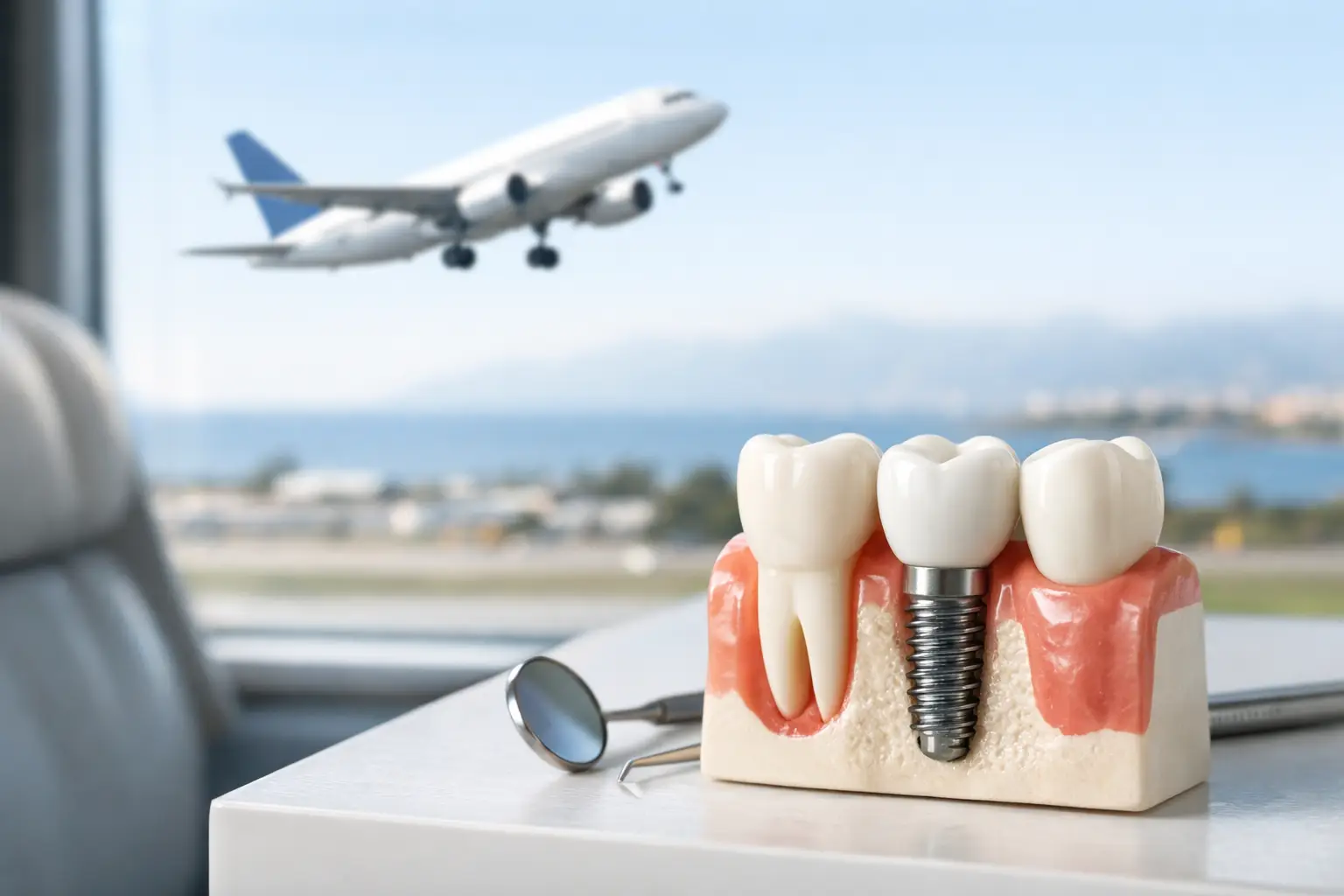
If you’re booking treatment abroad, this question matters more than clinics sometimes admit: can you fly after dental implants? In most cases, yes – but not always the same day, and not without thinking about what was actually done. A straightforward implant placement is one thing. Multiple implants, sedation, a sinus lift, or fresh grafting are different.
I’ll give you the short version first. Most patients can fly after dental implants once the immediate post-op period is over and the dentist is happy there’s no active bleeding, no unusual swelling, and no complication developing. For simple cases, that can be within 24 to 48 hours. For more involved surgery, I’d leave a bigger buffer.
Can you fly after dental implants? The practical answer
Flying itself does not damage a dental implant. The implant is fixed into bone. Cabin pressure does not somehow loosen it. That fear is common, but it’s not the real issue.
The real issue is what happens in the first day or two after surgery. If you fly too soon, you may be dealing with bleeding, swelling, pain, numbness wearing off at the wrong time, or the early signs of infection when you’re already in an airport queue. That is inconvenient at best and risky at worst.
For a single uncomplicated implant, many patients are fit to fly after 24 to 48 hours. If you’ve had several implants, surgical extractions, bone grafting, or any work near the sinus, I’d usually suggest staying longer. Not because the plane is dangerous, but because your body needs time to show whether healing is going normally.
What changes the flying timeline?
This is where a lot of clinic advice gets lazy. “You can fly tomorrow” might be true for one patient and poor advice for another.
A simple implant is not the same as full-mouth surgery
If you had one implant placed in a healed site, with no graft and no complications, recovery is often straightforward. Mild swelling and soreness are expected, but the risk profile is relatively low.
If you had full-arch implants, multiple extractions and immediate placement, the first 48 to 72 hours are more significant. Swelling tends to peak later, pain can build once the anaesthetic fully wears off, and any bite issue or pressure from a temporary bridge may only become obvious after a day or two. I would not rush to the airport in that situation.
Bone grafting and sinus lifts need more caution
This is the main exception people miss. If your implant treatment involved a sinus lift or grafting in the upper back jaw, flying too soon may be a bad idea. Pressure changes can aggravate sinus discomfort, and you absolutely do not want problems with congestion, sneezing, or pressure before the surgical area has settled.
Some surgeons are comfortable with flights after a few days. Others advise waiting one to two weeks after a sinus lift. That range exists because the procedure, your anatomy, and your healing all vary. If a clinic gives you a one-size-fits-all answer here, I’d question how carefully they plan cases.
Sedation matters too
If you had IV sedation or heavier medication, the first issue is not the implant but your general recovery. You may feel groggy, dehydrated, or nauseous. Flying straight after that is not sensible. Even if technically allowed, I wouldn’t recommend it.
Your medical history still counts
Smokers, poorly controlled diabetics, and patients with a history of slow healing or infection need to be more conservative. If healing goes off track, it usually starts with small signs. You want time for those signs to be checked before you leave the country.
Why clinics in Turkey often ask you to stay a few days
This is one area where good clinics and bad clinics separate themselves. A serious clinic builds your travel plan around surgery and review appointments. A volume-driven clinic tries to fit your surgery around your flight.
After implant placement, I want to see at least one review before a patient travels if the case was anything beyond simple. That lets the dentist check bleeding, swelling, bite, temporary restorations, and whether the patient is coping properly with cleaning and medication.
For many international patients in Turkey, a sensible stay is around 3 to 5 days for straightforward implant work, and longer for bigger cases. That does not mean you need a week for every single implant. It means you should leave enough room for post-op review and a bit of unpredictability. Dentistry is biology, not a package holiday.
What flying can make worse after implant surgery
Again, the aircraft is not the enemy. Poor timing is.
Cabin air is dry, so dehydration is common. That can make you feel worse after surgery and doesn’t help recovery. Long periods sitting still can also increase general discomfort and facial swelling.
If you are congested, especially after upper jaw surgery, pressure changes during take-off and landing can be unpleasant. If you had a sinus lift, that discomfort may be more than just annoying. And if you start bleeding lightly before boarding, the stress of travel can make it harder to manage calmly.
There is also the practical problem nobody mentions in glossy clinic ads: if a temporary tooth feels high, a stitch comes loose, or swelling suddenly spikes, what is your plan at 35,000 feet or after landing back home? That is why I prefer a buffer day rather than a same-day dash to departures.
When I would not recommend flying soon after implants
I would be cautious about early flying if you have ongoing bleeding, significant swelling within hours of surgery, severe pain that is not controlled by medication, dizziness after sedation, or any signs of sinus involvement. I’d also hold off if the clinic has not yet checked your temporary restoration and bite.
Another red flag is when patients do not fully understand what procedure they had. This happens more than it should in dental tourism. If you think you had “just implants” but the surgeon also did grafting or sinus work, your travel advice changes. Ask for clarity before you book the return flight.
How long should you stay in Turkey after implant surgery?
For a single or small number of straightforward implants, 2 to 3 nights may be enough if the clinic confirms healing is stable. For multiple implants or immediate implants after extractions, I’d be more comfortable with 3 to 5 nights. If there was a sinus lift or substantial grafting, staying longer may be the safer call.
This is one reason I tell patients not to buy the cheapest treatment plan built around the shortest stay. If the itinerary looks too tight, it probably is. The saving disappears quickly if you need emergency help once you get home.
If you’re comparing clinics through Dental Guide Turkey, this is exactly the sort of detail worth asking before you commit. Not “Can I technically get on a plane?” but “How long do you want me to stay for this exact treatment plan, and why?”
Tips if you do need to fly after dental implants
If your dentist says you’re fit to travel, keep the journey low drama. Take your prescribed medication exactly as instructed. Keep any post-op paperwork with you. Drink water, avoid alcohol, and do not smoke. Do not poke the site with your tongue every ten minutes. Patients do this constantly and then wonder why it’s sore.
If you were given instructions not to blow your nose, use straws, or sneeze with your mouth closed, take that seriously – especially after upper jaw surgery or sinus work. Those rules matter more than people think.
And before you leave the clinic, make sure you know who to contact if something changes after you land. A proper provider gives you that without hesitation.
The bottom line on can you fly after dental implants
Yes, you can usually fly after dental implants, but the right timing depends on how simple or invasive the surgery was. For basic cases, 24 to 48 hours may be fine. For multiple implants, grafting, or sinus lift procedures, waiting longer is often the smarter choice.
The mistake I see most often is patients treating implant surgery like a quick shopping trip. It isn’t. Give yourself enough time for the boring but important part – seeing how your mouth behaves once the adrenaline is gone, the numbness fades, and the dentist gets a proper look before you head home. That extra day can save you a lot of trouble.