
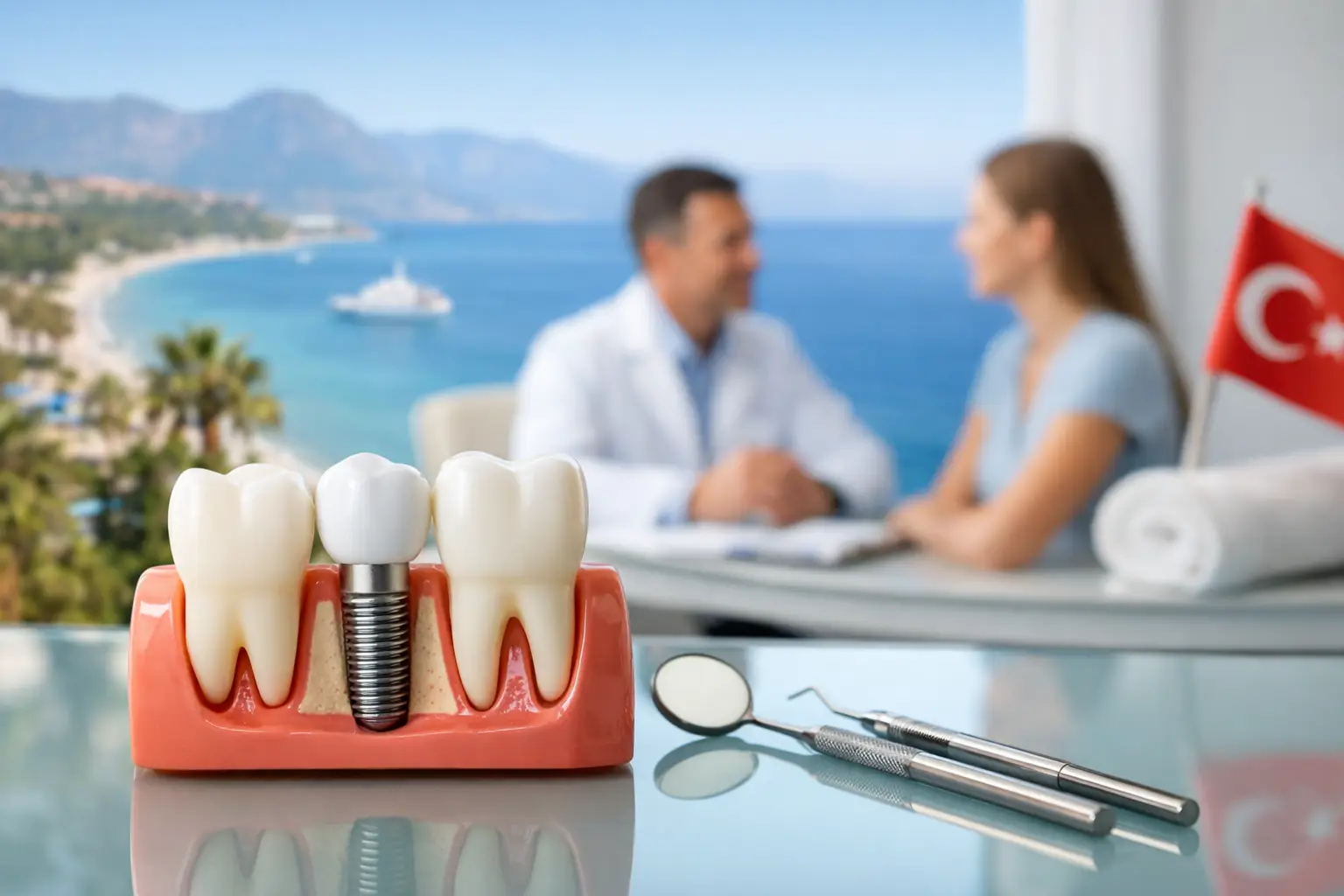
If you search for top implant clinics Turkey, you get the same tired pattern – glossy before-and-afters, airport transfer promises, and claims of being the best. That tells you almost nothing. A clinic can have a polished Instagram page and still cut corners on diagnostics, planning, implant systems, or aftercare. If I were narrowing down a shortlist, I would ignore the hype and judge clinics on the things that actually affect whether your implants last.
What actually makes a clinic one of the top implant clinics in Turkey
A serious implant clinic is not defined by a luxury waiting room or a huge social media following. It is defined by planning, case selection, surgical standards, and honesty. That last one matters more than most patients realise. If a clinic is willing to tell you that you are not a same-day candidate, or that you need periodontal treatment before implants, that is usually a good sign. The clinics I trust most tend to disappoint people early rather than fail them later.
The first thing I look for is proper diagnosis. For implants, that usually means a recent panoramic X-ray at minimum and, in many cases, a CBCT scan before the final treatment plan is confirmed. If a clinic quotes you for full implant treatment from a few phone photos and a ten-year-old scan, I would be cautious. Teeth are not kitchen units. Bone levels, sinus position, nerve location, gum health, bite forces, and smoking habits all change the picture.
I also pay attention to whether implants are the clinic’s core work or just one service on a long menu. A general cosmetic clinic can still do implant dentistry well, but only if implant cases are a routine part of its workload and not an occasional upsell. Full-arch work, bone grafting, and immediate loading are not beginner treatments.
The quality signals I would check first
There is no single league table for the top implant clinics Turkey offers. Anyone claiming to have the definitive top ten is usually trying to funnel you somewhere. What you can do, though, is assess a clinic against a small set of useful signals.
Implant systems and prosthetic standards
I want to know which implant brands the clinic uses and why. If the answer is vague, that is a problem. Good clinics can explain whether they use widely recognised systems with traceability, parts availability, and long-term support. Cheap no-name implants might reduce the headline price, but they can create real problems years later if components are hard to source.
The prosthetic side matters just as much. An implant is not only a screw in bone. It is also the crown, bridge, abutment, bite design, and how all of that is made and fitted. Some clinics sell implants cheaply and then make up margin by rushing the restorative work. That is how patients end up with crowns that look bulky, feel awkward, or overload the implants.
The dentist doing the work
I am less impressed by the word specialist thrown around in marketing than I am by clear information on who will diagnose, place, and restore the implants. Ask whether the same lead clinician follows the case from assessment to fitting, or whether patients are passed between teams. Large clinics can work well, but fragmented care can also mean no one fully owns the outcome.
Experience matters, but so does relevance. A dentist who places hundreds of straightforward single implants is not automatically the right person for a complex full-mouth reconstruction. If your case involves severe bone loss, failed implants, sinus lifts, or major bite correction, I would look for clinics that regularly handle those problems, not just advertise them.
Planning and whether the clinic says no
This is one of the best filters I know. A good implant clinic does not approve every case for immediate teeth or same-week treatment. Sometimes the bone is not stable enough. Sometimes gum disease has not been controlled. Sometimes the patient needs extractions and healing before placement. When a clinic says yes to absolutely everything, I start wondering what standards they are using.
Red flags that knock a clinic off my list
Some warning signs are obvious. Others are hidden behind polished sales language. If a treatment coordinator pressures you to pay a deposit quickly because the offer expires tomorrow, I would walk away. Good implant work should not be sold like a package holiday.
Another red flag is suspiciously low pricing. Turkey is cheaper than the UK, but there is still a floor below which something is being compromised – materials, time, lab quality, sterilisation, or clinical judgement. Very cheap full-mouth implant offers often exclude important extras such as temporary teeth, sedation, bone grafting, additional scans, or follow-up work. The initial quote looks attractive, then reality arrives.
I also dislike clinics that avoid talking about complications. Implant dentistry has risks. Sinus issues, implant failure, poor osseointegration, nerve proximity, gum recession, screw loosening, bite problems – these are all real. A trustworthy clinic will explain how often problems happen, how they manage them, and what is covered if revision is needed.
Price matters, but context matters more
Patients often ask me whether the top implant clinics in Turkey are always the most expensive. Not necessarily. Higher price can reflect better diagnostics, stronger implant systems, more experienced clinicians, and better lab work. It can also reflect nothing more than a waterfront address and a big marketing budget.
For a straightforward single implant with an abutment and crown, you will usually see a broad range rather than one standard market price. Full-arch cases vary even more because the final cost depends on implant number, provisional teeth, grafting, zirconia versus acrylic, and whether the case is immediate-load or staged. Comparing clinics only on the headline figure is where many patients go wrong.
The better question is this: what exactly is included, what assumptions is the quote based on, and what could change once the clinic sees updated scans? If those answers are clear, even a higher quote may be fair. If they are blurry, even a bargain is overpriced.
Which cities tend to have the strongest implant clinics?
Istanbul has the biggest concentration of clinics, and naturally that means more strong implant providers as well as more weak ones. The upside is choice. The downside is noise. Antalya is popular with dental tourists because treatment can be combined with a resort stay, but that creates its own problem – some clinics lean too hard into the holiday angle and not hard enough into the dentistry.
Izmir and Ankara are often overlooked by international patients, yet I have seen very solid clinical standards there. Smaller local markets can sometimes mean less flashy marketing and more word-of-mouth reputation. That said, city alone tells you very little. I would rather see a well-run clinic in a less famous location than a heavily advertised clinic in central Istanbul with poor case planning.
How I would build a shortlist
I would start with five or six clinics, not twenty. Too many options create confusion, and most of the websites repeat the same promises anyway. Then I would compare them on the evidence that matters: diagnostics, implant brand transparency, clinician information, case suitability, and clarity around aftercare.
Ask each clinic the same practical questions. What implant systems do you use? Will I need a CBCT before final confirmation? Who will place the implants and who will restore them? What happens if an implant fails to integrate? How many trips are likely, and how long between them? If you get vague, evasive, or copy-paste replies, that tells you plenty.
Patient reviews can help, but I treat them carefully. I am more interested in reviews that mention planning, communication, complications, and follow-up than generic praise about drivers and hotels. A clinic with nothing but perfect reviews makes me suspicious. Real healthcare is messier than that.
A word on guarantees
Many clinics advertise long guarantees on implants and crowns. Read that carefully. A guarantee is only useful if the clinic defines the conditions clearly and has a realistic process for handling problems when you are back in Britain or Ireland. Some guarantees sound generous but exclude smoking, grinding, poor hygiene, missed reviews, bone loss, and half the scenarios in which patients actually need help.
I would rather choose a clinic with a sensible, clearly explained policy than one promising a lifetime guarantee in giant letters. Dentistry is not a toaster. Long-term outcomes depend on biology, maintenance, and case design, not just paperwork.
My honest view
The top implant clinics Turkey has to offer are not the ones shouting the loudest. They are the clinics that assess properly, explain trade-offs, use reliable systems, and are willing to slow the process down when your case demands it. That is not exciting marketing, but it is usually where the better outcomes come from.
If you are still comparing options, keep your standards stubbornly high. A good clinic will not mind hard questions. In fact, it should welcome them, because implant treatment is one of those areas where a careful patient usually gets a better result than a rushed one.