
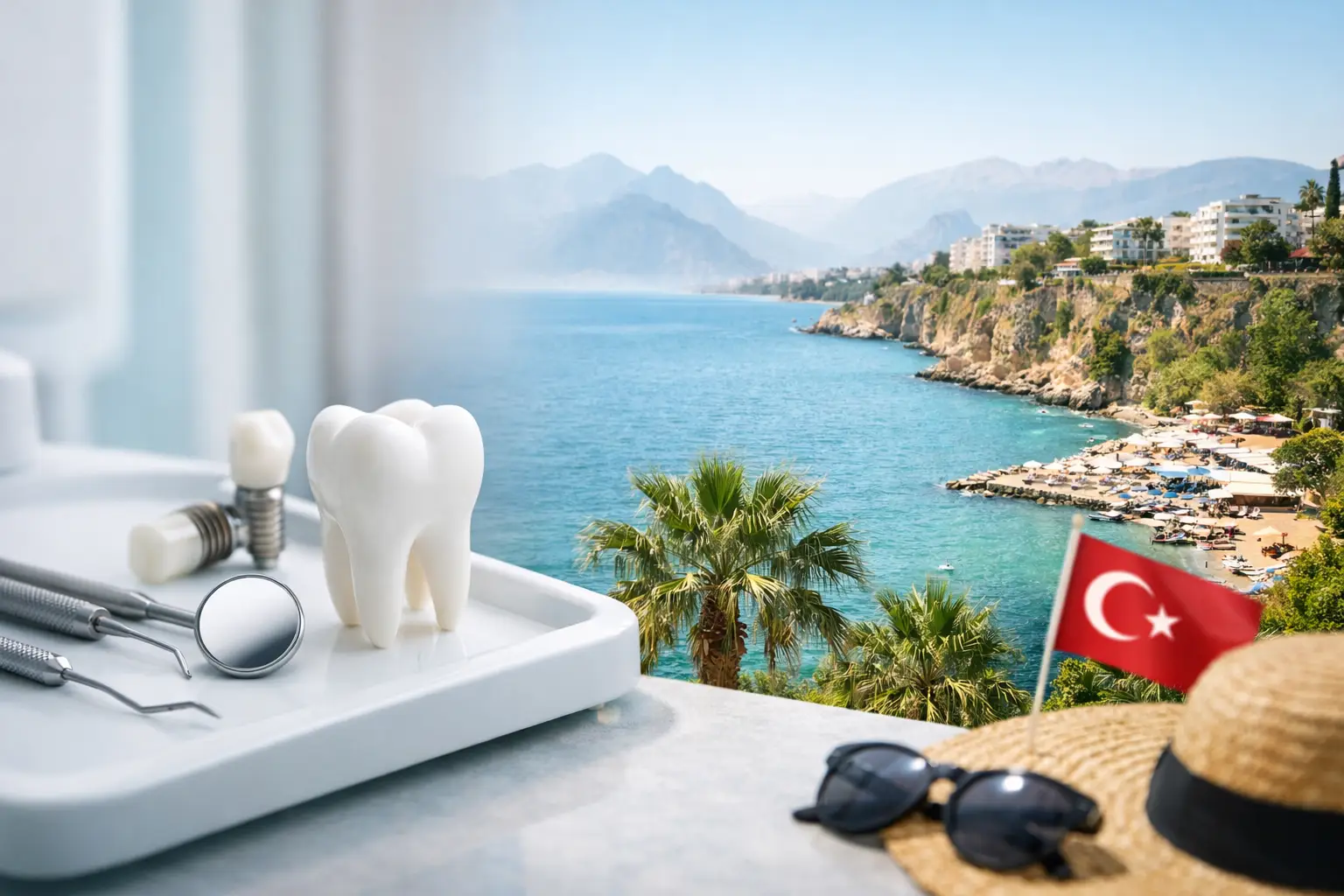
You can save thousands on dental work in Turkey and still end up with a result you regret. I have seen both outcomes. That is why any serious Turkey dental treatment guide has to do more than repeat cheap price headlines – it needs to explain where the real risks sit, what good clinics do differently, and when Turkey is actually the wrong choice.
For most international patients, the appeal is obvious. Private dentistry in the UK and Ireland is expensive, waiting times can be frustrating, and larger cosmetic cases often feel financially out of reach at home. Turkey offers lower labour costs, high treatment volume, and a mature medical tourism infrastructure. That combination can make treatment there genuinely good value. It can also attract aggressive sales tactics, over-treatment, and clinics built more for social media than long-term dentistry.
What this Turkey dental treatment guide is really about
If you are researching treatment in Turkey, the first thing to understand is that the country itself is not the quality signal. Clinic standards vary wildly. You can find experienced implantologists and prosthodontic teams doing solid work in well-run clinics. You can also find places pushing every patient towards crowns, rushing consultations, and promising impossible timelines.
So I would not ask, “Is Turkey good for dental treatment?” That is too broad to be useful. I would ask, “Is this specific clinic suitable for my case, budget, and tolerance for risk?”
That matters because not every treatment type carries the same level of downside. A straightforward set of composite bonding or a couple of crowns is not the same decision as full mouth implants. The more complex and irreversible the work, the more careful you need to be.
Which treatments people usually travel for
The most common cases I see are veneers, crowns, implants, implant-supported full arches, composite bonding, whitening, and smile makeovers combining several of those. Orthodontics exists too, but it is less suited to quick overseas trips because it needs ongoing review.
Single implants and smaller restorative cases can work very well in Turkey if diagnostics are done properly and healing timelines are respected. Veneers and crowns are more mixed. They are heavily marketed because they photograph well and can be completed fast, but fast is not always what you want. If a clinic is preparing healthy teeth aggressively just to create a uniform cosmetic look, I would be cautious.
Full mouth crown cases are where I see the most nonsense. Some patients do need extensive restorative work. Others are being sold 20 or 24 crowns when more conservative treatment would have been better. If every patient seems to leave with the same unnaturally white, very bulky smile, that is not bespoke dentistry. That is a production line.
Costs: cheaper, yes – but not automatically better value
Turkey is usually significantly cheaper than the UK, especially for implants and larger cosmetic plans. But the cheapest quote is often the most expensive mistake.
Low pricing can reflect honest efficiencies, high case volume, and lower overheads. It can also reflect shortcuts in diagnostics, lower-grade materials, underqualified staff doing key clinical steps, or treatment plans inflated in one area and discounted in another to create a headline number.
I pay attention to what is actually included. Is the consultation and 3D scan included? Are temporary teeth included for implant cases? What about extractions, bone grafting, sinus lift procedures, sedation, follow-up adjustments, and the final prosthetic brand? If the quote is vague, the final bill often grows once you arrive.
And then there is the hidden cost patients forget – repairs back home. If a crown chips or an implant restoration fails and your local dentist wants nothing to do with work done abroad, your “cheap” treatment stops looking cheap very quickly.
How to judge a clinic without falling for the sales pitch
A proper clinic assessment starts with the treatment planning process. I want to see a detailed remote review followed by in-person diagnostics before anything irreversible happens. Good clinics ask for recent X-rays, photographs, and medical history. Better ones are willing to say, “I need to examine you first before confirming the final plan.”
That answer is a good sign, not a red flag. If a clinic promises a full treatment plan and exact tooth count from a few WhatsApp selfies, they are guessing or selling.
Look closely at who is doing the dentistry. Many sites talk endlessly about luxury transfers and hotel packages while saying very little about the clinicians. I care more about the dentist’s training, case focus, years of experience with your procedure, and whether complex cases are handled by one person or a multidisciplinary team.
I would also check whether before-and-after cases look varied and believable. If every case uses the same shape, same blinding shade, and same camera angles, that tells me very little. Strong clinics can explain why one patient got veneers, another got orthodontics, and another was told not to proceed at all.
Red flags I would not ignore
Some warning signs are subtle. Others are not subtle at all.
If a clinic pushes crowns as the answer to everything, I would step back. If the salesperson is more available than the dentist, I would step back. If there is pressure to pay a deposit immediately because a “special offer ends tonight”, I would step back.
I am also wary of clinics that promise treatment timelines that do not respect biology. Implants need healing. Gum disease needs stabilising. Bite problems need proper planning. Teeth are not kitchen tiles – you do not rush them because the return flight is booked.
Another issue is the airport-hotel-clinic package model being used to distract from weak dentistry. Travel support is fine. Many patients want it. But when the package is the product and the dental care feels secondary, that is not where I would spend my money.
Travel and timing: what patients often underestimate
One of the practical strengths of Turkey is how easy it is to reach from the UK and much of Europe. Istanbul, Antalya, Izmir and other cities are well connected, and experienced clinics know how to handle airport transfers, scheduling and interpreters. For straightforward cosmetic work, that convenience matters.
But treatment timing still catches people out. Some procedures can be completed in one trip over several days. Others need two visits separated by months, particularly implant work. If you are travelling for implants, ask for the real timeline, not the marketing timeline.
I would also build slack into the trip. Do not book your return flight two hours after your final fitting. If adjustments are needed, you want room for that. Travelling home with sore gums, a rushed bite, and no time for refinement is avoidable.
Is Turkey right for your case?
Sometimes yes, absolutely. If you need private treatment, have done your homework, and choose a clinic with proper diagnostics and sensible planning, Turkey can be a very rational option. For implants especially, the savings can be substantial without forcing you into low standards.
Sometimes no. If your case is highly complex, if you are medically compromised, if you are anxious about aftercare abroad, or if you know you will struggle to return for revisions, local treatment may be the safer choice even at a higher price. I would say the same if you are being drawn mainly by cosmetic marketing and have not fully thought through the irreversible nature of some procedures.
This is where patients get into trouble. They compare prices before they compare treatment philosophy. They ask how white the teeth can be before asking how much healthy enamel will be removed. They focus on the hotel instead of the lab quality, the bite planning, or the implant system being used.
My honest view
Turkey is not the problem. Bad treatment planning is the problem. A good clinic in Turkey can be better than a mediocre one in the UK. A bad clinic in Turkey can leave you with expensive long-term damage, and the glossy Instagram feed will not help when you need revisions.
If you are still in research mode, slow down. Ask awkward questions. Request itemised plans. Get clarity on materials, healing periods, guarantees, and who handles complications. If a clinic dislikes informed patients, that tells you plenty.
I built Dental Guide Turkey around that exact gap – not to sell a fantasy, but to help patients sort the serious providers from the noise. If you treat this decision like healthcare rather than holiday shopping, you give yourself a much better chance of getting the result you actually want: work that looks good, functions properly, and still holds up years later.
The best dental trip to Turkey is rarely the cheapest or the flashiest. It is the one you do not have to fix when you get home.