
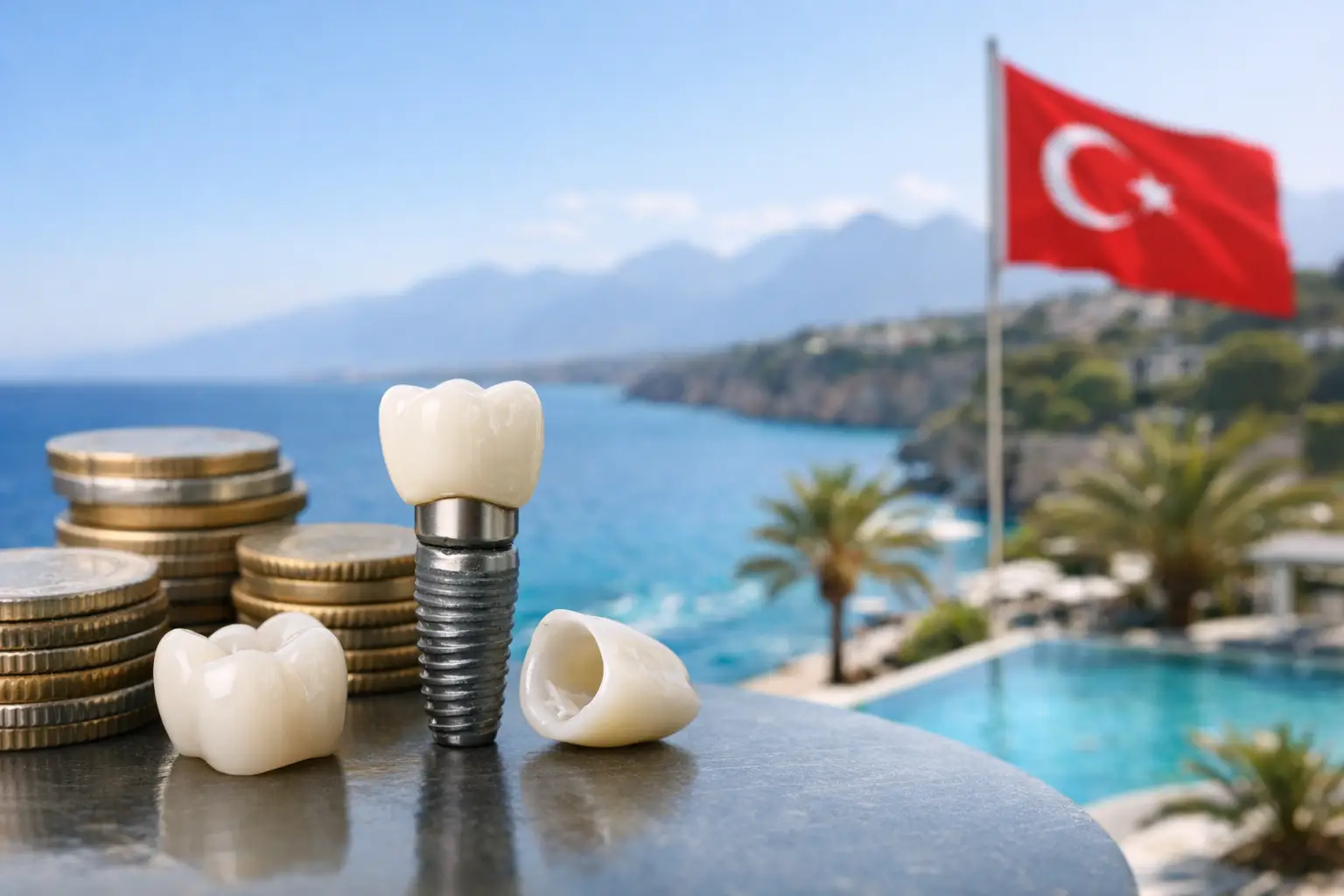
If a clinic has quoted you £120 per crown and another has come back at £280, your first thought is usually the same: how can the same treatment vary that much? When people ask me how much are dental crowns in Turkey, the honest answer is that there is no single price. There is, however, a very clear market range – and once you know what sits behind the quote, the cheap offers get a lot less tempting.
Turkey is still one of the cheaper places in Europe to get crowns, even after inflation and rising lab costs. But the old idea that every crown in Turkey is a bargain is outdated. Some clinics are pricing sensibly. Some are charging premium rates because they genuinely use better labs and better planning. And some are simply selling volume dentistry with a glossy Instagram feed.
How much are dental crowns in Turkey right now?
For most international patients, a realistic price is roughly £150 to £300 per crown. In euros, that is often around €175 to €350. If you are quoted much below that, I would want to know exactly what material is being used, who is making the crown, and how much prep is being done to the tooth.
The lower end of the market usually covers standard zirconia or porcelain-fused-to-metal crowns in high-volume clinics. Mid-range pricing often includes better lab work, more careful shade matching, and a more experienced restorative dentist. At the upper end, you may be paying for premium multilayer zirconia, stronger aesthetic work for front teeth, or treatment in a clinic that spends more time on diagnostics rather than rushing patients through a package system.
If you are having a full set of crowns, many clinics reduce the per-tooth rate. That is why smile makeover adverts can look aggressively cheap. A clinic might quote £130 per crown for 20 teeth, but that does not mean the same quality standards apply as they would for one or two carefully planned crowns on damaged teeth.
What changes the cost of dental crowns in Turkey?
Material is the first big factor. Zirconia crowns are the most commonly quoted option for international patients because they offer a decent balance of strength and appearance. E-max can be a better option for some front teeth where translucency matters, but not every case is suitable. Porcelain-fused-to-metal is often cheaper, though I rarely think it is the best choice aesthetically if the crown will be visible.
The second factor is the clinic itself. A properly run clinic with CBCT imaging, in-house diagnostics, good infection control, and a restorative dentist who plans cases conservatively will not be the cheapest. Nor should it be. If a clinic is doing crowns at rock-bottom rates while also offering airport transfers, hotel stays, and sales coordinators speaking five languages, something somewhere is being squeezed.
The lab matters more than most patients realise. A good crown is not just about the dentist drilling the tooth and cementing something on top. The fit, margin, shape, bite, and colour all depend heavily on the technician and the lab workflow. Cheap clinics often outsource to the fastest bidder. That is one reason some crowns look bulky, too opaque, or just slightly wrong in the mouth.
There is also the prep involved. If your tooth needs root canal treatment, a core build-up, old filling removal, gum contouring, or temporary crowns for several days, your total bill will rise. Some clinics bundle these costs in. Others do not. Always ask what is included.
Typical crown prices by type
I usually see prices in Turkey break down roughly like this:
- Porcelain-fused-to-metal: £120 to £180 per tooth
- Standard zirconia: £150 to £250 per tooth
- Premium zirconia or multilayer zirconia: £220 to £300 per tooth
- E-max: £200 to £320 per tooth
These are not fixed national rates. They are practical ranges based on what serious clinics actually quote international patients. If a clinic lists every crown type at exactly the same price, I would question how detailed their treatment planning really is.
Why are crowns in Turkey cheaper than in the UK?
The short version is overheads. Clinic running costs, staff wages, and lab costs are generally lower in Turkey than in the UK. That does not automatically mean lower quality. It simply means the same treatment can often be delivered for less.
But there is a limit to that logic. A crown in Turkey is not cheap because there is some secret efficiency miracle. It is cheaper because the underlying cost base is lower. Once a price starts looking absurdly low, the explanation is usually not efficiency – it is corner-cutting.
I also see clinics using crowns as a lead-generation product. They advertise a very low per-tooth price, then upsell extra work when you arrive. Sometimes that extra work is justified. Sometimes it is how the clinic makes the maths work.
The real question is whether you need crowns at all
This is the part many sites gloss over because it gets in the way of conversion. A lot of international patients asking how much are dental crowns in Turkey do not actually need as many crowns as they have been told.
Crowns require significant tooth reduction. Once healthy enamel is removed, you cannot put it back. If a clinic is recommending 20 crowns for mild crowding, small gaps, or cosmetic concerns that could be treated more conservatively, I would be very cautious. Veneers, orthodontics, whitening, composite bonding, or a mixed treatment plan may be the better route.
The worst offender in this space is the “Turkey teeth” package model – heavy prep, uniform white crowns, fast turnaround, and very little serious discussion about long-term maintenance. It looks cheap at the start. It can become expensive very quickly if the bite is wrong, the margins leak, or the teeth underneath develop problems later.
What should be included in the price?
A fair quote for dental crowns in Turkey should clearly state whether it includes consultation, X-rays, tooth preparation, temporaries, the final crowns, fitting, and follow-up adjustments during your stay. If there is a warranty, ask what it actually covers and what it does not.
I would also want to know whether the clinic includes accommodation and transfers. These perks are common, but they are not free gifts from the sky. They are built into the pricing somewhere. That is fine if the overall value is good, but do not mistake package wrapping for clinical quality.
If sedation, root canal treatment, gum treatment, or extractions may be needed, get those possible costs in writing before you book flights. Too many patients arrive in Turkey with one number in mind and leave having paid far more.
Cheap crowns in Turkey: when is it too cheap?
If you are seeing quotes under £100 per crown, I would slow down. That is not me being dramatic. At that level, the clinic is either doing extreme volume, using very basic lab work, cutting appointment time to the bone, or compensating elsewhere in ways you may not like.
Red flags include identical before-and-after photos across multiple websites, pressure to commit over WhatsApp, vague answers about materials, and treatment plans issued before any proper imaging. Another bad sign is a clinic promising crowns for every front tooth without asking about your bite, clenching, gum health, or previous dental history.
Cheap dentistry can still be expensive if it needs redoing in two years. I would rather see a patient pay £220 for a well-planned zirconia crown than £120 for one that looks fake, traps plaque, and irritates the gum line.
Are dental crowns in Turkey worth it?
For the right patient, yes. If you genuinely need crowns and choose a clinic that plans carefully, uses decent materials, and does not oversell treatment, Turkey can offer very good value. The savings compared with UK private dentistry are still real, especially if you need multiple teeth restored.
What I would not do is choose purely on headline price. Look at the dentist’s restorative work, ask what material they recommend for your specific teeth, and push for a proper explanation if they suggest a full arch of crowns. Good clinics do not mind detailed questions. Bad ones try to move you towards the deposit stage before you have had time to think.
If you are comparing quotes, compare the treatment philosophy as much as the number. The cheapest plan is not always the most conservative one, and the most expensive plan is not always the best either. The sweet spot is usually a clinic that explains its reasoning clearly, prices transparently, and is willing to say, “You do not need that many crowns.”
That is still the rarest kind of quote in this market – and usually the one worth listening to.