
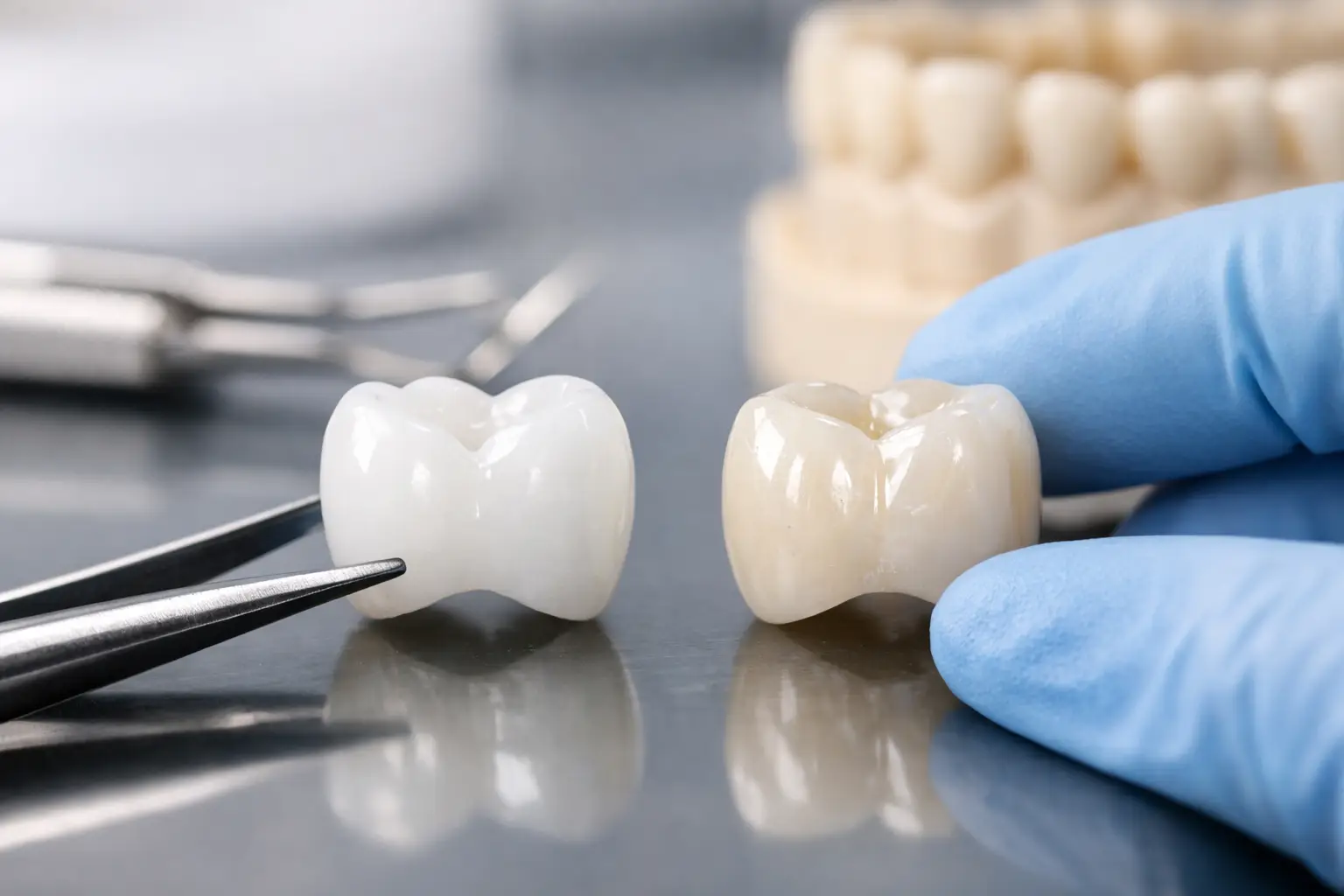
A crown choice can look like a cosmetic detail on a Turkish clinic package. It is not. The material affects how your teeth are prepared, how natural the result looks, whether your opposing teeth wear down, and how likely you are to be happy with it five years later. When comparing zirconia crowns versus porcelain crowns, I would not start with the clinic’s before-and-after gallery. I would start with the tooth, the bite and the exact material being proposed.
Turkey has plenty of capable labs and excellent clinicians. It also has clinics selling “zirconium packages” as though one material is automatically right for every tooth in every mouth. That is lazy treatment planning. A strong crown is not necessarily the best crown, and the whitest smile is not necessarily the most convincing one.
Zirconia crowns versus porcelain crowns: the short answer
Zirconia is generally the better choice for teeth that take heavy biting forces, particularly molars and some bridgework. It is exceptionally strong and less likely to chip than traditional layered porcelain. Porcelain, especially modern lithium disilicate ceramic, usually wins on light transmission and fine aesthetic detail, making it a strong option for visible front teeth when there is enough healthy tooth structure and the bite allows it.
But “porcelain crown” is not a precise enough label to make a decision. A clinic may mean porcelain fused to metal, lithium disilicate such as E.max, or a layered zirconia crown with porcelain on top. Those are very different restorations. If a coordinator cannot tell you which one you are being quoted for, stop there and ask for the written specification.
What zirconia does well
Zirconia is a high-strength ceramic. In practical terms, it handles pressure well. That makes it useful for back teeth, patients who clench or grind, and longer spans where a bridge needs support. Monolithic zirconia – made from one solid block – is particularly resistant to fracture and chipping.
The trade-off is appearance. Earlier zirconia could look opaque and slightly flat, especially across the front six or eight teeth. Newer multilayer and high-translucency zirconia looks far better than it used to, and a skilled technician can produce a good result. Still, it does not reproduce the depth, subtle translucency and enamel-like edges of a well-made lithium disilicate crown as reliably.
I also pay attention to surface finishing. Properly polished zirconia is usually kind to opposing teeth. Poorly adjusted or rough zirconia can be abrasive. A crown should be polished after bite adjustments, not merely sent away with a quick drill mark. This is a small technical point that affects long-term comfort and wear.
Where porcelain can be the better choice
For patients who want a natural-looking front tooth, porcelain-based ceramics are often more persuasive. Lithium disilicate allows light to pass through in a way that can mimic enamel. It is especially useful for a single visible crown beside natural teeth, where matching colour, texture and translucency matters more than brute strength.
Traditional porcelain fused to metal, often shortened to PFM, is a different proposition. It remains durable and can be suitable in certain cases, but it has aesthetic limitations. The metal substructure can create a darker look at the gumline over time, particularly if gums recede. I would not choose it for a high-visibility smile makeover unless there is a specific clinical reason.
Layered zirconia sits between the two. It has a zirconia core for strength and porcelain layering for appearance. It can look excellent, but the layered surface has a greater risk of chipping than monolithic zirconia. For someone with heavy grinding, that compromise needs a serious discussion, not a sales pitch.
The front teeth are not automatically porcelain territory
There is a common rule online: zirconia for back teeth, porcelain for front teeth. It is useful, but incomplete. A patient with a deep bite, severe bruxism or very little clearance may be better served by a carefully designed high-translucency zirconia crown at the front. Conversely, a patient with a stable bite and one discoloured front tooth may get a more lifelike result from lithium disilicate.
This is why photographs alone are not enough for remote planning. A clinic should assess scans, X-rays, gum levels, bite relationship and the amount of remaining tooth. Anyone promising a final material before seeing adequate records is guessing.
The preparation question most clinics gloss over
The larger issue is often not zirconia versus porcelain. It is whether you need a crown at all, and how much natural tooth must be removed to place it.
A crown may be justified where a tooth is heavily filled, cracked, root-treated, badly worn or structurally weak. It is not a harmless cosmetic shell. Teeth may need reduction, and once a tooth is prepared for a crown, it will always need a restoration. For healthy, mostly intact front teeth, I would be cautious about a clinic proposing 20 crowns simply because the patient wants a brighter, straighter smile.
Some Turkish clinics market crowns under the veneer label because “veneers” sell better on social media. Ask directly: are these full-coverage crowns, partial veneers, or veneers? How much enamel will be removed? Will any teeth need root canal treatment because of the preparation or existing disease? Get the answers in writing.
Cost in Turkey: what you are actually paying for
As a broad guide, individual zirconia crowns in Turkey are commonly advertised from around £150 to £300 per tooth, while lithium disilicate or E.max crowns often sit around £200 to £400. Premium clinics, complex cases and recognised lab systems can cost more. Prices vary by city, lab, warranty terms and whether the quote includes scans, temporary crowns, accommodation or transfers.
The cheapest quote is rarely a bargain if it leaves out diagnostics, temporaries, bite checks or a remake policy. Nor is an expensive quote proof of quality. I have seen inflated “luxury” packages using vague material descriptions and rushed treatment schedules.
Ask for the manufacturer or lab brand, not just “German zirconium” or “premium porcelain”. Those phrases are marketing, not a material specification. You should also ask whether the crown is monolithic zirconia, layered zirconia, lithium disilicate or PFM, and whether the stated price includes a temporary restoration and follow-up adjustment.
How I would choose between them
For a molar with a heavy bite, I would usually lean towards monolithic zirconia, provided the shade and contour are managed properly. For a single upper front tooth where matching adjacent natural teeth matters, I would usually explore lithium disilicate first. For a full arch, the answer depends on bite, gum condition, missing teeth, implant positions and how much of the smile shows. There is no responsible one-material answer.
If you grind your teeth, tell the clinic before treatment. Do not assume they will spot it from a smile photo. You may need a night guard after crowns, whatever material is used. Refusing one because it is inconvenient is a red flag, especially after a large cosmetic case.
A good Turkish clinic will be willing to explain why it chose a material tooth by tooth. A poor one will repeat that zirconia is “the best” and steer every question back to the package price. Your crown material should follow a diagnosis, not a marketing campaign.
Before you book flights, ask to see the proposed plan with each tooth numbered, the restoration type stated, and any alternatives explained. That one document tells you far more about a clinic’s standards than a hundred perfect Instagram smiles.