
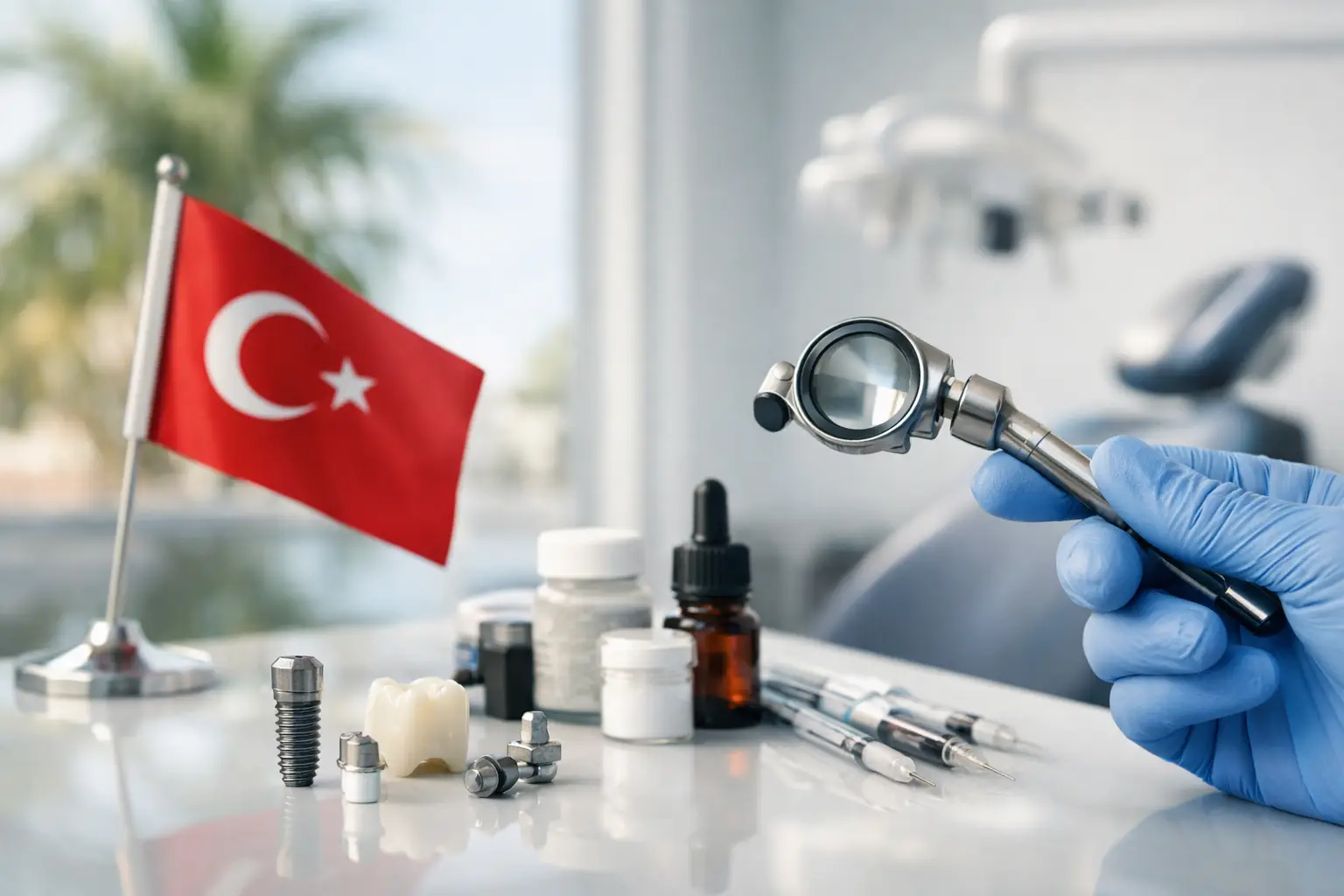
A clinic can show you a glossy smile simulation, a five-star hotel and hundreds of before-and-after photos. None of that tells you what will actually be fitted in your mouth. The more useful question is: are Turkish dental materials traceable? The short answer is yes, they can be – but traceability is not automatic, and the standard varies wildly between clinics.
I have seen reputable Turkish clinics produce implant passports, product stickers, laboratory work orders and material certificates without being asked twice. I have also seen clinics dodge basic questions about crown brands with vague lines such as “European zirconia” or “premium German material”. That is not a harmless marketing shortcut. It is a red flag.
For an international patient, traceability is one of the clearest ways to separate a properly run clinic from an Instagram-led volume business. It gives you evidence of what you received, makes future dental care easier, and reduces the chance of paying for one product while being fitted with another.
What traceability means in dental treatment
Traceability means a clinic can identify the manufacturer, product range and, where relevant, the batch or lot number of the materials used in your treatment. For implants, it should also mean recording the implant diameter, length, connection type and serial or lot information. You should leave with this information, not have to chase it from abroad six months later.
The level of documentation differs by treatment. A dental implant is a regulated medical device designed to remain in the body for years, so the paperwork should be particularly clear. A crown, veneer or bridge has a different paper trail: the clinic should be able to identify the laboratory, the restorative material and the shade, while the lab should retain records of the zirconia, ceramic or metal used.
Consumables such as bonding agents, composites, anaesthetic and cement are also batch-traceable within a well-managed clinic. Patients do not always need a folder full of stickers for every syringe and capsule. But the clinic should have those records internally, especially for treatments where a product failure or safety recall could matter.
Are Turkish dental materials traceable in practice?
Turkey has highly capable dental clinics, laboratories and distributors. Major global manufacturers sell implants, zirconia, ceramics, scanners and restorative products in the country. Many established clinics use the same recognised brands you would encounter in the UK or continental Europe.
But there is no single answer for every clinic. Dental tourism has grown faster than quality control in some parts of the market. A high-volume clinic may source legitimate materials but document them poorly. Another may use a low-cost local or unbranded alternative while quoting the name of a better-known material during the sales process. The worst operators rely on the fact that a patient is leaving the country within days.
So, yes: Turkish dental materials are traceable when the clinic, dentist and laboratory have systems worth trusting. If they cannot tell you exactly what they use before you book, I would not assume the records will magically appear after treatment.
Implants should come with an implant passport
For implant treatment, ask for the implant brand and system before paying a deposit. “Swiss implant” is not a brand. Neither is “German quality”. You want the manufacturer and product line, such as the specific implant system being proposed.
After placement, request an implant passport or equivalent record showing the brand, reference number, diameter, length and batch or serial number. Some manufacturers supply stickers that can be placed in a patient card or clinical record. Keep a digital copy as well as the original.
This matters if you need an implant crown replaced years later. Implant components are not universally interchangeable. A dentist in the UK needs to know the exact connection system to order compatible parts. Without that information, a straightforward repair can become more expensive, slower and occasionally impossible without exploratory work.
I would also ask whether the final abutment is original to the implant manufacturer or a compatible third-party component. Compatible parts are not automatically unsafe, but the clinic should state this plainly. If the quote says one thing and the paperwork later says another, challenge it before the final restoration is fitted.
Crowns and veneers need more than a brand name
For crowns and veneers, material naming can get slippery. “Zirconium” is often used casually by sales teams, even though patients need more detail. Is it monolithic zirconia, layered zirconia, lithium disilicate, feldspathic ceramic or a metal-ceramic crown? These are different materials with different strengths, aesthetics and suitable uses.
A good clinic should tell you the manufacturer or blank system where possible, but the more critical document is often the laboratory prescription or certificate. It should identify the laboratory that made the work, the restorative material and the teeth restored. For a full-mouth case, that record is far more useful than a generic certificate printed with a clinic logo.
Be realistic here. A crown certificate will not always contain a unique serial number for every individual tooth, as an implant passport might. What matters is whether there is a credible chain from clinic to laboratory to material. If the clinic cannot name its laboratory, that is not a minor administrative gap. I would be concerned.
The questions I would ask before booking
Do not wait until you are in the dental chair. Put these questions in writing before committing to flights or a deposit. A legitimate clinic should answer directly, even if the answer is that different materials are available at different price points.
Ask which implant brand and model will be used, whether the quoted crown or veneer material is named on the treatment plan, and whether the work is made in-house or by an external laboratory. Ask what documents you receive at the end: implant passport, laboratory certificate, treatment notes and radiographs are the minimum for complex cases.
For full-mouth crowns, I would ask whether the quote specifies monolithic or layered zirconia, and whether any front teeth will use a more aesthetic ceramic. A clinic offering one material for every patient, regardless of bite, tooth position and cosmetic goals, is selling a package rather than planning treatment.
You should also ask whether substitutions require your written approval. Materials sometimes need to change for sensible clinical reasons – stock issues, a revised bite plan or an unexpected finding during treatment. That is not inherently bad. Quietly replacing a named product with a cheaper one is.
How to verify the answer without becoming a materials expert
You do not need to memorise implant catalogues. Start by checking whether the clinic gives consistent answers across its coordinator, dentist and written quote. If the coordinator says one brand, the dentist says another and the consent form names nothing, stop and clarify.
Look at the documents rather than taking reassurance from a WhatsApp message. A credible implant record contains product-specific information. A credible lab certificate identifies a real laboratory and a defined material, not just the word “quality”. Ask for scans of example paperwork with patient details removed if you are still researching.
Price is another useful clue, though not proof on its own. A full-mouth package that is dramatically cheaper than comparable Turkish quotes has to save money somewhere. It may be on hotel arrangements or marketing, but it can also be on laboratory work, clinical time and materials. I would not choose a clinic solely because it says it uses a famous brand. I would choose the one that documents the whole plan clearly.
Red flags I would not ignore
A few warning signs come up repeatedly. The clinic refuses to put the material brand in the quotation. It says certificates are unavailable until after treatment, but cannot show a redacted example. It uses broad claims such as “FDA-approved” or “CE-certified” without naming the actual product. Or it pressures you to pay before your dentist has reviewed the final plan.
Another common problem is the all-inclusive package that treats materials as an afterthought. Accommodation and transfers are easy to describe. The clinical details are harder, which is exactly why some sales-focused clinics avoid them. Your treatment plan should not be less specific than your airport transfer.
Be particularly cautious if a clinic tells you that paperwork is unnecessary because its warranty covers everything. A warranty is only as useful as the business behind it, and it does not help a local dentist identify an unknown implant system. Documentation is not a replacement for good treatment, but it is a basic sign that the clinic expects to stand behind its work.
What to take home after treatment
Before you fly back, collect your treatment summary, dated radiographs where relevant, implant passport details, laboratory certificate and aftercare instructions. Ask the clinic to email the same documents as PDFs. Paperwork gets lost, and a photo of a tiny implant sticker is not an ideal long-term record.
For a substantial rehabilitation, I would also ask for a record of the final bite and shade, plus the names of any components used around implants. This may feel excessive when you are pleased with the result and ready to go home. It is far less excessive when a crown chips five years later and your UK dentist needs to understand what they are dealing with.
The right clinic will not make you feel awkward for asking. In fact, the best ones tend to answer before you think to ask. If a provider cannot prove what it intends to place in your mouth, keep looking. Turkey has enough good dentistry that you do not need to take that gamble.