
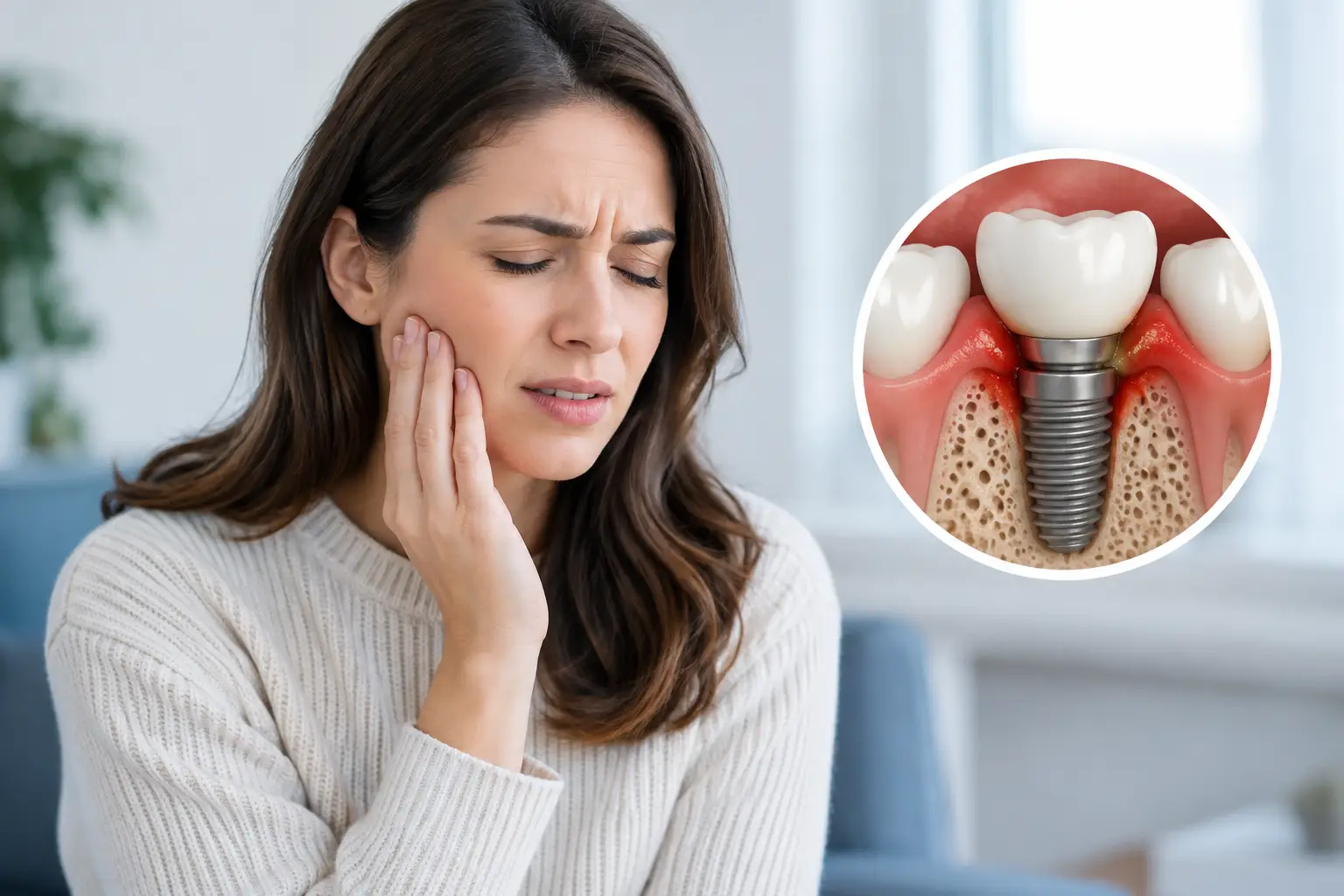
A little swelling after implant surgery is expected. A bad taste that keeps returning, bleeding around the implant weeks later, or pain that gets worse rather than better is not. Implant infection signs are easy to dismiss when you have flown home after treatment in Turkey, particularly if the implant itself does not hurt. That is exactly why some cases become serious.
I have seen too many patients treat an implant like a permanent replacement that needs no attention. It is not. An implant cannot get decay, but the gum and bone holding it in place can become infected. Left alone, that infection can lead to bone loss and, eventually, implant failure.
What an implant infection actually means
Infection around a dental implant usually falls into one of two categories. Peri-implant mucositis affects the soft gum tissue. It is the earlier, more reversible stage, broadly comparable to gingivitis around a natural tooth. The gums may look red, puffy and bleed when brushed or probed, but the supporting bone has not yet been lost.
Peri-implantitis is the more serious condition. Bacteria have triggered inflammation that is damaging the bone around the implant. Once bone loss is involved, the aim is no longer simply to settle sore gums. Your dentist needs to control the infection and preserve as much support as possible.
The distinction matters because a clinic that tells you to “just use mouthwash” without examining the implant or taking an X-ray may be missing the real problem. Mouthwash can improve breath. It cannot rebuild lost bone.
Implant infection signs to watch for
The clearest early sign is bleeding from the gum around the implant, particularly when brushing, flossing or using interdental brushes. Healthy implant gums should not routinely bleed. One isolated spot after accidentally catching the gum is different from repeated bleeding over several days.
Other warning signs include swelling, redness, tenderness, a persistent unpleasant taste or smell, and pus coming from the gum line. You may notice the gum has pulled back, exposing more of the implant crown or a grey metal edge. Some people describe pressure rather than sharp pain, especially when biting.
Later signs can be more worrying: looseness of the implant, a change in how the crown bites, visible recession, or pain when chewing. A properly integrated implant should not move. If the implant itself feels mobile, contact a dentist promptly. Do not keep testing it with your fingers. That can aggravate already compromised tissue.
There are also symptoms that need urgent assessment rather than a wait-and-see approach. These include facial swelling that is increasing, fever, difficulty swallowing or breathing, spreading redness, severe pain, or a large amount of pus. Seek urgent dental or medical care locally if this happens. Do not wait for your return flight or for a clinic abroad to reply on WhatsApp.
What is normal after implant surgery?
The first week can be confusing because normal healing and trouble can overlap. Mild to moderate swelling, bruising, tenderness and light bleeding or oozing during the first 24 to 48 hours are common. Symptoms should generally peak around day two or three, then steadily improve.
Pain that becomes stronger after initial improvement is a red flag. So is swelling that appears or worsens after several days, rather than settling. A slight metallic taste immediately after surgery can come from blood. A foul taste that persists, especially alongside discharge or swelling, needs checking.
If you had bone grafting, sinus work or several implants placed at once, recovery may be slower. That does not mean you should accept worsening symptoms. The direction of travel matters more than a rigid day-by-day rule: healing gets gradually better, while infection often gets progressively worse.
Why dental tourists need a clearer follow-up plan
For patients travelling to Turkey, the critical issue is not that implants are placed abroad. Good implant dentistry is available in Turkey, and poor implant dentistry exists everywhere. The weak point is often aftercare.
Many implant journeys involve two stages. The implant is placed during the first trip, then left to heal for roughly three to six months before the final crown is fitted. A reliable clinic should tell you exactly who will review the surgical site after you return home, what records you will receive, and how to reach the surgical team if symptoms arise.
I would be cautious of any provider selling implant treatment as a quick holiday makeover while glossing over healing time. Immediate teeth are possible in selected cases, but they are not a shortcut around biology. Smoking, untreated gum disease, poorly controlled diabetes, teeth grinding and inadequate bone can all raise the risk of complications.
Before leaving Turkey, ask for your implant passport or treatment record. At minimum, it should identify the implant brand, diameter, length, location, date placed and any grafting material used. This is not paperwork for paperwork’s sake. If a dentist at home needs to assess an infection or replace a component, unidentified implants make the job harder and sometimes more expensive.
How dentists check whether infection is present
A proper assessment is more than looking at the gum. The dentist will ask when the symptoms began, examine the tissues, check for bleeding and pus, assess how your bite meets, and test whether the implant or just the crown is moving. An X-ray is usually needed to compare the bone level around the implant with earlier records.
This is worth stressing: a loose crown is not always a loose implant. Screws can loosen, and crowns can fracture or become uncemented. Those problems need treatment but are not automatically infection. Conversely, an implant can have significant bone loss with very little discomfort. That is why routine reviews and X-rays matter.
Treatment depends on how early you act
For early mucositis, professional cleaning around the implant, better home cleaning and removing plaque-retaining factors may be enough. A poorly designed crown that blocks access for interdental brushes, excess cement trapped under the gum, or a bulky bridge can keep the area inflamed. Treating bacteria without fixing the cause is a temporary patch.
Peri-implantitis is more complicated. Treatment may involve deep decontamination, cleaning the implant surface, adjusting the restoration, antimicrobial treatment in selected cases and, where bone loss is advanced, surgical access or regenerative procedures. Antibiotics alone are rarely the answer. They may temporarily suppress symptoms but cannot remove hardened deposits or correct a restoration that is impossible to clean.
Sometimes an implant is too compromised to save. Removal sounds alarming, but retaining an infected implant until it destroys more bone can make future replacement harder. A dentist should explain the X-ray findings, options, likely prognosis and costs honestly. Anyone guaranteeing that an infected implant can always be saved is overselling it.
Preventing problems after the implant has healed
The best prevention is boring, consistent maintenance. Brush twice daily with a soft brush, clean between teeth using the tools your dentist recommends, and attend hygiene reviews. The right interdental brush size matters. A brush that is too small barely cleans; one forced through can injure the gum.
If you smoke or vape nicotine, stopping is one of the most useful decisions you can make for implant health. I would also take teeth grinding seriously. A night guard will not prevent bacterial infection, but excessive force can worsen mechanical complications and make an already stressed implant harder to manage.
Be particularly vigilant if you have had gum disease before. A history of periodontitis is not an automatic reason to avoid implants, but it does mean maintenance is non-negotiable. The same applies to diabetes: good control improves healing and reduces risk; poor control changes the equation.
Finally, do not judge a clinic by the number of implant brands on its Instagram page. Judge it by diagnosis, records, the quality of the restorative plan and whether it has a credible aftercare process. If you spot implant infection signs, arrange an assessment early. Getting a professional opinion while the problem is still limited is usually the cheapest, least invasive decision you can make.