
A cheap treatment plan can become less cheap at the payment desk. I have seen patients focus so hard on the quoted price for implants or veneers that they miss the currency, card fees and payment timing. Turkey payment methods are not just a travel detail – they affect how much you pay, what protection you have if plans change, and whether a clinic’s financial practices should concern you.
For most international dental patients, paying a modest card deposit and settling the balance by card is the cleanest option. It is not always the cheapest route, but it creates a transaction record and may give you some protection through your card provider. The right choice still depends on your treatment value, your bank’s foreign transaction fees and the clinic’s payment policy.
Turkey payment methods: the short answer
International debit and credit cards, cash, and bank transfers are all widely used by Turkish dental clinics. Visa and Mastercard are the most commonly accepted foreign cards. American Express acceptance is far less reliable, so do not assume it will work simply because your hotel accepts it.
For a straightforward treatment worth a few thousand pounds, I would normally use a credit card for the deposit and as much of the final payment as the clinic allows without adding an unreasonable fee. If a clinic gives a genuine discount for bank transfer or cash, compare that saving with the protection you are giving up.
A clinic that insists on cash only, refuses to issue an invoice, or wants money sent to an individual’s personal account is a red flag. That does not automatically mean fraud, but it is not a standard I would accept for irreversible dental work.
Paying by card: usually the sensible default
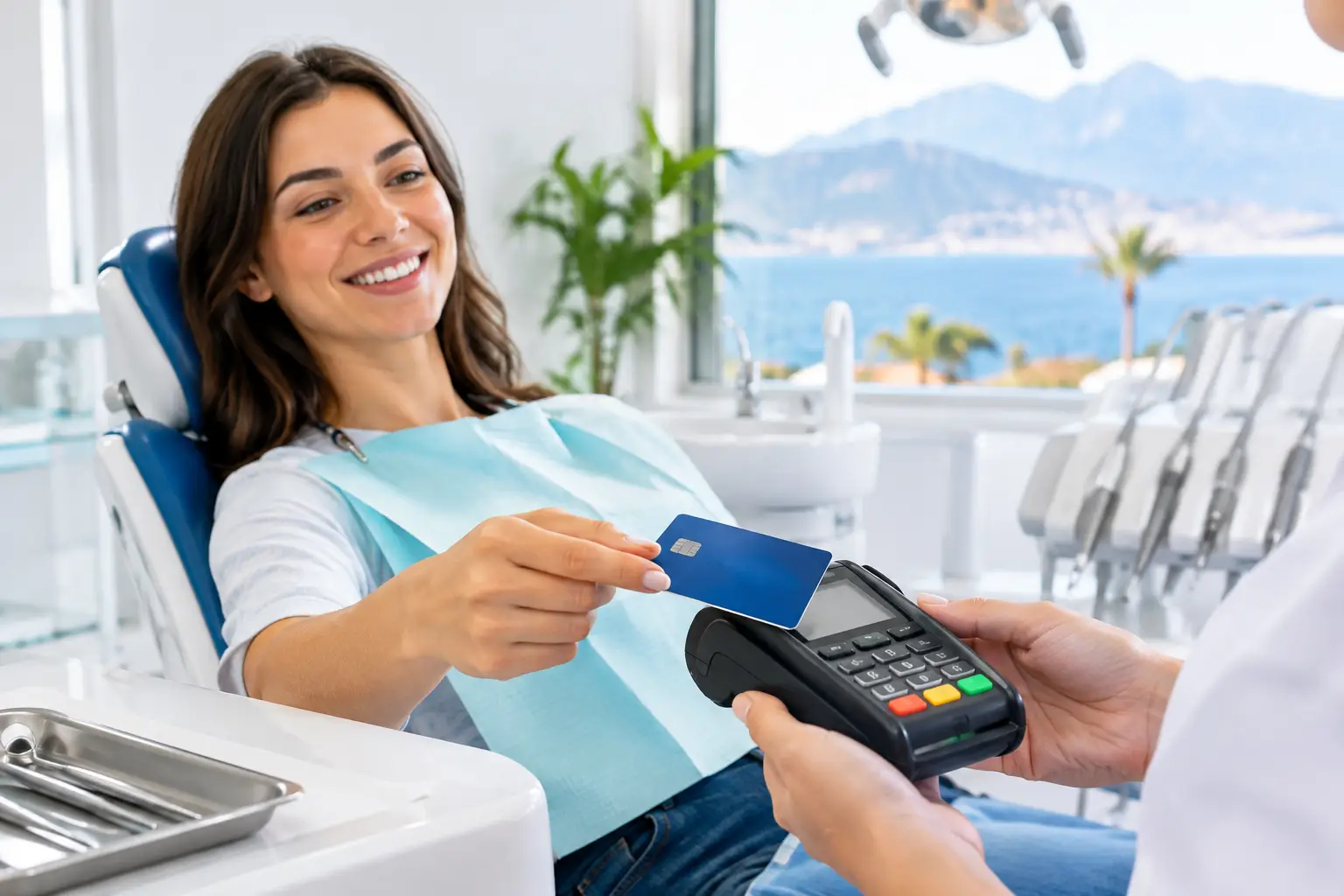
Card payments are convenient, familiar and easier to document. Most established clinics in Istanbul, Antalya and Izmir have card terminals and regularly take payments from British patients. Tell your bank you are travelling before you leave, particularly if you expect to make a large payment. Anti-fraud systems can block an unfamiliar overseas transaction at exactly the wrong moment.
The main issue is cost. Your bank may charge a foreign currency transaction fee, commonly around 2.75% to 3%. On a £5,000 treatment bill, that is meaningful money. Some clinics also add a card-processing charge, particularly for larger balances. Ask about this before you commit, not while you are in the chair with treatment already underway.
There is also the question of currency conversion. If the card terminal offers to charge you in pounds rather than Turkish lira, euros or dollars, decline it in most cases. This is dynamic currency conversion, and the exchange rate is often poor. Choose the local transaction currency and let your card provider convert it, unless you have checked the offered rate and it is genuinely better.
Credit cards can offer more useful protection than debit cards, although the rules depend on the card issuer, how the treatment is contracted and where the merchant is based. Do not treat a card payment as insurance against a bad clinical outcome. A chargeback is not a substitute for proper clinic research, written treatment planning and knowing what you are consenting to.
Bank transfer: cheaper, but less forgiving
Bank transfer is common for higher-value dental work, especially implant cases. A clinic may offer a discount because it avoids card-processing costs. That can be legitimate. It can also be worth considering when the saving is substantial and the provider has been properly vetted.
But bank transfers are difficult to reverse. Once the money arrives, your bank has limited ability to retrieve it if there is a dispute. I would never transfer the full treatment cost weeks before travelling just because a clinic promises a better deal. A reasonable deposit to secure dates is one thing. Paying the entire amount before you have met the dentist, reviewed the final plan and had any necessary scans is another.
Check the account details carefully. The beneficiary should be the registered clinic company or a clearly identified healthcare business, not a coordinator, dentist or sales agent acting privately. Ask for a pro forma invoice that states the clinic name, patient name, planned procedures, total price, deposit amount and balance due. Keep the confirmation of transfer with it.
Transfer fees can be surprisingly messy. Your bank may charge to send the payment, intermediary banks may deduct a fee, and the clinic may receive less than expected. Ask whether the quoted price is the amount you send or the amount the clinic must receive. For larger payments, compare your bank’s exchange rate with a specialist currency provider, but only use a reputable, regulated provider and make sure the reference identifies you correctly.
Cash: useful as a backup, not a strategy
Cash remains popular in Turkey, and some clinics offer their best headline price for it. It avoids card charges and gives you control over the exchange rate if you have converted money well. For small balances, local transport and incidental spending, it is practical.
For a multi-thousand-pound dental bill, I would be cautious. Carrying a large amount of cash creates obvious security risks, and it leaves you with weaker evidence if the amount later becomes disputed. If you do pay cash, count it with a staff member, obtain a dated receipt immediately and make sure the receipt identifies the clinic and the procedure. A handwritten note saying “paid” is not enough.
You must also check cash declaration rules for both the country you are leaving and Turkey before travelling with a large amount. These rules can change, and failing to declare funds when required can cause delays or worse. Do not split cash between travelling companions in an attempt to dodge reporting requirements.
When should you pay?
A sensible payment schedule follows clinical milestones. A deposit may be needed to reserve hotel arrangements, laboratory work or surgery time. For routine veneer cases, a modest deposit followed by payment after your in-person consultation is reasonable. For implant treatment, I prefer a plan that separates surgical and restorative stages where the clinical timeline genuinely supports it.
The key word is genuinely. Some clinics advertise a low package price, take a large advance payment and then reveal that bone grafting, temporary teeth, sedation, extractions or upgraded materials cost extra. Before paying, ask what happens if the dentist finds you need a different plan after examination. Will the deposit be refunded, credited, or lost? Get the answer in writing.
I would be especially wary of a clinic demanding full payment before taking diagnostic scans or before the treating dentist has examined you. A sales coordinator cannot clinically guarantee that you are suitable for six implants or 20 crowns from a WhatsApp photograph.
Fees and paperwork worth checking
Ask one direct question: “What is the total amount I will pay, in which currency, using my chosen payment method?” Then ask whether that amount includes every clinical and laboratory item in the written plan.
A proper invoice should show the clinic’s legal details, date, treatment description, price, currency, payments received and outstanding balance. Request itemisation where possible. It may be less glamorous than choosing tooth shade, but it is far more useful if you need to query a charge, make an insurance claim or seek follow-up care at home.
Be alert to pressure tactics. A “today only” cash discount, a request to cancel a card transaction and pay another way, or a suggestion that an invoice will cost extra are all poor signs. Legitimate clinics can explain their pricing without making the payment process feel secretive.
My preferred approach for UK patients
For most patients, I would pay a limited deposit by credit card, take written confirmation of the full plan, and pay the outstanding amount after the consultation confirms the treatment is appropriate. If the clinic charges a card fee, calculate the pound value rather than reacting to the percentage. A 3% fee may be worth paying for the record and reassurance on a £2,000 case; on a much larger case, a verified bank transfer may be more rational.
Do not choose a clinic because it is £150 cheaper in cash. Choose it because the dentist, plan, materials, laboratory standards and aftercare make sense. Payment should support a well-researched decision, not compensate for a weak one.