
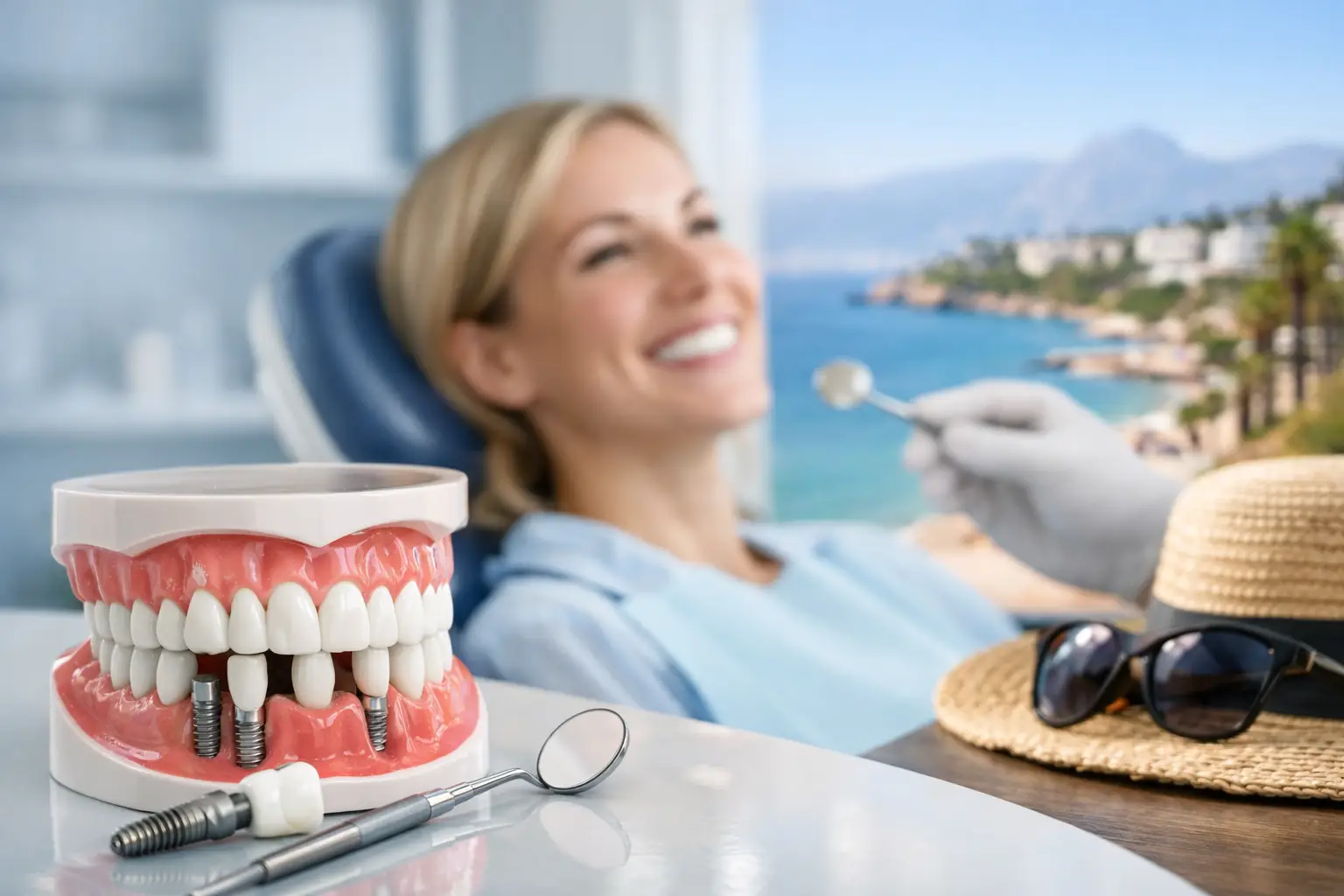
If you’re researching full mouth dental implants Turkey, you’re probably seeing the same promises everywhere – fixed teeth in a few days, luxury transfers, huge discounts, perfect smiles. Some of that is real. A lot of it is marketing. What matters is whether you’re actually a suitable candidate, which implant method is being proposed, and whether the clinic is planning a treatment that will still make sense five or ten years from now.
This is one of the most expensive and irreversible treatments in dentistry. I wouldn’t treat it like a cosmetic purchase, and I definitely wouldn’t choose a clinic because the Instagram videos look polished.
What full mouth dental implants in Turkey usually means
In practice, “full mouth” can mean a few different things. Sometimes it means replacing all teeth in the upper and lower jaw with fixed implant-supported bridges. Sometimes it means one full arch only. And sometimes clinics use the phrase loosely when they are really selling a package based on multiple implants plus crowns.
That difference matters, because the price, healing time and long-term maintenance are not the same.
Most patients looking at full mouth treatment in Turkey fall into one of three groups. They already have missing teeth and unstable dentures, they have severe gum disease or failing dental work, or they have been told at home that saving the remaining teeth may not be realistic. Turkey can be a good option for these cases, but only when the treatment plan is built around bone quality, bite function and medical history – not around a headline price.
The main treatment options
All-on-4 and All-on-6
These are the most common solutions for full arch replacement. A full bridge is supported by four or six implants, depending on the case. All-on-4 is often marketed more heavily because it can reduce cost and may avoid bone grafting in some patients by using angled posterior implants.
That said, fewer implants is not automatically better. If a clinic recommends All-on-4 for everyone, I would question it. In stronger bone with enough volume, six implants often gives better load distribution. It is not a magic number, but it can be the more sensible long-term plan.
Individual implants for many missing teeth
Some patients assume full mouth treatment means replacing each tooth with its own implant. That is rarely necessary and often not ideal. It becomes more invasive, more expensive and harder to maintain. In most edentulous or near-edentulous cases, full-arch bridges on fewer implants are the more practical route.
Immediate load versus delayed load
This is one of the biggest points of confusion. Immediate load means a fixed temporary bridge is placed shortly after implant surgery, sometimes on the same day. Delayed load means you heal first, then return later for the final bridge.
Immediate teeth can be perfectly reasonable in the right case. They are not the same as final teeth. If a clinic blurs that distinction, that is a red flag. Good clinics explain clearly that the first set is usually provisional and that the final bridge comes after healing and review.
How much full mouth dental implants Turkey really costs
For most international patients, a realistic range for upper and lower full arch implant treatment in Turkey is roughly £4,500 to £10,500 per jaw, depending on the clinic, materials, implant brand and complexity. For both jaws together, many cases land somewhere between £9,000 and £20,000.
If you are quoted far below that, I would be cautious. Very low prices often mean lower-cost implant systems, limited diagnostics, rushed surgery, acrylic provisionals presented as if they were premium finals, or treatment plans built to win deposits rather than deliver durable outcomes.
At the top end, some clinics are simply overpriced. Higher price does not guarantee better planning or better prosthetics. I’ve seen expensive clinics sell weak treatment plans under a luxury brand image.
You also need to check what is actually included. Ask whether the quote covers CBCT imaging, extractions, temporary teeth, final bridges, sedation, bone grafting if needed, hotel, transfers and follow-up visits. Many patients compare packages that are not like for like.
Why Turkey is cheaper – and where patients get misled
Turkey is usually cheaper than the UK or Ireland because clinic overheads, staff costs and laboratory costs are lower. That part is straightforward. The problem is that some marketers act as if lower price alone makes the decision obvious.
It doesn’t. Full arch implants are technique-sensitive. The surgery matters, but so does prosthetic planning. A badly designed bridge can create speech problems, hygiene problems and bite issues even if the implants integrate well. This is why I pay close attention to who is planning the restorative side, not just who is placing the implants.
The best-value clinics in Turkey are not always the cheapest. They are the ones that combine proper diagnostics, clear communication and solid lab work without charging inflated foreigner rates.
Who is a good candidate?
Not everyone is. Good clinics say that early. If a sales coordinator tells you everyone qualifies after looking at two photos on WhatsApp, that is nonsense.
You may be a reasonable candidate if you have multiple failing teeth, significant tooth loss, denture problems or widespread damage that makes piecemeal treatment poor value. But candidacy depends on bone volume, gum health, smoking, diabetes control, grinding habits and your ability to maintain the work properly afterwards.
Heavy smokers are a higher-risk group. Patients with uncontrolled diabetes are a higher-risk group. Severe clenching can also complicate things. None of these automatically rules treatment out, but they should affect planning. If they don’t even come up in discussion, the clinic is not taking the case seriously enough.
Red flags I would not ignore
Turkey has excellent implant clinics. It also has fast-turnover clinics built around sales scripts. You need to tell the difference.
Be wary if the clinic refuses to name the implant brand, pushes extraction of every remaining tooth without a proper rationale, guarantees suitability before a CBCT scan, or offers a huge discount if you book immediately. I also don’t like clinics that show endless smile makeovers but almost no evidence of long-term implant follow-up.
Another issue is who you’re actually dealing with. Some operations are basically marketing companies feeding cases into whichever clinic has capacity. That creates a gap between what was promised online and what the dentist is prepared to do once you arrive.
A proper clinic should be able to explain why they recommend four implants rather than six, acrylic rather than zirconia, immediate loading rather than staged treatment. If the answer is just “this is our package”, keep looking.
What the treatment timeline usually looks like
For full mouth dental implants in Turkey, most patients need at least two trips unless the case is highly specific and uses a long provisional phase. On the first trip, diagnostics are reviewed, extractions are completed if necessary, implants are placed, and temporary fixed teeth may be fitted.
Healing usually takes several months. During that period, the implants integrate with the bone and the soft tissue settles. The second trip is for impressions or scans, bite records, try-ins where needed, and fitting of the final prosthesis.
Some clinics advertise impossibly short timelines because quick treatment sells. Biology does not care about marketing. If your bone quality is poor or grafting is involved, the timeline can extend. That is normal.
Material choices matter more than brochures suggest
For final full-arch bridges, the common options are acrylic over a metal framework, composite-based solutions, or zirconia. There isn’t one universal best material.
Acrylic is more affordable and easier to repair, but it wears faster. Zirconia is stronger and often feels more premium, but it is more expensive and can be less forgiving in certain bite situations. The right choice depends on bite force, opposing dentition, budget and whether this is your first full-arch case or a remake.
If a clinic pushes zirconia as the only serious option, I would want to know why. If they only offer acrylic because it’s cheaper for them, I would also want to know why. Good treatment planning involves trade-offs, not slogans.
How to shortlist clinics sensibly
I would start with diagnostics and transparency, not social media. Ask to see what records they require before confirming a plan. Ask which implant systems they use. Ask who makes the final prosthesis and whether there is an in-house lab or an external one. Ask how complications are handled if something fails after you return home.
Read reviews carefully, but don’t stop there. Reviews tend to over-represent first impressions. Full arch implant work should be judged on planning quality and medium-term outcomes, not whether the driver was friendly and the hotel had a sea view.
If you’re comparing several providers, write down the proposed number of implants, loading protocol, provisional material, final material, total trip count and exclusions. That alone will make weak offers easier to spot.
A final thought: if a clinic makes full mouth implants sound easy, cheap and the same for everyone, they’re selling, not advising. The right clinic should make you feel informed, not rushed.