
If a clinic has quoted you for all on 6 Turkey treatment after a five-minute WhatsApp exchange, slow down. This is one of the biggest dental decisions you can make, and a lot of clinics sell it far too casually. Six implants supporting a full arch can be an excellent option, but only when the diagnosis is sound, the planning is thorough, and the price actually reflects what you are getting.
I have seen all-on-6 cases in Turkey that were genuinely well planned and fairly priced. I have also seen rushed treatment sold to people who were never given proper alternatives, never told the risks, and never shown what would happen if something failed two years later. That is the difference that matters.
What all on 6 in Turkey actually means
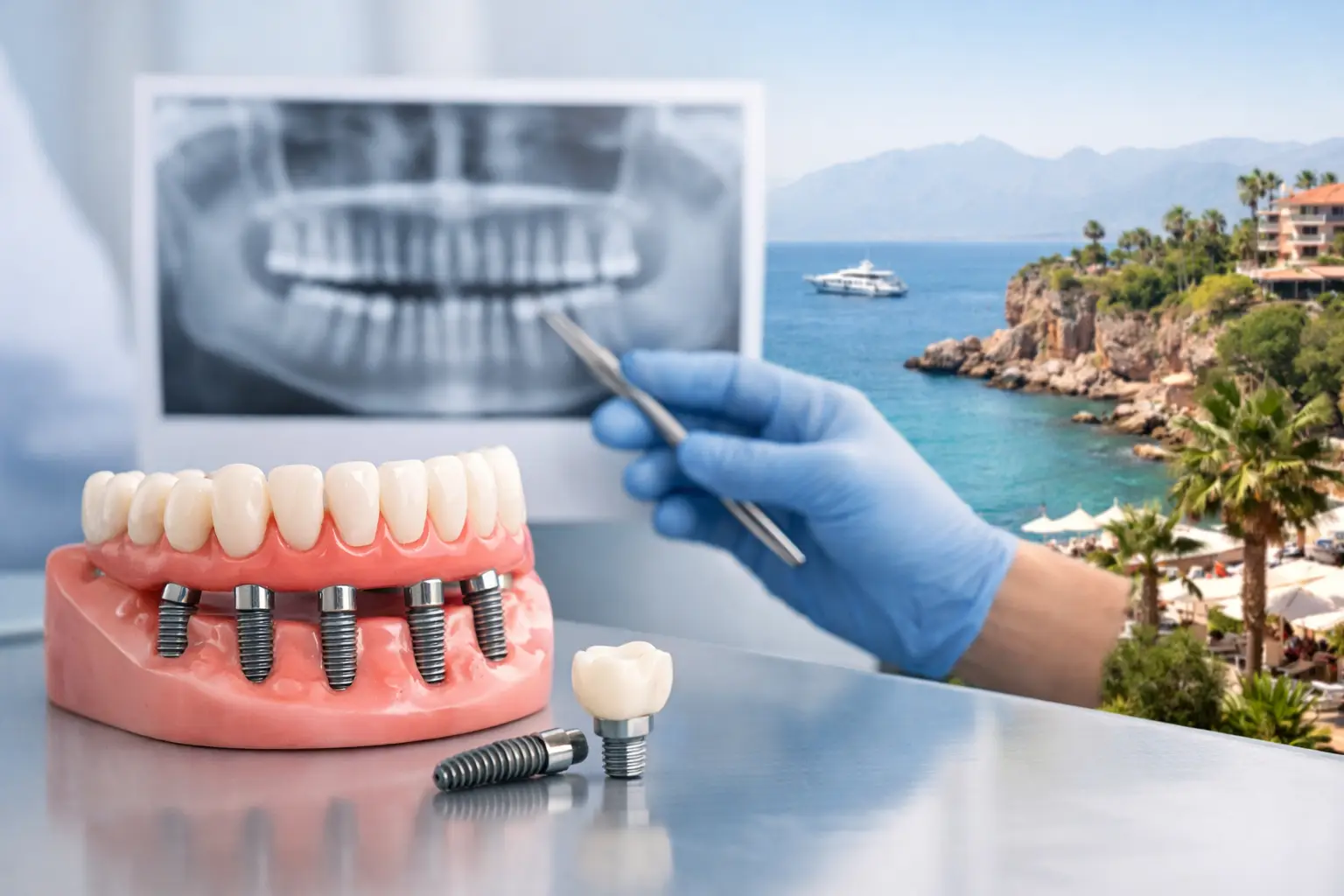
All on 6 means a full arch of teeth is supported by six dental implants. Usually that means either the upper jaw, the lower jaw, or both. The implants are placed into the jawbone and connected to a fixed bridge, rather than a removable denture.
The idea is simple enough. By using six implants instead of one implant per tooth, you can replace a whole row of missing or failing teeth with a stable fixed solution. In practice, though, there is a lot of variation. The implant brand, the quality of the bridge, whether you get a temporary prosthesis, whether bone grafting is needed, and how the bite is designed all affect the outcome.
This is where patients get caught out. Two clinics can both advertise all on 6, but one may be offering a premium implant system, digital planning, a reinforced temporary bridge and a proper final prosthesis. Another may be offering a bare-bones package with limited diagnostics and lower-grade materials. Same headline treatment, very different standard.
Why people look at all on 6 Turkey options
The obvious reason is cost. In the UK, full-arch implant treatment is often priced beyond what many patients can realistically pay. Turkey can look dramatically cheaper, sometimes by half or more. For the right patient, that price gap is real.
But cost is not the only reason. Turkey also has a high concentration of clinics doing full-mouth work every week, which means some teams are very experienced. In busy implant clinics, surgeons and prosthodontic teams may handle far more full-arch cases than a general private dentist in Britain. Volume alone does not guarantee quality, but it can matter.
The problem is that popularity has created a market full of noise. Some clinics are serious surgical centres. Others are marketing companies wearing a dental badge. If you are choosing based on glossy videos and airport transfers, you are focusing on the wrong things.
How much does all on 6 Turkey cost?
For one arch, I generally see all on 6 in Turkey priced at roughly £3,500 to £7,500. For both arches, a common range is around £7,000 to £15,000. Premium clinics can go higher, especially if they use top implant brands, zirconia finals, sedation, advanced imaging and more complex surgery.
If you see a price far below that, ask why. Sometimes it is a genuine promotion. More often, it means the quote excludes important parts of treatment, uses a budget implant system, or assumes a very basic prosthesis. It can also mean the clinic is desperate for volume, which is not a reassuring sign in implant dentistry.
The total should be clear on a few basic points. Does the quote include CT scanning, consultations, extractions, temporary teeth, the final bridge, medication, follow-up and any need for additional nights in Turkey? If it does not, the package price is not the real price.
Who is a good candidate for all on 6?
This treatment tends to suit patients with multiple failing teeth, severe tooth loss, or long-term denture problems who want a fixed full-arch solution. It can work very well when there is enough bone volume, gum disease has been addressed, and the patient understands the maintenance involved.
It is not automatically the right answer for every worn or damaged mouth. I would be cautious if a clinic recommends all on 6 without discussing whether some natural teeth can be saved. Full-arch extraction is irreversible. Once healthy or restorable teeth are gone, they are gone.
I would also be cautious if you smoke heavily, have uncontrolled diabetes, clench badly, or have untreated periodontal disease. None of those necessarily rules you out, but they absolutely affect risk. Any clinic pretending otherwise is selling, not advising.
The big trade-offs nobody should gloss over
The strongest argument for all on 6 is stability. Compared with dentures, a fixed bridge can feel more secure, more functional and more natural. It can also distribute force better than reduced-support options in some cases.
The trade-off is complexity. More implants can mean better support, but it also means more surgery, more planning, higher cost and more points of failure if the case is poorly managed. In some patients, all on 4 may be enough. In others, six implants offer better load distribution and long-term confidence. It depends on bone quality, jaw shape, bite forces and prosthetic design.
This is exactly why I dislike clinics that push one-size-fits-all packages. Good implant planning is case-specific. If everyone gets the same answer before the clinic has seen proper scans, that is a red flag.
Red flags when comparing all on 6 in Turkey
A clinic that guarantees you are suitable before a CT scan is guessing. A clinic that refuses to name the implant brand is hiding something. A clinic that cannot explain who designs the final prosthesis, who places the implants, and what happens if an implant fails is not giving you enough information.
I also pay attention to timelines. Immediate teeth on the same day can be legitimate, but not every patient should be loaded immediately. If a clinic promises fixed permanent teeth in a few days for everyone, I would question whether they are simplifying the biology to make the sale easier.
Another issue is prosthetic quality. Patients often focus on the surgery and forget the bridge. That is a mistake. A poorly designed full-arch bridge can create speech issues, hygiene problems, fracture risk and an unnatural look. The restorative side is not a minor detail. It is half the treatment.
What the treatment journey usually looks like
Most patients will first send photos, x-rays or a CT scan if they already have one. A provisional assessment can be made remotely, but it should stay provisional until proper examination in clinic. Anything more certain than that is marketing theatre.
If you go ahead, the first trip may involve scans, planning, extractions if needed, implant placement and fitting of a temporary fixed bridge in suitable cases. Healing then takes several months. During that stage, osseointegration happens, which means the implants bond with the bone.
The final bridge is usually fitted after healing, often on a second trip. Some clinics try to compress everything into one visit. Sometimes that is clinically reasonable. Often it is driven more by travel convenience than by best practice. Those are not always the same thing.
How to judge value, not just price
The cheapest all on 6 Turkey quote is rarely the best value. I would rather pay more for a clinic with a clear surgical plan, a recognised implant system, a prosthodontist involved in the case, and realistic aftercare policies than save £1,500 on a package held together by sales messaging.
Ask blunt questions. What implant brand is being used? What material is the temporary made from? What is the final bridge made from? How many full-arch cases does the surgeon do each month? What happens if one implant does not integrate? Is there a written warranty, and what does it actually exclude?
You should also ask who will be responsible once you are back in the UK or Ireland. Turkish treatment can be good value, but geography still matters when complications arise. If a clinic has no sensible follow-up system and simply tells you to fly back if anything goes wrong, factor that into the real cost.
Is all on 6 Turkey worth it?
For the right patient, yes. If you have significant tooth loss or a failing dentition, and you choose a clinic that treats diagnosis and prosthetics seriously, Turkey can offer strong value. You may get experienced teams and a much lower overall cost than at home.
But I would not call it worth it if the decision is being driven by a flashy package, a countdown discount or a salesperson calling themselves your treatment adviser. Full-arch implant treatment should feel carefully planned, not hurried.
If you are researching all on 6 Turkey options, look past the before-and-after photos and ask harder questions than the clinic expects. The clinics worth trusting usually answer them clearly. The ones worth avoiding tend to get vague very quickly.
Your best decision will probably come from the quote that makes the most clinical sense, not the one that shouts the loudest.