
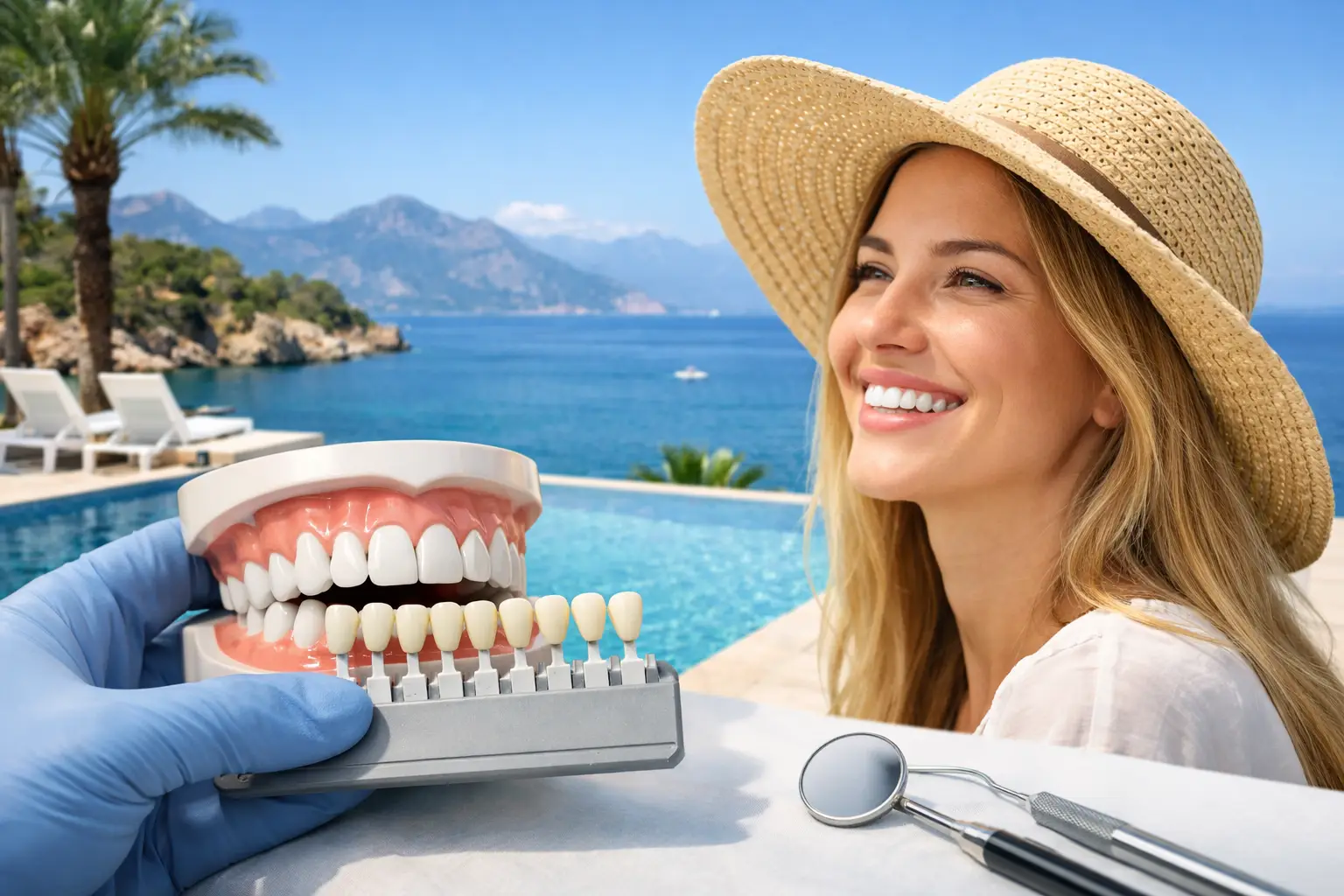
If you are looking for a veneer treatment turkey guide, you are probably already seeing the same pattern: dramatic before-and-after photos, prices that look suspiciously low, and clinics promising a “Hollywood smile” in three days. I have spent long enough reviewing Turkish dental providers to tell you this plainly – veneers in Turkey can be excellent value, but they are also one of the easiest treatments to oversell badly.
The problem is not Turkey itself. The problem is that veneers are cosmetic, subjective, and very easy to market to anxious patients who want a fast fix. Good veneer work is careful, conservative and planned around your face, bite and natural tooth structure. Bad veneer work is bulk whitening plus aggressive tooth shaving sold as luxury dentistry.
What this veneer treatment Turkey guide actually covers
I am not going to pretend veneers are right for everyone. For some patients, they are a smart cosmetic option. For others, whitening, edge bonding or orthodontics would preserve more healthy tooth tissue and cost less overall.
Veneers are thin shells bonded to the front surface of teeth, usually the upper front teeth that show when you smile. They are used to change colour, shape, minor alignment issues and worn edges. In Turkey, the main options are composite veneers and porcelain veneers, with porcelain usually split into e.max and zirconia-backed restorations.
If a clinic tries to push veneers for severe crowding, active gum disease, untreated grinding, or generally unhealthy teeth, I would treat that as a warning sign. Veneers can improve appearance. They do not solve every dental problem.
Veneer types in Turkey – and which one suits which patient
Composite veneers are the cheaper route. They can be done directly in the chair, often in one visit, and they require less lab work. The upside is lower cost and easier repairs. The downside is that they stain more easily, usually do not last as long as porcelain, and can look less natural if the dentist is not particularly skilled.
Porcelain veneers are what most international patients mean when they enquire. These are lab-made and tend to give better translucency, polish and long-term appearance. E.max is the material I see recommended most often for front teeth because it combines aesthetics with decent strength. Zirconia can be useful in some cases, but I would be cautious if a clinic pushes zirconia veneers as the default cosmetic option for every patient. They can look too opaque if used badly.
The key point is simple: the best material depends on your bite, habits, tooth shade, expectations and budget. Any clinic that says one material is always best is selling, not advising.
How much veneers cost in Turkey
This is where patients get drawn in, and also where plenty get misled.
A realistic starting point for composite veneers in Turkey is often around £80 to £180 per tooth. Porcelain veneers are more commonly in the region of £180 to £350 per tooth, depending on clinic, city, dentist profile and material. Premium clinics in Istanbul can charge more, especially if they are using a recognised lab and a prosthodontist-led planning process.
If you see prices far below that, ask what is actually included. Some deals strip out essentials like X-rays, temporary restorations, consultations, bite checks or follow-up adjustments. Others quote per tooth but quietly assume you will need 16 or 20 teeth treated. That is how a cheap package becomes an expensive one.
I would also question any clinic recommending veneers on every visible tooth without a strong aesthetic reason. A lot of patients do not need 20 veneers. They may need 6, 8 or 10 on the upper arch, sometimes fewer if the plan is conservative.
Why cheap veneer packages can go wrong
The biggest risk is over-preparation. Some clinics still market crowns as veneers, because many patients do not know the difference until their teeth have been heavily reduced. A true veneer is usually more conservative than a crown. If a clinic is shaving teeth down aggressively across the full circumference for a cosmetic case, that is not a minor detail. That changes your long-term dental future.
The second issue is poor smile design. Whitening teeth to one bright shade and making them all the same length is not smile design. It is cookie-cutter dentistry. Good veneers should fit your face, lip line, age and natural proportions. Perfectly even, ultra-white blocks might look impressive on social media for five seconds. In real life, they often look fake.
The third issue is speed. Yes, veneers can be completed quickly in Turkey. That does not mean they should be rushed. If there is no proper planning stage, no mock-up, no discussion of shape and no bite assessment, you are taking a gamble.
Choosing a clinic for veneers in Turkey
This is the part most websites soften. I will not.
A clinic is not good because it has a driver, a rooftop terrace and 200,000 Instagram followers. For veneer cases, I care about the dentist doing the preparation, the prosthetic planning, the lab standards and whether the clinic shows restraint.
In my view, the best clinics ask awkward questions before accepting you. They want recent X-rays and close-up photos. They ask if you grind your teeth. They tell you when veneers are not appropriate. They explain how many teeth actually need treatment rather than defaulting to a full smile package.
Red flags are easy to spot once you know what to look for. Be careful if the clinic guarantees a set shade before seeing your teeth in person, avoids naming the dentist, refuses to explain preparation levels, or uses the words veneers and crowns interchangeably. I would also be wary of any place that treats cosmetic dentistry like a holiday extra rather than a medical procedure.
The treatment timeline and what to expect on the ground
Most veneer patients in Turkey stay around five to seven days, though some clinics ask for slightly longer depending on complexity. On the first appointment, expect scans, X-rays, photos and a full examination. If the clinic does not examine your gums, existing fillings and bite before talking aesthetics, that is poor practice.
Preparation usually happens next, though in very conservative cases it can be minimal. Impressions or digital scans are taken, temporary veneers may be fitted, and then the lab produces the final restorations. The fit appointment should include checking margins, bite, phonetics and overall appearance before final bonding.
Do not be embarrassed to ask for changes if the shape looks wrong. This is exactly the stage to speak up. Once veneers are bonded, adjustments become more limited.
Aftercare, lifespan and maintenance
Porcelain veneers can last 10 to 15 years, sometimes longer, if the work is good and you look after them. Composite usually has a shorter lifespan, often around 4 to 7 years before more noticeable maintenance or replacement. That is the broad picture, not a guarantee.
Your habits matter. If you grind your teeth, bite your nails, open packaging with your incisors or neglect hygiene, veneers will not perform well. Some patients also need a night guard, particularly if there is a history of clenching.
This is another reason I dislike clinics that treat veneers as a one-off purchase. They are not. They are a long-term commitment. Once natural enamel is removed, even conservatively, you are usually signing up for future maintenance down the line.
Who should think twice before booking
If your main issue is simply tooth colour, start by asking whether professional whitening could get you close enough. If your teeth are healthy but slightly uneven, composite bonding may be the more sensible option. If your teeth are crooked, orthodontics may fix the actual problem rather than masking it.
I would also slow down if you are choosing veneers mainly because the package is cheap and available next month. Cosmetic dentistry done in a hurry is where people make poor decisions. The best Turkish clinics are not just trying to close a booking. They are trying to avoid giving you treatment you will regret.
At Dental Guide Turkey, that is the standard I think patients should expect from any provider worth considering.
If you take one thing from this guide, let it be this: veneers in Turkey can be a very good decision when the plan is conservative, the clinician is selective and the result is designed for your face rather than for a sales brochure. If a clinic makes everything sound easy, instant and perfect, I would keep looking.