
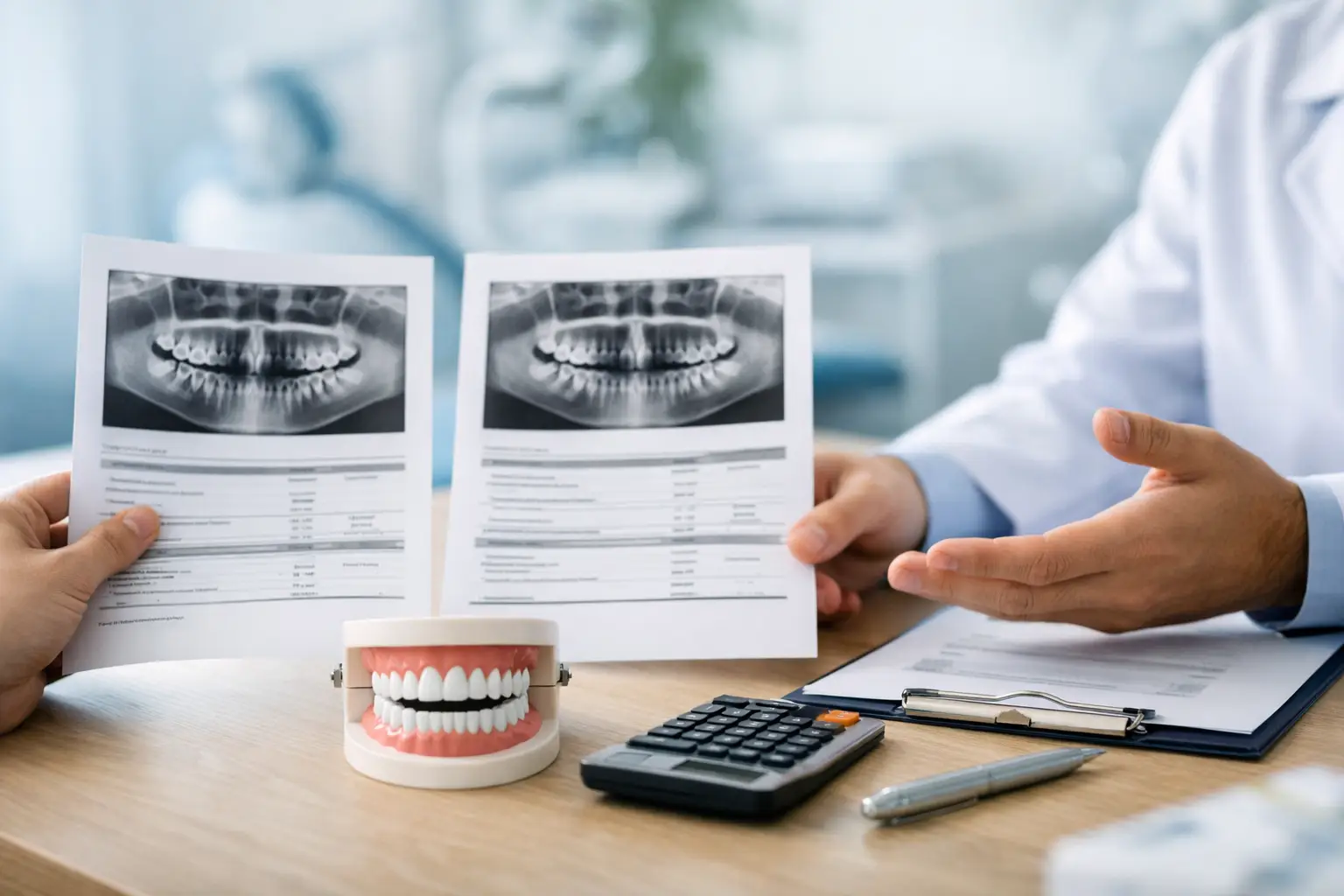
A quote says more about a clinic than most patients realise. When I look at two dental quotes for Turkey, I am not just comparing prices. I am looking at what has been included, what has been left vague, and whether the clinic is giving a realistic treatment plan or simply telling the patient what they want to hear. If you want to know how to compare dental quotes properly, start there.
The biggest mistake I see is patients treating quotes like airline fares. One says £3,200, another says £5,800, so the cheaper one must be the better deal. That logic falls apart very quickly in dentistry. A low quote can mean fewer procedures included, cheaper materials, less experienced clinicians, or a treatment plan built on guesswork because no proper diagnostics have been done.
How to compare dental quotes without being misled
First, compare like with like. That sounds obvious, but it is where most people go wrong. One clinic may quote for 20 zirconia crowns, while another has quoted for 20 E-max crowns. One may include root canal treatment, temporary restorations and airport transfers, while another has priced only the cosmetic work and left the rest for later. Those are not equivalent offers.
I always tell patients to strip each quote back into categories. Look at the diagnosis, the procedures proposed, the brand or material named, what is included in the package, and what is excluded. If a clinic sends one total figure with no breakdown, that is not a proper quote. It is a sales number.
A good dental quote should tell you exactly what teeth are being treated, what procedure is planned for each one, and what material or implant system will be used where relevant. If it does not, ask. If they still stay vague, I would be cautious.
Price matters, but structure matters more
A quote is only useful if it is detailed enough to survive scrutiny. I would rather see a slightly higher quote with a clear breakdown than a bargain figure wrapped in marketing language.
Here is what should be visible in a quote for treatment in Turkey. You should be able to identify consultation and imaging costs, tooth-by-tooth treatment, laboratory or material type if applicable, whether anaesthesia or sedation is charged separately, and whether accommodation, transfers or follow-up visits are included. Not every clinic packages things the same way, and that is fine. What is not fine is hiding core treatment costs behind a headline number.
This is especially important with larger cases such as implants, full-mouth crowns or veneers. A clinic may quote attractively for implants, then later add bone grafting, sinus lift, custom abutments, temporary teeth or final zirconia bridges as extras. Suddenly the cheap quote is no longer cheap.
The treatment plan itself may be the real issue
Sometimes the biggest difference between quotes is not the price. It is the diagnosis.
If one clinic says you need 24 crowns and another says you need 8 crowns, 4 implants and periodontal treatment first, that is not just a pricing issue. Someone is either taking a more aggressive approach, a more conservative one, or a careless one. This is why dental quotes should never be judged in isolation from the treatment philosophy behind them.
I have seen too many cases where overseas patients were advised to crown healthy teeth for the sake of speed and cosmetics. It may create a dramatic before-and-after photo, but that does not make it good dentistry. If a clinic is pushing a very invasive plan without explaining why alternatives are not suitable, I would question it.
Ask each clinic why they chose that treatment plan. Ask what the conservative option would be. Ask what happens if they find decay, gum disease or failed root canals when you arrive. Their answer will tell you a lot about whether the quote is based on proper clinical thinking or just conversion tactics.
How to compare dental quotes on materials and brands
Materials are one of the easiest places for clinics to make cheap work sound premium. Patients hear words like zirconium, porcelain or implant package and assume the quality is standardised. It is not.
If you are getting crowns or veneers, ask what material is being used and in which situations. Monolithic zirconia, layered zirconia and E-max do not behave the same way. One may be stronger, another more aesthetic, and the right choice depends on your bite, tooth position and expectations.
If you are getting implants, ask for the implant brand. A quote that just says implant is incomplete. Some clinics use globally recognised systems with solid long-term data. Others use lower-cost brands that may be perfectly acceptable in some cases, but replacement parts and aftercare can be harder to manage back home. That matters more than many patients think.
I would also ask where the lab work is made. In-house and outsourced labs can both be fine, but the clinic should be able to explain the process clearly. If they cannot even name the material brand or implant system, I would not trust them with a complex case.
Beware package language and cosmetic upselling
Turkey has plenty of very good clinics. It also has clinics that sell dental treatment like a beach holiday. That is where quote comparison becomes tricky.
Words like smile package, VIP treatment and Hollywood smile tell me almost nothing. They are marketing wrappers, not clinical information. A proper quote should not depend on buzzwords. It should explain the actual dentistry.
Be especially careful if every patient seems to get the same recommendation. If everyone is being sold 20 veneers or 28 crowns regardless of age, bite, gum health or existing tooth structure, that is a red flag. Good clinics do not force every mouth into the same template.
A low-cost package can still be decent value, but only if the clinical part holds up. If most of the sales pitch is about hotel nights and airport pickups, they may be compensating for weak dentistry.
Hidden costs I would ask about before booking
This is where many patients get caught out. The initial quote may be technically accurate, but incomplete in all the ways that matter once you are on the ground.
Ask whether the quote can change after your in-person examination and under what circumstances. Some changes are normal. X-rays taken remotely do not always show everything. But the clinic should be able to explain the likely variables.
Ask about extractions, root canal retreatment, gum treatment, temporary teeth, medication, night guards and follow-up adjustments. Ask whether revisions are covered if something needs refining during your stay. Ask who pays if you need to return.
I would also check the timetable. Some quotes look attractive because the clinic is compressing treatment into an unrealistic number of days. That may save on hotel costs, but it can compromise fit, bite and healing. Faster is not always better, especially with extensive restorative work.
Communication quality is part of the quote
A quote is not just a document. It is a preview of the clinic’s standards.
If the coordinator cannot answer straightforward questions, gives contradictory information, or keeps steering you back to the deposit page, pay attention. That usually does not improve once you arrive. The best clinics are not always the fastest to reply, but they are usually clear, specific and consistent.
I also look at whether the clinic requests proper records before quoting. Good photographs, X-rays and medical history matter. If a clinic is happy to promise a full treatment plan from a couple of selfies, that tells me they are selling first and diagnosing later.
When the most expensive quote is still poor value
Higher price does not automatically mean better quality. I have seen clinics charge premium rates for very average work, usually by dressing up ordinary treatment as luxury care for foreigners.
If a quote is expensive, there should be a reason you can identify. That might be a highly experienced implant surgeon, a strong prosthodontic team, better diagnostics, top-tier materials, or a more conservative treatment plan that preserves healthy teeth. If you cannot see where the extra money is going, it may simply be overpriced.
This is why I care less about the absolute number and more about value. A fair quote is one where the diagnosis is sensible, the inclusions are clear, the materials are named, and the clinic can justify its recommendations without resorting to pressure.
If you are comparing quotes for dental treatment in Turkey, do not ask which one is cheapest. Ask which one still makes sense after you have removed the sales language, checked the detail, and challenged the assumptions. That is usually where the bad options fall apart.