
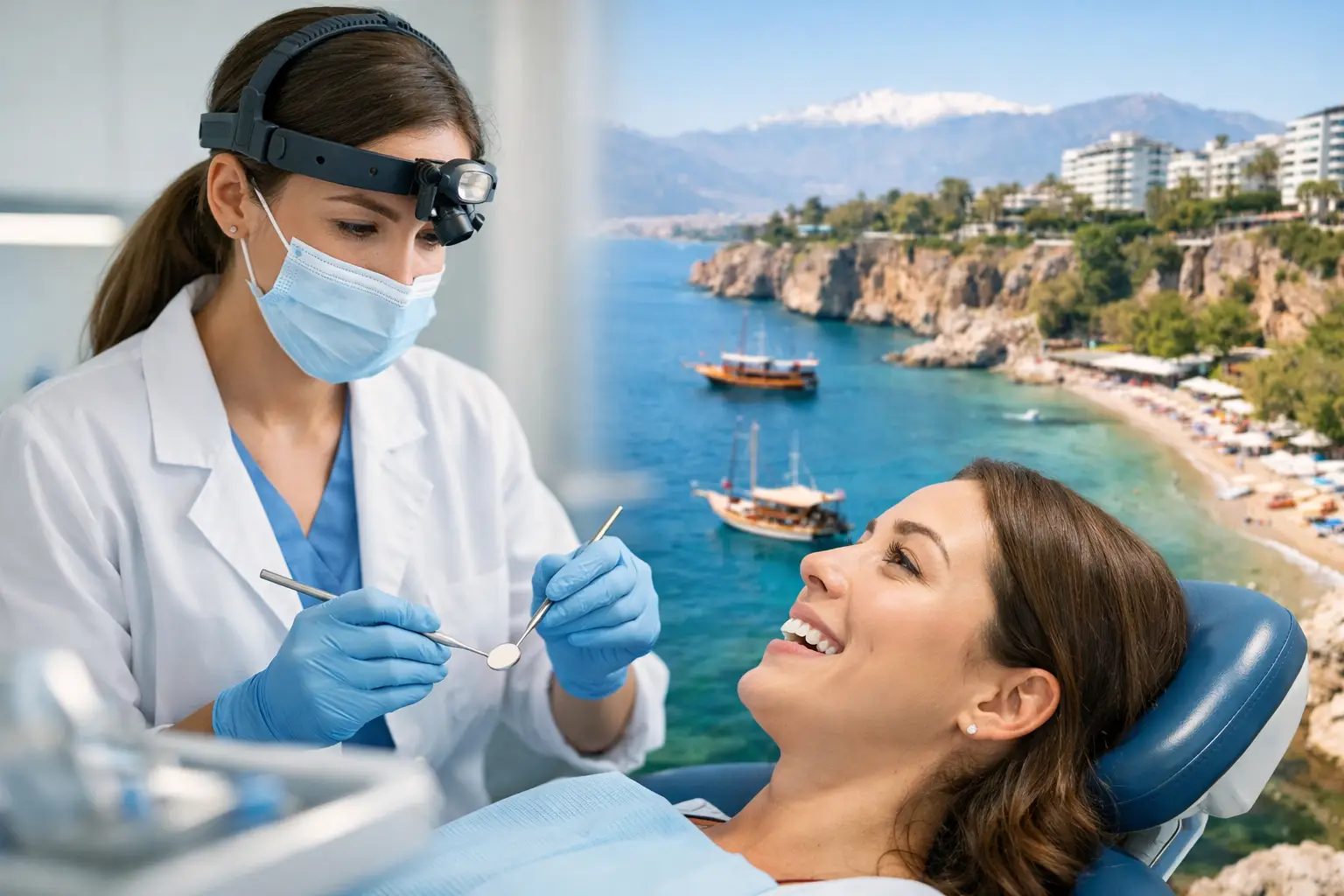
If you’re asking is dental work safe Turkey, you’re asking the right question. Not whether it’s cheap, not whether the hotel looks nice, not whether the clinic has 200,000 Instagram followers. Safe is the question that matters, because Turkey has both very good dentistry and some genuinely reckless operators selling cosmetic treatment like a holiday extra.
My short answer is this: yes, dental work in Turkey can be safe. In some clinics, the standard is excellent. But it is not automatically safe just because a clinic is popular, foreign-patient focused, or based in Istanbul, Antalya or Izmir. The gap between the best clinics and the worst ones is wide, and patients who get into trouble usually make the same mistake – they judge marketing, not dentistry.
Is dental work safe in Turkey if you choose carefully?
Yes, often it is. Turkey has many well-trained dentists, modern private clinics, strong dental lab support and treatment prices that are still significantly lower than in the UK and much of western Europe. For routine work like crowns, veneers, implants and full-mouth rehabilitation, there are clinics doing careful, high-quality work every day.
But this is the part most glossy websites skip: low price does not create risk on its own. Bad planning creates risk. Overtreatment creates risk. Rushed tooth preparation creates risk. Poor infection control creates risk. A clinic pushing 20 crowns on healthy teeth is not unsafe because it is in Turkey. It is unsafe because it is doing bad dentistry.
That distinction matters. If you assume the whole country is risky, you miss the good clinics. If you assume every clinic is fine because dental tourism is common, you expose yourself to avoidable harm.
Where the real risks come from
The biggest safety issue I see is not surgery itself. It is the business model behind some tourist-heavy clinics. They are built to sell fast, close quickly and move high volumes of patients through treatment with as little friction as possible.
That tends to produce a few predictable problems. The first is over-treatment. A patient asks about whitening or a few veneers and gets told they need 24 crowns. The second is under-diagnosis. Gum disease, bite problems, failed root canals and bone loss are missed or ignored because they complicate the sale. The third is speed. Good dentistry takes planning, records, fit checks and sometimes restraint. Bad clinics turn everything into a two-visit production line.
None of that is unique to Turkey, but the dental tourism model can make it worse. Once you fly home, follow-up is harder. If the clinic knows you are unlikely to return, the incentive to fix marginal work properly is not always there.
What safe dental treatment in Turkey actually looks like
A safe clinic is rarely the cheapest and rarely the loudest. It usually looks more measured than glamorous.
You should expect a proper consultation, even if it starts remotely. That means recent X-rays or a panoramic scan, clear photographs, a medical history review and questions about symptoms, not just a quote based on a smiling selfie. If a clinic gives you a full treatment plan without proper records, I would treat that as a warning sign.
A safe clinic also explains alternatives. If your teeth could be treated with bonding, orthodontics or a smaller number of restorations, that should be discussed. If the only option presented is a large cosmetic package, the clinic may be selling the highest-ticket plan rather than the best one.
For implants, safety means proper imaging, attention to bone levels, realistic healing times and a surgeon who does not pretend every patient is suitable for immediate loading. For crowns and veneers, it means conservative preparation, bite assessment and materials chosen for function as well as appearance. A bright white smile is easy to advertise. A stable bite that still works five years later is the harder job.
Red flags I would not ignore
Some warning signs are so common that I now treat them as screening shortcuts.
If the clinic avoids naming the treating dentist, I would walk away. If every review talks about transfers, hotels and VIP treatment but says nothing useful about diagnosis, pain management, fit or follow-up, I would be sceptical. If the clinic promises a perfect smile in absurdly short timelines without discussing limitations, that is not efficiency. That is sales.
Another red flag is pressure to commit before you’ve had a proper assessment. Deposits, countdown discounts and “today only” pricing have no place in serious healthcare. Nor does casual language around aggressive treatment. If someone suggests shaving healthy teeth down for crowns as though it is no bigger decision than choosing a haircut, you are not dealing with a careful clinician.
I am also wary of clinics that use the same quote structure for everyone. Real treatment plans vary because mouths vary. When every patient somehow needs the same number of zirconium crowns, the same smile design and the same package deal, that is not custom care.
Why some patients have excellent results
The positive stories are real. Patients do save money, and many get work in Turkey that is better organised and more modern than what they were offered at home. Some UK patients have spent years patching things up because private dentistry is expensive and NHS access is limited. Turkey can give them access to comprehensive treatment they simply could not afford otherwise.
The better clinics also tend to be experienced with international patients. Their systems are smoother, English communication is usually strong, and they are used to building treatment plans around travel schedules. When that is combined with sensible case selection, good lab work and honest aftercare advice, outcomes can be very good.
This is why blanket statements are useless. “Never go to Turkey” is lazy. So is “Turkey is the best place for teeth”. Both ignore the only thing that matters, which is the clinic and the treatment plan in front of you.
How to judge whether a clinic is actually safe
Start with the dentist, not the brand. I would want to know who is doing the work, what their area of focus is, and whether complex parts of treatment are handled in-house or passed around. Cosmetic cases, implant surgery and full-mouth rehabilitation require different strengths. A clinic that does everything for everyone is not automatically impressive.
Then look at diagnostics. Ask what records they need before confirming your plan. Ask whether they assess gum health and bite. Ask what happens if you arrive and the original quote changes after scans. Serious clinics can answer these questions clearly. Weak ones get vague very quickly.
You should also ask what they would not recommend for you. This is one of my favourite filters. Good clinicians have limits and will tell you them. Sales-led clinics tend to say yes to everything.
Aftercare matters as well. If something goes wrong once you’re back in Britain or Ireland, what is the process? Do they offer a clear guarantee? Do they pay for corrective care locally, ask you to return, or simply stop replying? A warranty is only useful if the clinic is realistic about how problems are handled in practice.
Is dental work safe in Turkey for veneers, crowns and implants?
It depends on the procedure.
Veneers and crowns are often marketed as simple cosmetic upgrades, but they can create long-term problems if too much tooth structure is removed or the bite is poorly designed. This is where I see some of the worst overtreatment. If a clinic wants to place crowns on teeth that could be preserved more conservatively, I would be cautious.
Implants can be very safe in Turkey when planned properly. There are clinics with excellent implant surgeons and solid protocols. But implants are not a shortcut. If bone quality is poor, if smoking is a factor, or if gum disease is active, the risks go up. Any clinic pretending otherwise is selling fantasy.
Full-mouth cases carry the highest stakes. Done well, they can be life-changing. Done badly, they are expensive to undo and sometimes impossible to reverse fully. If you’re considering that level of treatment, slow down. Get more than one opinion. Cheap mistakes in dentistry are rarely cheap to fix.
My honest view
Turkey is not the problem. Bad clinics are the problem. The country has enough excellent dentists to make dental tourism a sensible option for many patients, but it also has enough aggressive, sales-driven operators to make blind trust a bad idea.
If you do your homework, ask better questions and refuse to be rushed, dental work in Turkey can be safe and good value. If you shop on price alone, or let a social media team make clinical decisions for you, you’re gambling with your teeth.
I’d rather see you delay treatment for six months than book with a clinic that cannot justify its plan. A good smile should still make sense when the marketing is stripped away.