
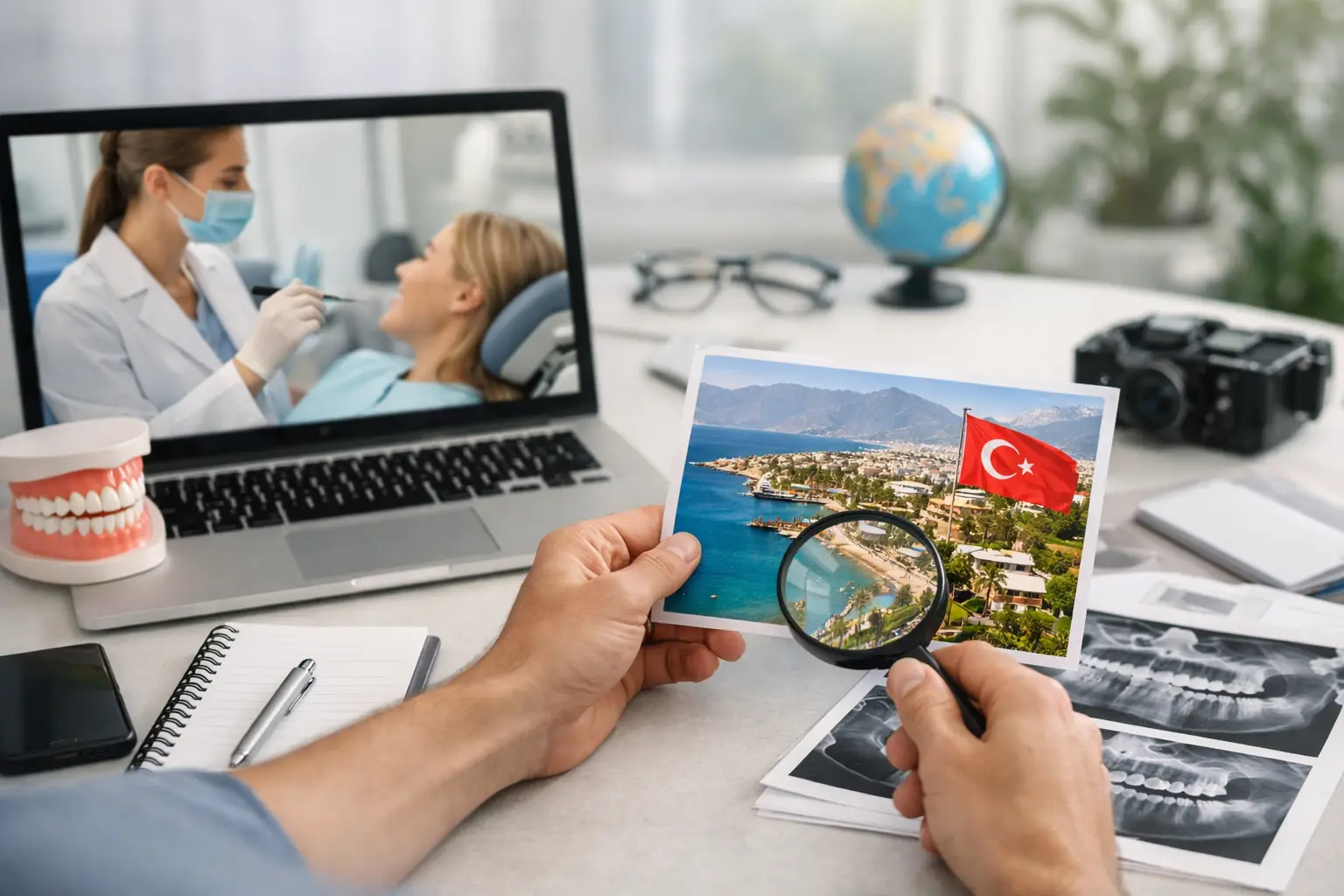
If you are trying to work out how to research Turkish dentists, ignore the glossy smile photos for a minute. Most bad decisions happen because patients judge the marketing first and the dentistry second. That is exactly backwards.
I have seen clinics with polished Instagram accounts and weak treatment planning, and I have seen less flashy clinics doing excellent work with solid diagnostics and sensible case selection. If you want to avoid ending up in the wrong chair, you need to research the clinician, the plan, and the aftercare – not just the price.
How to research Turkish dentists without falling for marketing
Start with a simple rule. You are not choosing a country. You are choosing a specific dentist and a specific clinic. Turkey has very good dentists and very bad ones, just like the UK does. The phrase “Turkish dentists” is too broad to be useful unless you narrow it down fast.
The first filter is whether the clinic is actually transparent. A serious clinic should tell you who the treating dentists are, what they focus on, and how your treatment is planned. If the website gives you endless promises about luxury transfers and five-star hotels but makes it awkward to find the names and backgrounds of the dentists, that is not a small issue. It usually tells you where their priorities are.
I would also be careful with clinics that market every treatment to every patient. Full-mouth crowns, veneers, implants, composite bonding, smile design – all presented as if they are interchangeable. They are not. Good dentistry starts with diagnosis and suitability, not a menu.
Check the dentist before you check the deal
This is the part many patients skip because it takes effort. It matters more than the airport pickup ever will.
Look for the full name of the treating dentist, not just the brand name of the clinic. Then check whether the clinic clearly states that dentist’s qualifications, university, areas of practice, and years of experience. I would want to know whether the person placing implants mainly does implants, whether the cosmetic dentist actually does restorative cosmetic work regularly, and whether more complex cases are handled in-house or passed around.
A vague profile such as “expert smile designer with international experience” tells you nothing. A useful profile explains training, scope of work, and clinical focus. If a clinic will not tell you who is treating you until after you pay a deposit, I would walk away.
It also helps to ask direct questions. Who will do the tooth preparation? Who places the implants? Who reviews the fit and bite before final cementation? In some high-volume clinics, the answer is not one experienced dentist but a rotating chain of staff. That does not automatically mean poor quality, but it increases the chance of inconsistent work.
Reviews matter, but not in the way most people think
Patients often overvalue volume and undervalue pattern. A clinic with 3,000 glowing reviews can still be a bad option if the reviews all sound generic, appeared in bursts, or focus on transport, hotel, and friendliness rather than clinical outcomes.
When I read reviews, I look for details. Do people mention the actual treatment they had? Do they talk about pain, healing, bite issues, communication, or aftercare? Are there reviews from six months or a year later, not just the day treatment finished? Immediate happiness is easy to buy. Long-term satisfaction is harder to fake.
You should also compare review platforms rather than relying on one source. If a clinic looks flawless in one place and patchy everywhere else, that gap is worth paying attention to. No clinic dealing with hundreds of international patients will have a perfect record forever. What matters is whether the negative comments point to repeated issues like rushed treatment, poor communication, surprise costs, or refusal to fix problems.
Ask for diagnostics, not just a quote
One of the clearest ways to separate serious clinics from lead-generation machines is to look at how they assess your case.
If you send a few selfies and get an instant promise of 20 veneers, that is not careful planning. It is sales. For simple cosmetic cases, photos can help with a rough discussion, but proper treatment planning usually needs more than that. For implants, a recent CBCT scan is often essential. For crowns or veneer work, a clinic should still want clear images, medical history, and some conversation about your goals, bite, and existing dental issues.
A quote without a diagnosis is just a number. It may be attractive, but it is not reliable. I would rather get a slightly slower, more cautious response than an instant bargain that falls apart when I arrive.
Compare treatment plans, not only prices
This is where real research happens. If you contact three or four clinics and all of them recommend different treatment for the same problem, do not assume the cheapest is best or the most expensive is most honest. Ask why the plans differ.
For example, one clinic may suggest crowns on healthy teeth where another recommends whitening and bonding. One may push implants immediately where another suggests saving existing teeth. One may propose 24 zirconium crowns because that is the clinic’s business model, not because your mouth needs them.
Price matters, of course. But it only means something when the treatment scope is comparable. A lower quote may exclude temporary restorations, sedation, bone grafting, follow-up x-rays, or any remake policy. An expensive quote may include a more experienced clinician, better lab work, and a more conservative plan. It depends.
This is why I tell patients to line up proposals side by side. Compare the number of teeth treated, the materials used, the appointment schedule, what happens if adjustments are needed, and whether aftercare is written down clearly.
Red flags I would not ignore
Some warning signs are so common in Turkish dental tourism that they have become normalised. They should not be.
Heavy pressure to pay a deposit immediately is one. Deep discounts that expire in 24 hours are another. Dentistry is healthcare, not a sofa sale.
I would also be wary if a clinic avoids answering basic questions, refuses to provide the dentist’s name, promises impossibly short treatment times, or recommends aggressive work before seeing proper diagnostics. Full-mouth crown cases completed at speed can look dramatic on camera and create expensive problems later if the bite is wrong or too much tooth was removed.
Another red flag is overuse of the term Hollywood smile. It often means very little clinically and is sometimes a euphemism for over-treatment. If the consultation language is all about “perfect white teeth” and barely mentions function, gum health, occlusion, longevity, or maintenance, I would keep looking.
How to research Turkish dentists for aftercare
Aftercare is where many clinics suddenly become less responsive. Everything sounds easy before you travel. The real test is what happens if your crown chips, your bite feels off, or an implant site becomes painful after you return home.
Ask exactly what aftercare policy exists and get it in writing. Does the clinic offer remote follow-up? Who pays if you need to return? What counts as a warranty issue and what does not? If a restoration fails, do they remake it or argue that you did something wrong? You want clear answers before treatment, not evasive messages afterwards.
It is also sensible to ask whether the clinic coordinates with dentists in your home country if needed. Not every local dentist will want to take over another clinic’s work, especially if the treatment was extensive or poorly documented. Good records, x-rays, and a clear treatment summary make a difference.
Look at the clinic’s case quality with a critical eye
Before-and-after photos can help, but most patients read them badly. Bright white teeth are not proof of quality. Look at gum symmetry, tooth proportions, whether the result suits the face, and whether the work looks natural or bulky. If every result is blindingly white and identical, that is not reassuring to me. It suggests a production-line aesthetic.
Video testimonials are similar. Useful if they show real patients discussing the full process. Less useful if they are filmed five minutes after treatment while the patient is still euphoric and numb.
This is one reason resources like Dental Guide Turkey exist in the first place. Patients need editorial judgement, not just clinic self-promotion dressed up as advice.
A final thought. The best clinic for you may not be the cheapest, the most famous, or the loudest online. It is usually the one that answers awkward questions properly, plans carefully, and is willing to tell you no when a bad treatment idea comes from you.