
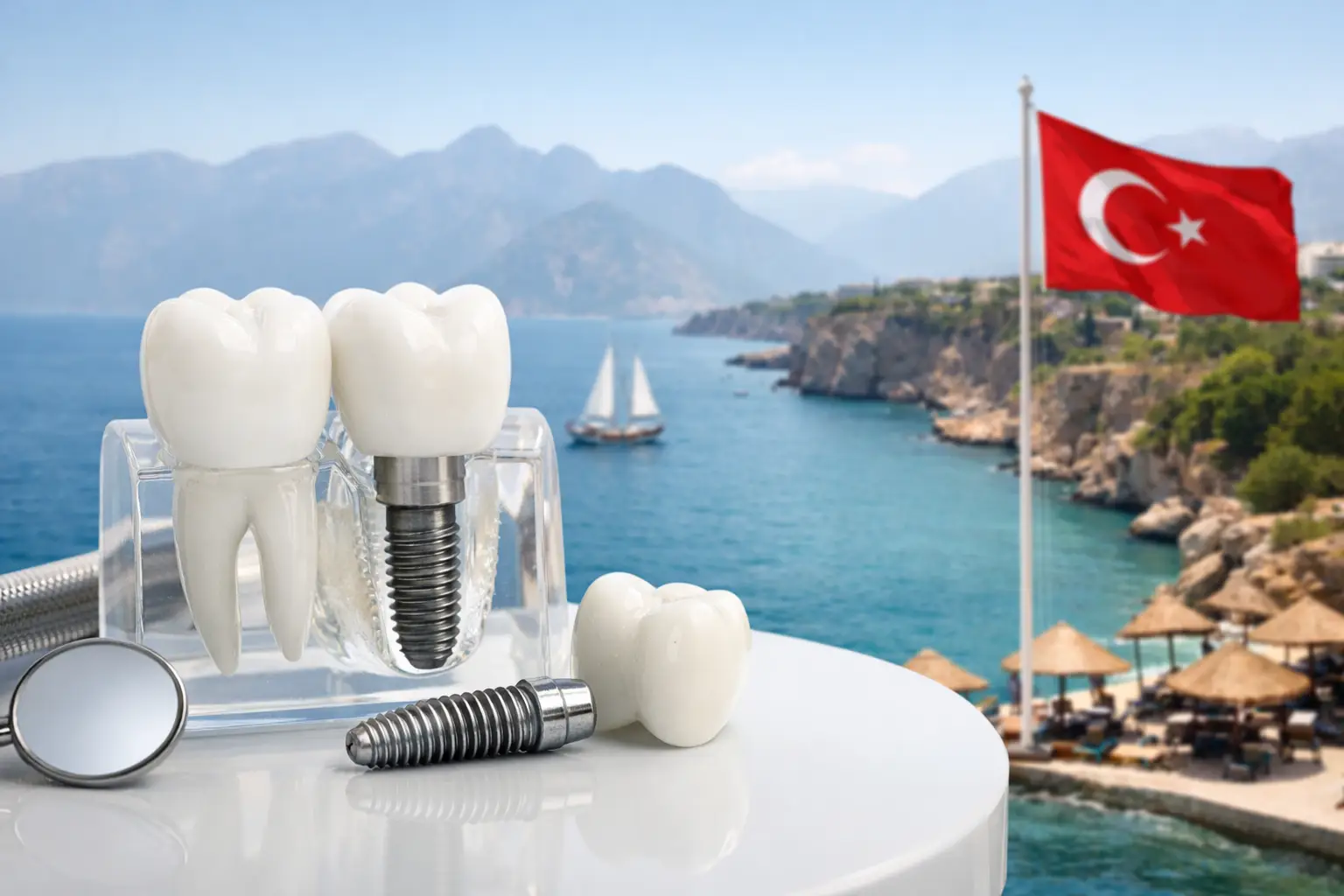
If you are asking is Turkey good for dental implants, you are already asking a better question than most patients. The wrong question is whether Turkey is cheap. It is. The right question is whether you can get implant treatment there that is safe, well planned and worth travelling for. My answer is yes – but only if you are selective, and very selective means more than reading Google reviews and looking at before-and-after photos.
Turkey has some genuinely excellent implant dentists and oral surgeons. It also has clinics I would not let near my own mouth. Both things are true at once, and that is what makes this market confusing for overseas patients.
Is Turkey good for dental implants in practice?
At its best, Turkey is very good for dental implants. The country has a large private dental sector, high patient volumes, experienced implant teams and prices that are usually far lower than the UK, Ireland or North America. In the right clinic, you can get diagnostics, surgery, temporary teeth and follow-up planning that are every bit as modern as what you would expect at home.
The problem is inconsistency. Turkey is not one standard. A proper implant clinic in Istanbul, Izmir or Antalya may use high-quality implant systems, detailed CBCT scans, guided planning and a surgeon with years of full-arch experience. A weaker clinic may be built around marketing first and dentistry second. Those are the places pushing rushed treatment, vague promises and suspiciously low package prices.
So yes, Turkey can be an excellent option. No, I would not call it automatically a good option for everyone.
Why so many people choose Turkey
The obvious reason is price. A single implant in Turkey can cost a fraction of what many patients are quoted in the UK. Full-mouth implant work can be dramatically cheaper, especially when compared with private treatment in London, Dublin or major US cities. For patients who have delayed treatment for years because of cost, that price gap is not a minor detail. It is the difference between getting treatment and going without it.
But cost is not the only reason. Turkish clinics that focus on international patients are often organised around fast diagnostics, coordinated treatment schedules and multilingual staff. That matters when you are flying in for a short stay and trying to avoid three months of back-and-forth admin.
There is also a lot of clinical experience in this market. Dentists and surgeons doing implants every day tend to get very good at implants. Volume on its own does not equal quality, but repeated experience with straightforward and complex cases does count for something.
Where Turkey does well on implants
The strongest clinics tend to do a few things consistently well. They plan properly. They use 3D imaging instead of guessing from a basic X-ray. They explain whether you need grafting, whether immediate loading is realistic and what the failure risks actually are. They are not trying to force every patient into the same full-smile package.
Another strength is access to full-arch treatment. Patients considering All-on-4, All-on-6 or implant-supported bridges often find better availability and lower costs in Turkey than at home. Some centres have surgeons and prosthetic teams working together in a way that is genuinely efficient.
Laboratory support can also be strong. In-house or closely partnered labs can speed up temporaries and improve communication between dentist and technician. When that setup is run properly, it is a real advantage.
Where things go wrong
This is the part many glossy clinic websites skip. A low price does not protect you from expensive problems later.
The most common issue I see is poor case selection. Not everyone is a same-day implants patient. If you have active gum disease, poor bone volume, uncontrolled diabetes, heavy smoking habits or a bite problem, you may need a slower and more careful plan. Clinics that promise instant fixed teeth to almost everyone are often selling optimism, not judgement.
Another problem is implant brand quality. Some clinics use reputable systems with good long-term support and component availability. Others use obscure brands or private-label systems that can become a headache if you need maintenance in the UK later. If a clinic is vague about the implant brand, I take that as a warning sign.
Then there is the cosmetic oversell. Some patients go to Turkey asking about implants and come back with six extra procedures they did not need. Bone grafts, sinus lifts and full-arch conversions can all be legitimate, but they should be justified by scans and clinical reasoning, not sales pressure.
How to tell if a clinic is actually good
If you want a straight answer to is Turkey good for dental implants, the real test is whether you know how to screen clinics. Most people don’t, and that is why they get burned.
Start with the dentist, not the package. Who is placing the implants? A general dentist can place implants, but for complex cases I want to see serious implant experience and, where relevant, oral surgery or prosthodontic depth in the team. Ask direct questions. How many implant cases do they do each month? Who plans the surgery? Who makes the final bridge? Who handles complications?
Then look at diagnostics. A proper clinic should rely on a recent panoramic X-ray and, for most implant cases, a CBCT scan. If a clinic is quoting confidently from a selfie and an old X-ray, that is not efficiency. That is nonsense.
Ask what implant system they use and why. Good clinics can answer this in plain language. Also ask what happens if something fails after you go home. A warranty is not enough on its own. I care more about the actual aftercare process, response times and whether there is a sensible pathway for remote support.
The price question – cheap versus good value
Turkey is usually good value for dental implants. It is not always cheap in the way social media ads suggest.
A realistic single implant case with abutment and crown might sit somewhere around the lower to middle hundreds in pounds at the budget end, rising materially for better brands, better diagnostics and stronger prosthetic work. Full-mouth cases vary hugely depending on how many implants are used, whether you are getting acrylic or zirconia, and whether extractions or grafting are needed. If one quote is dramatically lower than the rest, assume something is missing until proven otherwise.
I would rather see a transparent mid-range quote from a clinic that explains every stage than a rock-bottom package price with mystery materials and vague timelines. Dental work is one of the worst places to buy on headline price alone.
Is Turkey good for full-mouth implants?
For the right patient, yes. Turkey is often strongest on larger restorative cases because many clinics have built entire systems around them. That means treatment coordination, temporary teeth, laboratory workflow and accommodation support are usually better developed than for ad hoc single implant cases.
But this is also where the stakes are highest. Full-mouth implant treatment is not a holiday purchase. If the bite is wrong, if the bridge is over-contoured, if hygiene access is poor or if too few implants are used in the wrong places, you can end up with chronic problems that are expensive to fix. I have seen patients save thousands upfront and then spend years dealing with repairs.
This is why I tell people to be especially cautious with clinics that advertise only transformations and never talk about maintenance.
Who should think twice?
Turkey is not ideal for everyone. If you are medically complicated, highly anxious, unable to travel twice if needed, or likely to struggle with follow-up at home, local treatment may be the better decision even at a higher price. The same goes if your case is borderline and likely to need prolonged monitoring.
I also think patients who want absolute continuity of care should be realistic. Even with a good Turkish clinic, day-to-day aftercare once you are back in Britain may not be as straightforward as having your treating dentist twenty minutes away.
My honest view
So, is Turkey good for dental implants? Yes, often very good. The best clinics offer serious value, strong technical standards and far more implant experience than many local practices. That is why so many patients come back happy.
But the market is crowded with clinics that look polished online and cut corners where patients cannot easily see them. That is the trade-off. Turkey rewards careful research and punishes lazy research.
If you are willing to ask awkward questions, compare treatment plans properly and walk away from clinics that feel too sales-driven, Turkey can make excellent implant treatment far more accessible. If you are choosing on Instagram photos and the cheapest quote, I would not expect a good outcome just because the destination is popular.
The safest mindset is simple: don’t go to Turkey for cheap implants. Go for a well-planned implant case at a fair price, and be fussy about who earns your trust.