
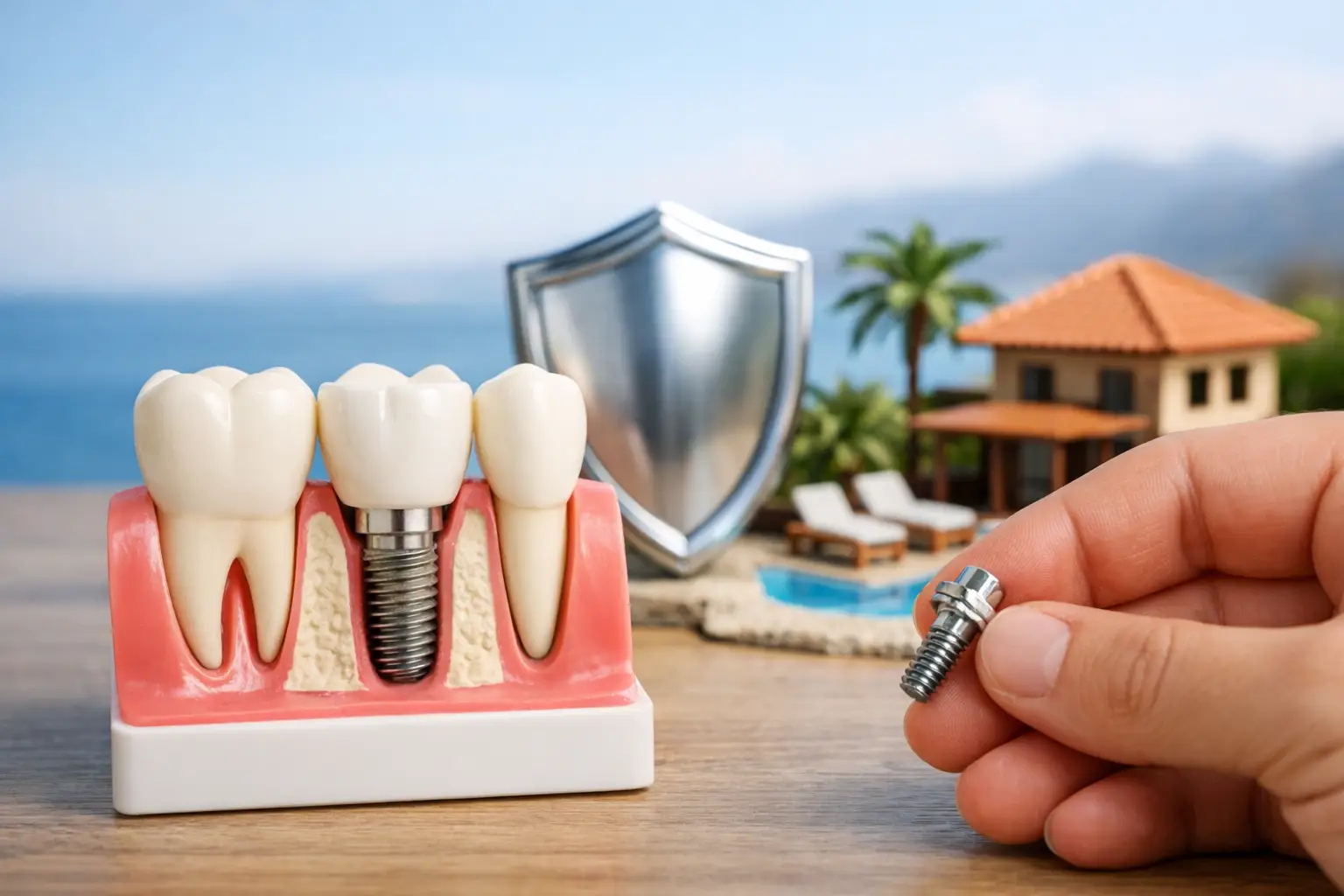
If a clinic in Turkey is promising a “lifetime guarantee” on implants before it has even seen your bone scan properly, I take that as a warning sign, not a selling point. Implant warranty Turkey explained properly means separating a genuine warranty from a marketing line designed to calm nervous patients and close the sale.
This is one of the most misunderstood parts of dental tourism. Patients often assume a warranty means the clinic will fix anything, forever, for free. That is rarely how it works. In reality, implant warranties in Turkey vary hugely between clinics, brands and treatment types, and the small print matters more than the headline.
What an implant warranty in Turkey usually covers
Most clinics use the word “warranty” to describe three different things. First, there is the manufacturer warranty on the implant itself. Second, there is the clinic’s own guarantee on the work they have done. Third, there is the practical aftercare support they offer if something goes wrong. Those are not the same thing.
A manufacturer warranty usually covers defects in the implant component. If the titanium implant itself has a proven manufacturing fault, the brand may replace that component. That does not mean they will pay for your flights, your hotel, the surgeon’s time, new scans, bone grafting, or replacement crowns. Patients miss this point all the time.
The clinic warranty is where the real differences appear. A decent clinic may offer a limited warranty on implant placement, abutments and crowns, with different time periods for each. For example, the implant fixture might have long-term coverage, while the crown attached to it may only be covered for a few years. That makes sense, because crowns are exposed to wear, bite pressure and accidental damage in a way the implant in the bone is not.
Then there is aftercare. This matters more than the warranty wording. A clinic can advertise a ten-year guarantee, but if it ignores you once you get home, that promise is nearly useless.
Implant warranty Turkey explained – what is not covered
The biggest mistake I see is patients treating a warranty like all-risk insurance. It is not. Even good clinics exclude a lot, and in some cases they are right to do so.
Most warranties will not cover problems caused by poor oral hygiene, smoking, uncontrolled diabetes, gum disease, teeth grinding, trauma, skipped check-ups or failure to follow aftercare instructions. That may sound harsh, but implant success depends partly on patient behaviour. If somebody is smoking heavily and missing hygiene appointments, no honest clinic should pretend otherwise.
Another common exclusion is bone loss over time. If your implant integrates well initially but later fails because of peri-implantitis, gum issues or bite overload, the clinic may argue this is a maintenance problem rather than a placement defect. Sometimes that is fair. Sometimes clinics hide behind that excuse too quickly. It depends on the records, the planning and whether the prosthetic work was done properly in the first place.
Travel costs are another sore point. Many clinics in Turkey will replace a failed part under warranty but expect you to pay to return. If you live in Manchester, Dublin or Toronto, that is not a small detail. It is the real cost of using the warranty.
The phrase I trust least – lifetime guarantee
I am naturally sceptical of blanket lifetime guarantees in dentistry, especially when they are used as a sales hook. Teeth, bone, gums and bite forces change over time. Crowns chip. Screws loosen. People grind their teeth. Medical conditions shift. A serious clinic knows this.
So when I see “lifetime implant warranty” with no detail, I assume one of two things. Either the clinic has not thought through the promise properly, or it has written terms so restrictive that very few claims will ever qualify.
That does not mean long warranties are meaningless. Some reputable implant brands do stand behind their components for the long term, and some Turkish clinics offer fair replacement terms if an implant fails early without obvious patient-related causes. But I would always ask what “lifetime” means in practice. Lifetime of what – the implant component, the restoration, or the clinic’s goodwill?
What good warranty terms actually look like
A trustworthy clinic normally explains the warranty in plain language and breaks it down by component. I would expect to see separate terms for the implant fixture, abutment and crown or bridge. I also want to know who pays for diagnostics, anaesthetic, lab work and surgeon time if a remake is needed.
Good terms are usually conditional rather than unconditional. That is not a bad thing. In fact, I prefer it when a clinic says the warranty depends on regular hygiene visits, annual X-rays and following post-op instructions. That suggests it understands implants as long-term treatment, not a one-off transaction.
I also look for process. If something fails, what happens next? Will the clinic review photos first? Do they ask for local X-rays? Can they coordinate with your dentist at home? How quickly do they respond? A clinic with a sensible system is often safer than one with flashy wording.
Questions I would ask before booking
This is where patients can save themselves a lot of grief. Before you commit, ask for the warranty terms in writing. Not on WhatsApp as a vague message. Not in a glossy brochure with no details. In writing, with actual conditions.
Ask exactly what is covered and for how long. Ask whether the implant brand itself is a major international brand with traceable components. Ask what voids the warranty. Ask who pays if you need to come back. Ask whether local check-ups in your home country are required and whether records must be sent to the clinic.
I would also ask a less obvious question: what happens if the clinic closes, changes ownership or the treating dentist leaves? This is one reason why a manufacturer’s component warranty and proper documentation matter. If a clinic disappears, its in-house guarantee may disappear with it.
Why implant brand matters to the warranty
Not all implant systems are equal, and this affects practical warranty value. If your clinic uses a recognised brand with good international availability, a failed component is easier to identify and replace. If it uses a budget house brand or an obscure system, you may struggle to get support outside Turkey.
That does not automatically mean cheaper brands are bad, but it does mean the warranty can become harder to use once you are back home. Your local dentist may not stock the parts or may refuse to work on a system they do not know. I have seen patients save money upfront and then spend more later because their implant system was awkward to restore or repair.
Red flags I would not ignore
There are a few warranty claims that make me cautious straight away. One is any clinic that treats the warranty as a substitute for proper diagnostics. Another is a clinic that cannot tell you the implant brand clearly. A third is a clinic offering the same “lifetime guarantee” on everything from single implants to full-mouth immediate-load cases, as if those treatments carry identical risk. They do not.
I am also wary when the warranty sounds generous but the clinic avoids discussing maintenance. Every implant case needs follow-up, especially full-arch work. If the sales team talks only about guarantee years and never about hygiene, occlusion, night guards or review scans, that tells me they are selling confidence rather than care.
So is an implant warranty in Turkey worth much?
Yes, but only if you judge it properly. A clear, limited, realistic warranty from a solid clinic is useful. It shows the clinic is willing to stand behind its work within reason. A vague promise designed to make treatment feel risk-free is worth very little.
This is why I tell patients to look at warranty terms as one part of the quality picture, not the deciding factor. Surgical planning, clinician experience, implant brand, aftercare and honest communication matter more. I would rather see a clinic offer a modest, clearly written warranty and do excellent work than shout about a lifetime guarantee and disappear when there is a complication.
If you are comparing clinics, treat the warranty like you would treat the price. Useful, yes, but meaningless without context. The right clinic will not mind detailed questions. In fact, that is usually how you spot one worth trusting.