
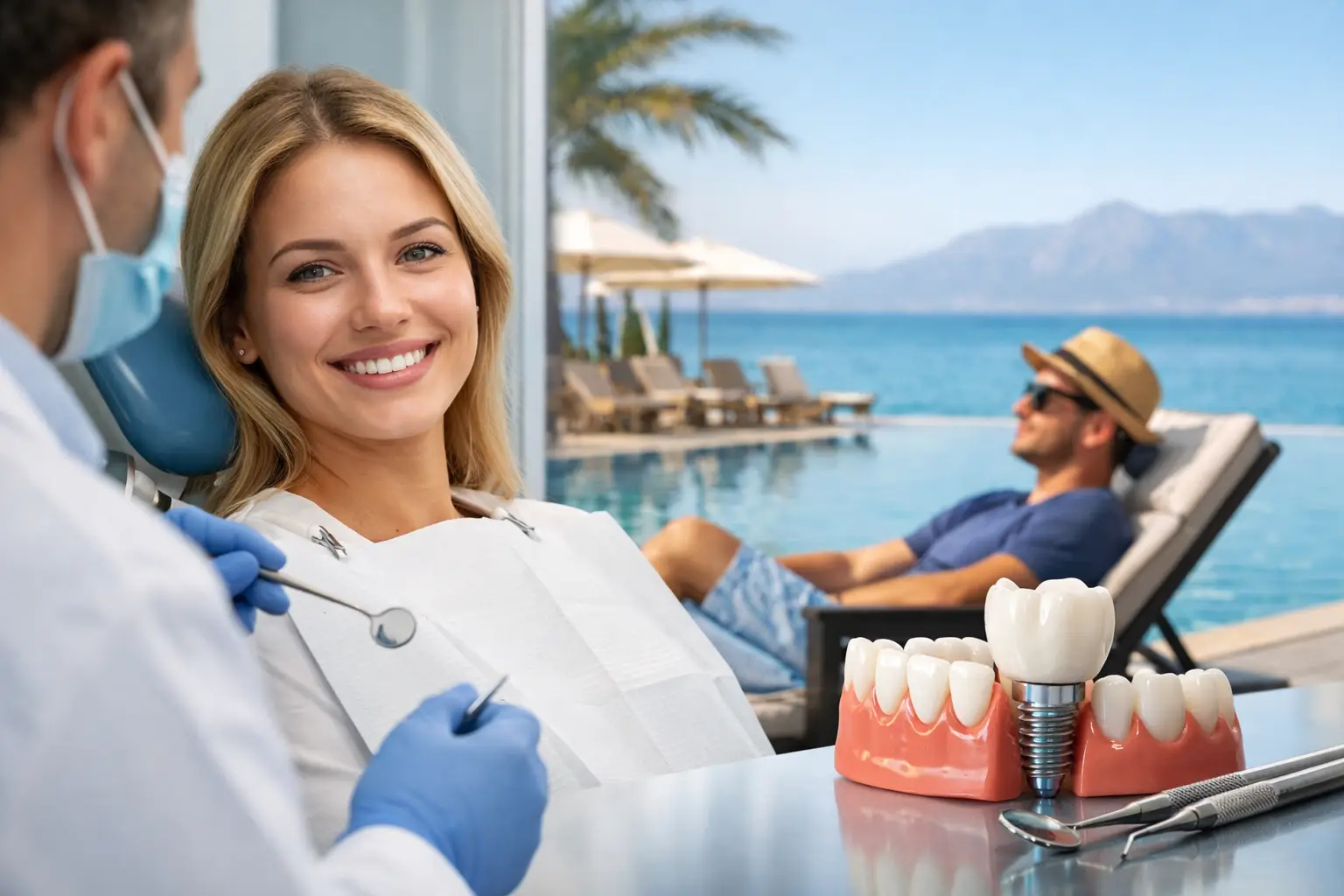
Most people start researching Turkey after seeing a quote at home that feels ridiculous. A full set of crowns, implants, or even a few veneers can cost enough in the UK to delay treatment for years. That is usually the point where people ask how dental tourism Turkey works in real life – not the glossy version on Instagram, but the actual process, costs, timing, and risks.
The short answer is this: you send photos or scans to a clinic, get a remote treatment plan and price estimate, travel to Turkey for an assessment, have treatment over a few days or across two trips, then return home for recovery and long-term aftercare. The longer answer matters more, because this is where the good decisions and bad ones get separated.
How dental tourism Turkey works from first enquiry to flying home
In practice, the process usually starts online. You contact a clinic or agency, send photos of your teeth, perhaps an X-ray if you have one, and explain what you want fixed. Some patients ask for a specific treatment. Others just say they hate their smile and want options.
The clinic then gives a provisional plan. I say provisional because any quote based only on photos has limits. Photos do not show bone levels, gum health, hidden decay, root problems, or whether a tooth can actually support a crown. If a clinic gives you a very confident, fixed price for extensive work without proper diagnostics, I would treat that as a warning sign, not a sign of efficiency.
If you decide to go ahead, the clinic usually helps arrange the practical side. Many offer airport transfers, hotel packages, and a treatment schedule built around your flights. This convenience is one reason Turkey became so popular. It is relatively easy to organise compared with treatment in many other destinations.
Once you arrive, the first proper step should be an in-person consultation. That normally includes a panoramic X-ray, often 3D imaging for implants, photographs, and a clinical exam. This is the stage where the original plan may change. Sometimes the change is minor. Sometimes it is the difference between a conservative treatment plan and far more drilling than necessary.
After diagnostics, treatment begins. Simple cosmetic work such as whitening or composite bonding may be completed in one short trip. Veneers and crowns are often done over five to seven days, depending on the clinic’s workflow. Implant cases are different. If implants are being placed, many patients need two visits – one for surgery and one months later for the final teeth after healing.
That is the normal version. The sales version often skips over the waiting, the revisions, the temporary restorations, and the fact that complex dentistry does not always fit neatly into a five-day city break.
Why Turkey is cheaper – and where people get this wrong
Turkey is not cheap because dentistry is lower quality by definition. It is cheaper mostly because clinic overheads, staff costs, rent, and laboratory costs are often lower than in the UK or Ireland. Exchange rates also help international patients.
But lower prices do not automatically mean good value. There is a huge gap between a well-run clinic in Istanbul, Antalya, or Izmir using decent labs and evidence-based planning, and a high-volume operation built around aggressive sales. Both may be marketed as premium. They are not the same thing.
This is where people get caught. They compare Turkey prices with UK prices and assume any big saving is a win. Sometimes it is. Sometimes the price is low because the plan is rushed, the diagnostics are weak, or the treatment is far more destructive than it needs to be. A cheap full-mouth makeover becomes expensive very quickly if you need corrective work later.
What treatments people usually travel for
The most common treatments in Turkish dental tourism are veneers, crowns, implants, all-on-4 or all-on-6 full-arch implants, composite bonding, and smile makeovers combining several procedures. Orthodontics is less commonly a reason for short dental trips because it needs ongoing review over time.
Crowns and veneers attract a lot of interest because they promise fast cosmetic change. They also attract some of the worst treatment planning. If a clinic wants to crown every visible tooth when bonding, orthodontics, whitening, or a smaller number of restorations would do the job, I would be sceptical. Fast does not mean appropriate.
Implants are different. Turkey can offer excellent value for implant treatment, but implant work is less forgiving than social media makes it look. Good implant dentistry depends on bone quality, bite planning, gum condition, healing time, and lab accuracy. If you are being sold implants like they are a hotel package upgrade, walk away.
How to judge clinics when researching how dental tourism Turkey works
This is the part most people underestimate. They spend hours comparing prices and almost no time comparing treatment philosophy.
I would start with diagnostics and case selection. Does the clinic explain when a treatment is not suitable? Do they discuss alternatives? Do they mention risks in plain English? A clinic that never says no is not patient-friendly. It is commercially aggressive.
Then look at who is actually doing the work. Not just the brand, but the dentist, prosthodontist, oral surgeon, or implantologist involved. In larger clinics, the person on WhatsApp selling the treatment is often not the person planning it. That gap matters.
Before-and-after photos can help, but they are easy to cherry-pick. Video testimonials are not proof either. I put more weight on whether the clinic shows realistic cases, explains materials properly, and gives consistent answers when challenged. If the language is all about Hollywood smiles, pain-free miracles, and limited-time deals, I would not take them seriously.
Travel, timing, and what the trip actually feels like
For many UK patients, Turkey is logistically straightforward. Direct flights are common, and the main treatment cities are set up for international visitors. That part is usually easier than expected.
What is harder is the pace. Treatment days can be long, especially if you are having teeth prepared, impressions or scans taken, temporaries fitted, and bite adjustments repeated across several appointments. You may have swelling, sensitivity, trouble eating, and a mouth that feels odd while temporary work is in place.
A lot of patients imagine a holiday with dentistry on the side. I think that is the wrong mindset for anything beyond minor treatment. If you are having major restorative work, assume the trip revolves around your appointments. If things go smoothly, great. If not, you will be glad you did not build an unrealistic itinerary around it.
The biggest risks in Turkish dental tourism
The main risk is not Turkey itself. It is poor case selection and overtreatment.
I have seen too many patients pushed towards full crowns on healthy teeth because it is faster and more profitable than conservative dentistry. That is the red flag I would watch most closely. Once healthy enamel is removed, you do not get it back.
The second major risk is weak aftercare planning. Complications are not rare in dentistry generally. Bites need adjustment. Gums can react. Temporary sensitivity may last. Crowns can feel high. Implants can fail. The question is not whether a clinic promises perfection, because that promise is meaningless. The question is what happens if something goes wrong after you are back in Manchester, Dublin, Glasgow, or Riga.
You need a clear answer on warranty terms, what is covered, whether travel costs are covered, and what support exists with a local dentist if urgent issues come up. If the aftercare policy is vague, that is not admin sloppiness. It is a business choice.
Costs, deposits, and what surprises people
Most clinics ask for a deposit to secure dates. That is normal. What matters is whether the deposit is refundable or transferable if the treatment plan changes after diagnostics.
Price surprises usually happen when the online quote was based on incomplete information. Extra root canal treatment, gum treatment, tooth extractions, sinus lifts, bone grafting, or changes in restoration type can all shift the final bill. Some changes are reasonable. Some are bait-and-switch. You need enough detail in writing beforehand to tell the difference.
As a rough rule, the more complex the case, the less seriously I would take a photo-only quote. For single crowns or a few veneers, estimates can be fairly close. For full-mouth work or implants, wide quote variation is common for a reason.
Is dental tourism in Turkey worth it?
For the right patient, yes. If you choose carefully, understand the treatment, and budget for proper aftercare, Turkey can offer very good dentistry at a price that remains competitive even after flights and hotels. I have seen excellent work there.
But I would not recommend going simply because the quote is the cheapest, or because a clinic promises a dramatic smile in record time. The better question is whether the plan is sensible, conservative where possible, and realistic about timelines. That is what separates a good decision from an expensive lesson.
If you are still at the research stage, slow down a bit. The clinics worth trusting usually give you enough information to think, not just enough pressure to book.