
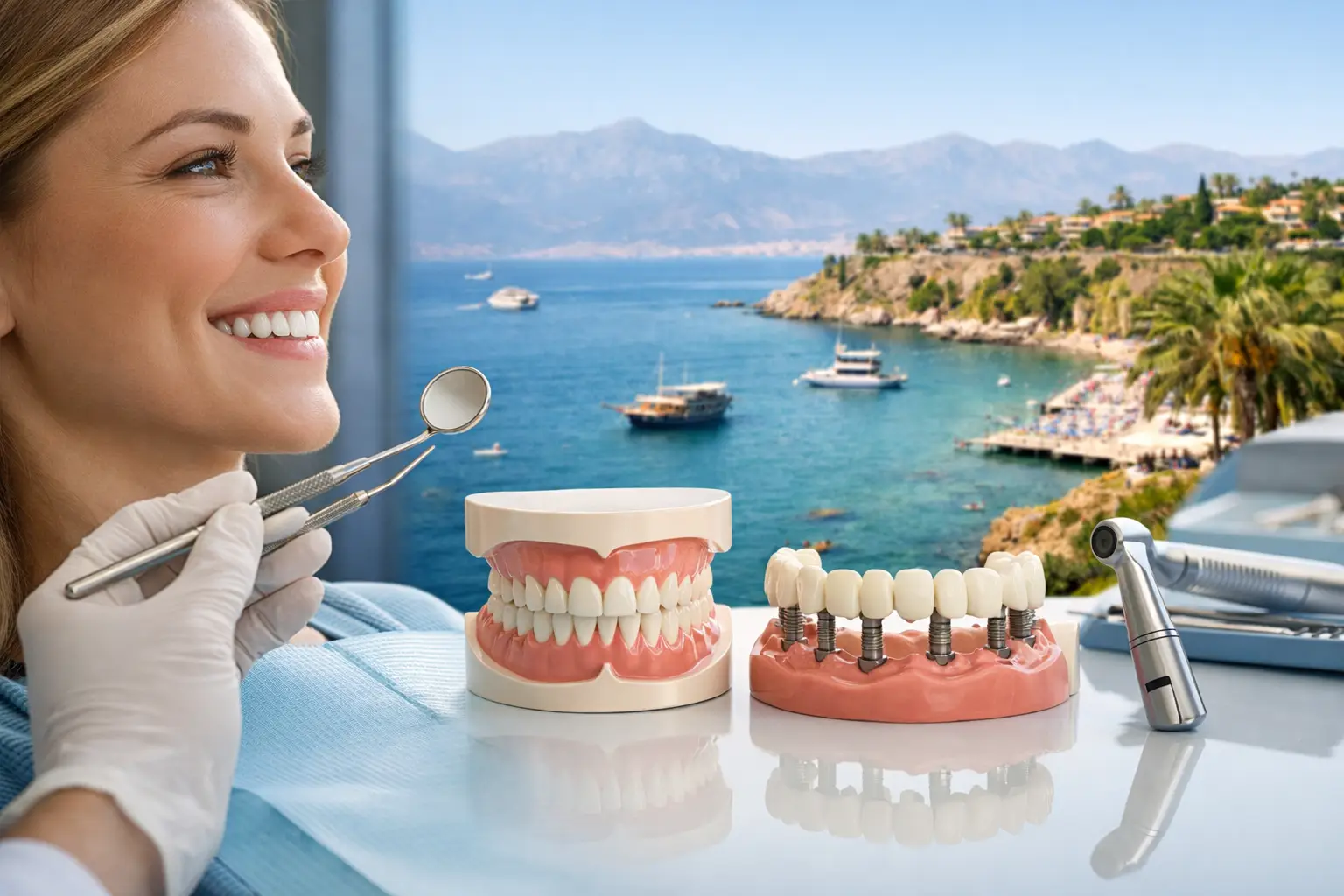
A phrase like “full mouth restoration” gets used far too loosely in Turkish dental marketing. I have seen clinics apply it to 20 cosmetic crowns on healthy teeth, and to genuinely complex reconstructions involving implants, gum treatment and a rebuilt bite. Those are not remotely the same thing.
These full mouth restoration examples show what treatment can actually look like, who it suits, and where I would be cautious. The right plan starts with diagnosis, not a smiling sales representative promising a Hollywood result from two photographs.
What counts as full mouth restoration?
A full mouth restoration rebuilds function, appearance, or both across most or all of the teeth. It may involve crowns, bridges, implants, root canal treatment, gum therapy, bite adjustment and temporary teeth. In some cases, treatment affects both jaws. In others, one severely damaged arch is restored while the opposing teeth need only limited work.
The central question is not, “How many crowns do I get?” It is, “What is causing the current teeth to fail?” Wear from grinding, untreated gum disease, decay around old crowns, missing back teeth and a collapsed bite each need a different solution.
1. Severe tooth wear with most natural teeth retained
This is one of the more sensible full mouth restoration examples for patients who have worn, shortened or cracked teeth but still have healthy roots and stable gums. The patient may have reflux, a history of grinding, or years of chewing without back teeth. Their face can look slightly more collapsed because their bite has lost height.
A proper plan may use ceramic or zirconia crowns on selected teeth, with onlays or veneers where less preparation is needed. The aim is to restore the bite height gradually and protect the teeth that remain. It is not automatically necessary to crown every tooth.
In Turkey, a comprehensive crown-led case often falls around £4,000 to £8,000, depending on the number of units, materials and whether root canal treatment is needed. I would be sceptical of a clinic proposing 28 aggressively prepared crowns without discussing why each tooth needs one. A diagnostic wax-up or digital smile design is useful, but it is not a substitute for bite planning.
2. Missing back teeth and failing old bridges
A common patient has a few front teeth that look acceptable but has lost several molars over time. They then overload the remaining teeth, old bridges loosen, and chewing becomes difficult. This is not primarily a cosmetic case. It is a support problem.
The restoration might involve two to six implants to replace posterior teeth, plus crowns or bridge replacements elsewhere. Once the back teeth support the bite again, the dentist can make more conservative improvements to the front teeth.
This is often best completed in stages. Implants are placed on the first trip, allowed to integrate for roughly three to six months, then fitted with final crowns or bridges on a return visit. Any clinic promising permanent implant crowns in a few days without explaining immediate-loading criteria is oversimplifying a medical decision.
3. One full arch replaced with an implant bridge
For someone with a hopeless upper or lower arch, an All-on-4 or All-on-6 style fixed bridge can be appropriate. This usually means removing teeth that cannot be saved, placing four to six implants, and securing a full-arch bridge. The patient leaves with fixed temporary teeth if bone quality, implant stability and bite conditions allow it.
The final bridge should usually come later, after healing and bite adjustments. I prefer clinics that are clear about the distinction between a temporary PMMA bridge and a final zirconia or ceramic bridge. Patients are often quoted an attractive headline price, then discover the final bridge, sedation, bone grafting or additional implants are excluded.
A single full arch in Turkey can range broadly from around £3,500 to £8,000 or more, depending on implant brand, number of implants, grafting and final material. The lowest package is not automatically poor, but it deserves much closer questioning. Ask exactly what is temporary, what is final, and what happens if an implant fails to integrate.
4. Full upper implant bridge, lower teeth restored conservatively
Not every patient needs both jaws replaced. A realistic case might involve an upper arch with extensive decay, loose teeth and failed bridges, while the lower teeth are worn but salvageable. Replacing the upper arch with implants while using crowns, onlays or a small bridge on the lower jaw can preserve more natural tooth structure.
This mixed approach is often clinically better than turning both arches into implant work for the sake of symmetry. It can also reduce cost and surgical risk. The challenge is getting the bite right between natural lower teeth and a fixed upper bridge, which is why an experienced restorative dentist matters as much as the implant surgeon.
5. Gum disease before any cosmetic reconstruction
This is the example many social-media clinics avoid showing. A patient may want a complete smile makeover, but bleeding gums, bone loss and mobile teeth change the priorities entirely. Placing crowns over active periodontal disease can create a neat-looking short-term result and a much bigger problem later.
The first phase should be periodontal assessment and treatment. Some teeth may stabilise with deep cleaning and improved home care; others may need removal. Only then should the final restoration be designed.
If a clinic quotes a full set of crowns or implants from photos and never asks about bleeding gums, loose teeth or smoking, I would not proceed. Gum disease is one of the main reasons restorations fail early, and no premium crown material can solve it.
6. Replacing poor-quality crowns from an earlier trip
I see this more than I should: crowns are too bulky, margins are irritated, the shade is unnaturally white, and the bite feels wrong. The patient then faces paying twice. Sometimes only a few crowns need changing. Sometimes the issues are widespread enough that a full-mouth remake is the safer route.
Before agreeing to replacement, the new dentist should assess whether the underlying teeth are healthy, whether root canal work is needed, and whether there is enough tooth structure left to support new crowns. Repeatedly cutting teeth down for fresh crowns is not harmless.
A good clinic will tell you when a local repair, polish or bite adjustment is enough. Replacing every crown is profitable. It is not always necessary.
7. Bite collapse after years of tooth loss and grinding
The most complex cases combine missing teeth, worn front teeth, jaw discomfort and a bite that no longer closes predictably. These patients often need a planned increase in bite height, temporary restorations to test comfort, implants in strategic positions and final crowns or bridges once the new bite has been proven.
This is not a treatment I would book on the basis of a three-night package. It may require a first visit for scans, records, extractions or implant placement, a healing period, and a longer return visit for final work. Sometimes a third review is sensible.
Temporary teeth are not a sign the clinic is delaying your treatment. In difficult bite cases, they are how the dentist checks speech, chewing, appearance and jaw comfort before committing to expensive final ceramics.
What should be included before you accept a plan?
For a genuine reconstruction, I expect to see a panoramic X-ray and often a CBCT scan for implant cases, a written tooth-by-tooth plan, periodontal findings, clear material names and a realistic timeline. You should also receive a price that separates essential treatment from optional cosmetic upgrades.
Ask whether the clinician who designs the bite will be involved in fitting the final work. Ask how many visits are needed, whether laboratory-made temporaries are included, and what the clinic’s policy is for implant failure or fractured crowns. Vague answers are a red flag.
The best full mouth restoration is rarely the biggest one. It is the plan that saves sound teeth, restores stable chewing, respects gum health and gives you a result you can maintain from home. If a proposed treatment feels rushed or suspiciously simple, slow down before you book the flights.