
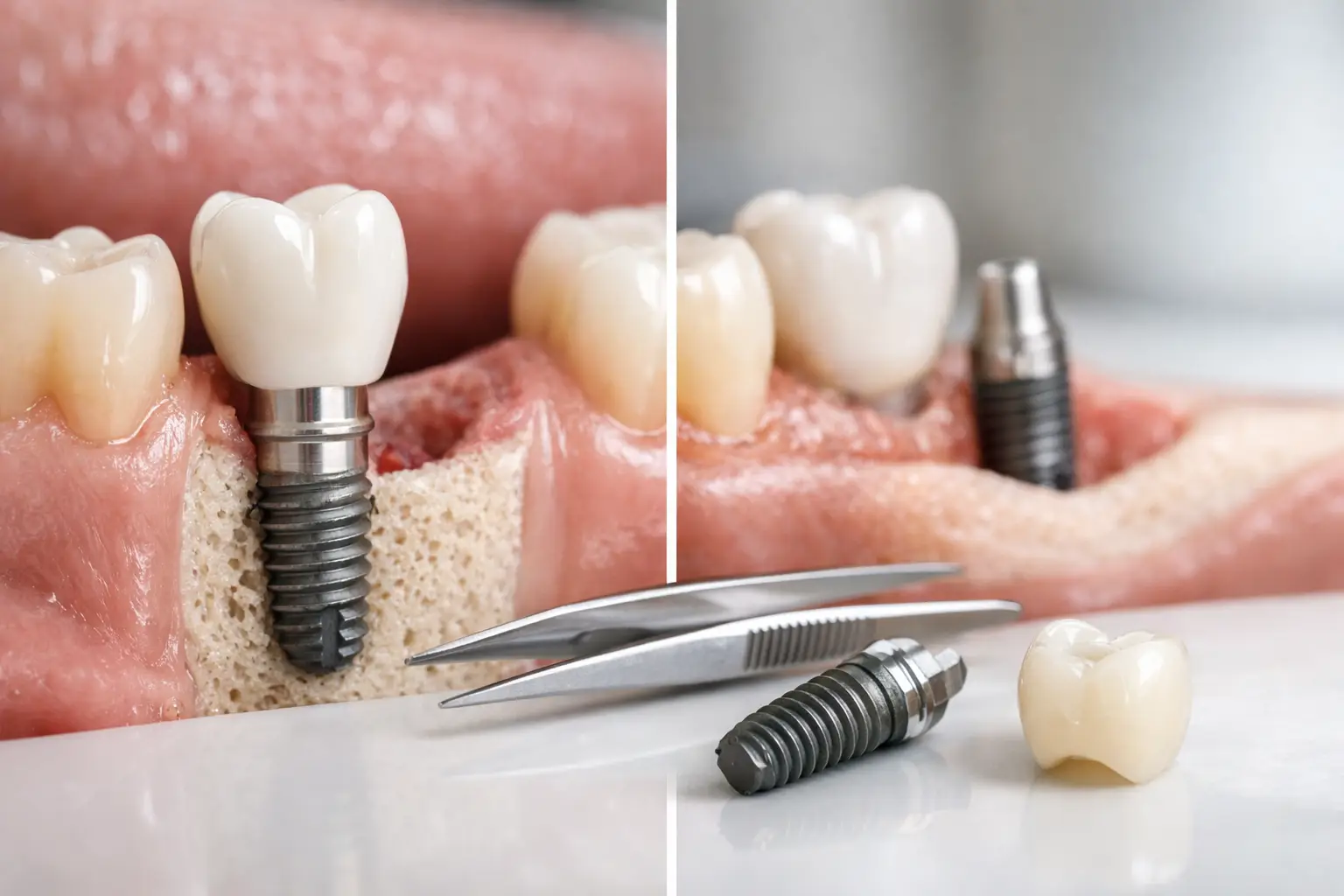
A missing tooth at the front of your smile creates a practical problem: you do not want to leave Turkey with a visible gap. That is why same day versus delayed implants comes up in so many treatment plans. But the phrase is routinely used too loosely by clinics. Having an implant placed on the day of extraction is not the same thing as having a fixed tooth loaded onto it that day. Those are two separate clinical decisions, and both need to be justified.
I have seen clinics sell immediate treatment as though it is automatically the modern option and delayed placement as an old-fashioned compromise. That is nonsense. The best timing depends on the condition of your bone, gums, tooth infection and bite – not on how attractive a one-trip treatment plan looks on Instagram.
What “same day” actually means
A same-day, or immediate, implant is placed directly into the socket after a tooth is removed. The surgeon cleans the socket, assesses the remaining bone and positions the implant, often slightly differently from where the natural root sat. A temporary crown may be fitted immediately, but it may also be kept out of contact with the opposing teeth so it is mainly cosmetic.
This distinction matters. Immediate placement refers to when the implant is inserted. Immediate loading means a crown, bridge or full-arch restoration is attached and allowed to take biting forces. You can have immediate placement without immediate loading. In many single-tooth cases, that is the more cautious and sensible approach.
Delayed implant treatment means the tooth is extracted first and the site is allowed to heal before implant placement. That healing period is often around eight to 16 weeks, although grafted sites, active infections and more complex cases can require longer. After the implant is placed, it normally needs a further healing phase before the final crown is fitted.
For an international patient, the difference is not merely clinical. A delayed plan usually means at least two trips to Turkey, and sometimes three. An immediate plan may reduce the number of visits, but it does not magically remove the biology of healing.
Same day versus delayed implants: who is a good candidate?
The strongest candidates for immediate placement tend to have healthy gum tissue, a sound bony socket, enough bone around the implant, no uncontrolled gum disease and a bite that can be managed safely. The front upper jaw can work well aesthetically when the surrounding gum and bone are intact, but it is also unforgiving. A millimetre of poor implant position can leave recession, grey shine-through or an awkward crown shape later.
A lower molar extraction socket can sometimes be suitable too, particularly where the bone between the roots provides strong anchorage. But this is a technical procedure, not a routine shortcut. The surgeon must avoid nearby nerves and make sure the implant has enough initial grip in healthy bone.
I would be cautious where there is significant bone loss, a large cyst or abscess, thin gum tissue, heavy smoking, untreated periodontitis, uncontrolled diabetes or a serious clenching habit. None of these automatically rule out implants, but they can make a delayed approach safer and more predictable. The same applies if you have had a tooth missing for years and the ridge has already shrunk. That is not an immediate implant case because there is no fresh socket to use.
A proper assessment requires a CBCT scan, not just a panoramic X-ray and a WhatsApp photograph. The clinic should review the three-dimensional bone volume, the position of the sinus or nerve, the gum line and your opposing teeth. If a provider promises same-day implants before seeing a diagnostic scan, I would treat that as a red flag.
Why delayed placement is often the safer choice
Delayed treatment gives infection time to settle and allows the extraction site to form stable bone and soft tissue. It can also make bone grafting more predictable where the socket walls are damaged or missing. This is not glamorous, but it is frequently what protects the long-term result.
The biggest advantage is control. Once healing has taken place, the clinician can place the implant in a planned position rather than trying to adapt to a damaged socket. That matters particularly in the visible upper front teeth, where the final result depends on gum symmetry as much as the implant integrating with bone.
The obvious downside is time. You may wear a removable temporary tooth, a bonded temporary bridge or, in some cases, have a gap during healing. You will also need to budget for return travel. For patients travelling from the UK or Ireland, that can make a delayed plan look more expensive even when the clinical fees are reasonable.
Still, I would not choose immediate placement simply to avoid a second flight. Replacing a failed implant, repairing lost bone and correcting gum recession is usually far more costly and frustrating than organising another visit.
When immediate treatment earns its place
Immediate placement can preserve the contour of the gums and bone around a freshly extracted tooth, reduce the number of surgical procedures and shorten the route to a fixed final tooth. In the right hands and the right case, it is excellent dentistry.
It is especially useful when a front tooth has failed because of a root fracture or a non-restorable problem, but the surrounding tissues remain healthy. The patient can leave with a natural-looking temporary rather than a visible space. The temporary must be designed carefully, however. It should support the gum shape without being used to bite into sandwiches, crusty bread or anything else that transfers force to a healing implant.
Full-arch cases are different again. If all remaining teeth are being removed, a clinician may place four, five or six implants and fit a fixed temporary bridge within a few days. This can be appropriate because the implants support one connected restoration and the bite is designed from scratch. It is not equivalent to placing one implant with a crown after an extraction, so do not compare the two as though the risks are identical.
The Turkey-specific issue: fast treatment should not mean rushed treatment
Turkey has many experienced implant surgeons and excellent dental laboratories. It also has clinics built around compressed itineraries, sales teams and aggressive promises. The problem is not that treatment is fast. The problem is when the schedule dictates the clinical decision.
A credible clinic should explain whether your quote covers extraction, implant placement, grafting material if needed, a temporary tooth, abutment and final crown. Ask whether the price changes if the socket is unsuitable for immediate placement once the tooth is removed. This can happen, even with good planning. You need to know the fallback plan before you are in the chair.
Also ask who performs the surgery, what implant system is proposed and whether its components are readily available in your home country. Brand names alone do not guarantee quality, but an identifiable, established system is easier for another dentist to service if a screw loosens or a crown needs replacing years later.
Do not accept a plan that treats a CBCT scan as an optional add-on. And be sceptical of blanket claims that every patient can receive implants and permanent teeth in five days. A temporary fixed bridge may be possible. A genuinely final restoration often needs more healing time to allow the gum level and bite to stabilise.
Questions I would ask before agreeing to either plan
You do not need to become a dental surgeon, but you should get direct answers to a few specific questions. Is the proposal immediate placement only, or immediate placement and loading? Is there active infection or a missing socket wall? How will the temporary be protected from biting forces? If grafting is necessary, will the implant still be placed that day? And if you return home with a temporary, when and where will the final crown be fitted?
I would also ask how the clinic measures implant stability at surgery. Clinicians may refer to insertion torque or an ISQ reading, both ways of assessing whether an implant has enough initial stability for the proposed restoration. You do not need a target number from a salesperson, but the surgeon should have a clear rationale rather than simply saying, “We always do it this way.”
My view: choose predictability over convenience
Same-day treatment is not inherently risky, and delayed treatment is not automatically superior. The better option is the one that gives you enough healthy bone, stable gums and a manageable bite for the implant to last. That may be an immediate implant with a carefully protected temporary, or it may be an extraction, a graft and a return visit months later.
If a clinic is willing to slow down when your scan demands it, that is usually a good sign. A well-planned second trip is inconvenient. A preventable implant failure is worse.