
A missing tooth does not automatically mean you need a bone graft before an implant. Yet I regularly see Turkish clinics include grafting in a treatment plan without showing the scan, explaining the defect, or discussing alternatives. This guide to implant bone grafting is for patients who want to know whether the recommendation is clinically justified, what the process actually involves, and where the cost should sit.
Bone grafting can make an implant possible and improve its long-term stability. It can also be oversold. The difference comes down to the amount and location of bone you have left, the quality of the diagnostic work, and whether the dentist is planning for a predictable result rather than a quick sale.
Guide to implant bone grafting: when is it needed?
An implant needs enough healthy jawbone to hold it firmly. After a tooth is removed, the body begins to remodel the bone around the empty socket. The greatest change often happens during the first few months, particularly in the visible front section of the upper jaw. Gum disease, infection, trauma, wearing dentures, and a missing tooth left untreated for years can all reduce the available bone further.
A graft may be recommended when the jaw is too narrow, too short, or has a local defect where bone has been lost. In the upper back jaw, the sinus can also expand downwards after tooth loss, leaving too little height for an implant. That is a separate but related procedure called a sinus lift.
The only sensible basis for this decision is a CBCT scan, which produces a 3D view of the jaw. A panoramic X-ray is useful but does not provide the same detail. If a clinic has proposed implants and grafts from photographs, a basic X-ray, or a WhatsApp conversation alone, treat that as a provisional estimate, not a final medical plan.
I would also question a clinic that promises to decide everything before examining you in person. Scans can reveal infection, thin bone on the cheek side of the jaw, or an anatomical issue that changes the whole plan.
Situations where grafting may be avoidable
Grafting is not always the only route. A skilled implant dentist may use a shorter or narrower implant, change the implant angle, or select a different implant position where anatomy allows. For full-arch cases, angled implants can sometimes avoid a sinus lift or larger graft.
That does not mean graft-free treatment is inherently better. Very short implants and aggressive angulation have limits. The right choice depends on bite forces, bone quality, the final tooth position, and how much compromise is acceptable aesthetically. If you are replacing a front tooth, preserving the contour of the gumline can matter as much as getting an implant to integrate.
What happens during a bone graft?
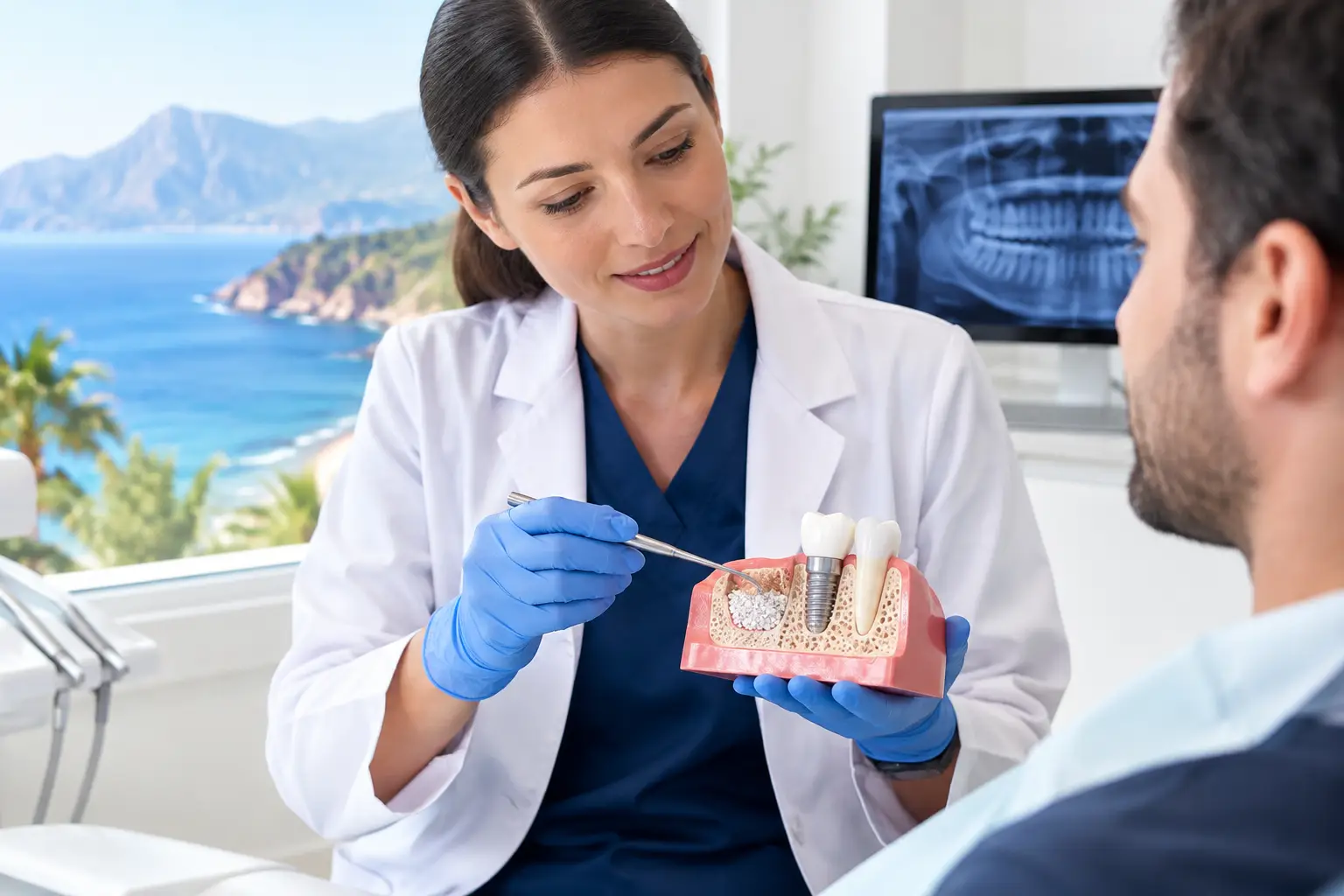
For a small socket graft, the dentist places graft material into the extraction socket, often with a collagen membrane over it, to reduce collapse as the area heals. This can be done at the same appointment as the extraction. It is commonly recommended when an implant is planned later, especially in the aesthetic zone.
A larger guided bone regeneration procedure involves placing graft material against an area of missing bone and covering it with a membrane. The membrane protects the graft while your own bone grows into it. In more substantial defects, the surgeon may use a fixation screw or take a block of your own bone from another part of the jaw.
A sinus lift works differently. The surgeon carefully raises the lining of the maxillary sinus and places graft material beneath it, creating more bone height above the upper back teeth. It sounds alarming, but in experienced hands it is a routine procedure. The main point is that it needs careful planning: the sinus anatomy, membrane thickness, and any sinus disease should be assessed before surgery.
Some patients can receive an implant at the same time as the graft. This is called simultaneous placement. Others need the graft to heal first, then return for implant placement. Immediate treatment can reduce visits, which is attractive when travelling to Turkey, but it is not automatically appropriate. If the graft lacks initial stability or there is active infection, rushing it is poor practice.
Graft materials: what is actually being placed?
Most dental grafts are not harvested from your hip or another dramatic source. The material is usually a processed mineral scaffold that supports new bone formation. Common options include bovine-derived material, human donor material from regulated tissue banks, synthetic ceramics, and your own bone.
Each has a place. Bovine-derived mineral is widely used because it maintains volume well, which can be valuable around implants in the front of the mouth. Synthetic materials avoid animal-derived products, while your own bone may be useful in selected larger reconstructions. There is no universally superior material.
Ask what material and membrane will be used, whether it is from a recognised manufacturer, and whether the clinic can record the batch details in your notes. Vague answers such as “European graft” are not good enough. You do not need to memorise brand names, but traceability matters.
Healing time and travel planning
For a modest graft, healing often takes around three to six months before implant placement. A larger graft may need six months or longer. After an implant is placed, it commonly needs another three to six months to integrate before the final crown is fitted, although timelines vary by jaw location and implant stability.
This is where glossy Turkish dental packages frequently become misleading. A clinic may advertise a short first trip, but a grafted case cannot be compressed into a one-week holiday without taking clinical shortcuts. Expect at least two trips for many cases: one for extraction and grafting or implant placement, then another for the final restoration.
You should normally remain in Turkey for several days after grafting, particularly if it involves a sinus lift or multiple sites. That gives the dentist time to check bleeding, swelling, wound closure, and your bite. Flying home the next morning is not a plan I would choose unless the treatment was very minor and your clinician specifically approved it.
At home, swelling and bruising are common for a few days. You will usually need soft foods, careful cleaning, and to avoid smoking. Smoking significantly increases the risk of poor healing and graft failure. If you smoke, the honest answer is that elective implant treatment becomes less predictable and more expensive if it has to be redone.
What implant bone grafting costs in Turkey
Pricing varies sharply because “bone graft” covers everything from a small amount of particulate material to a complex reconstruction. As a broad guide, a minor socket graft in Turkey may cost roughly £100 to £250 per site. Guided bone regeneration can sit around £250 to £600 or more, depending on the membrane and complexity. A sinus lift commonly ranges from about £350 to £800 per side.
These figures should be treated as planning ranges, not a quote. The important question is whether the price includes the graft material, membrane, surgical fee, CBCT scan, follow-up checks, medicines, and any required removal of fixation screws. A cheap headline price can become expensive when every component is added separately.
Compared with private UK pricing, Turkey can still offer meaningful savings. But grafting is not where I would chase the lowest number. A failed graft can delay treatment for months and may leave you needing a more complex revision. Saving £150 at the planning stage is irrelevant if the work has to be repeated.
Questions I would ask before agreeing
Ask the clinic to show you the CBCT images and explain exactly where the deficiency is. Ask whether grafting is essential or whether a different implant approach is reasonable. You should also know who will perform the surgery, their implant experience, the brand of implant and graft materials, and what happens if the graft does not integrate.
Get the treatment sequence in writing. It should state how many visits you need, realistic healing intervals, the total price, and which parts are provisional until your examination. Be cautious if the proposed plan changes from “no graft needed” to a costly add-on once you arrive without a clear scan-based explanation. Sometimes a change is legitimate. Sometimes it is simply a sales tactic aimed at patients who feel committed after booking flights.
A good clinic does not treat a bone graft as an accessory to an implant package. It treats it as surgery with a specific purpose, a documented material, and a healing period that cannot be wished away. If a provider is clear on those points, you can make the decision with your eyes open rather than hoping a cheap, fast plan will somehow beat biology.