
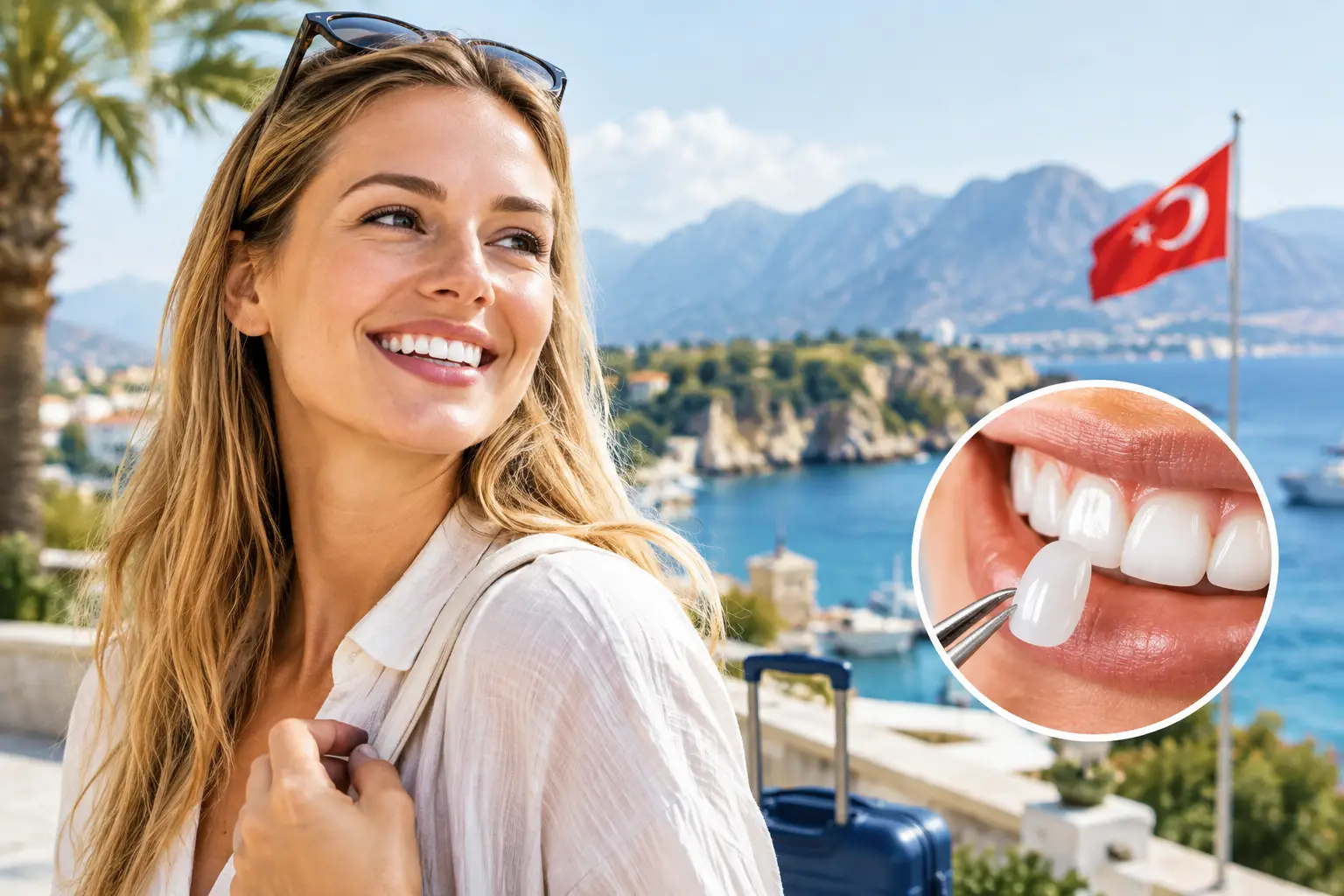
A UK patient veneer journey in Turkey usually starts long before the flight. It starts with photographs sent on WhatsApp, a quote that may or may not be meaningful, and the uncomfortable question most people avoid: are you improving healthy teeth, or are you being sold an irreversible makeover because it photographs well?
I have seen both outcomes. Turkey has excellent cosmetic dentists and modern laboratories, but it also has clinics that treat every enquiry as a 20-unit zirconia case. The difference is rarely obvious from an Instagram feed. For a UK patient, the safest journey is not the fastest or cheapest one. It is the one built around diagnosis, conservative preparation and a plan for aftercare once you are home.
Before travelling: work out what you are actually buying
The word “veneer” gets used far too loosely. A true veneer is a thin ceramic shell bonded to the front of a tooth. It may require no preparation or a small amount of enamel reduction. A crown covers the entire tooth and generally requires substantially more drilling. In Turkish marketing, packages labelled “veneers” can include crowns, often made from zirconia or lithium disilicate.
Neither material is automatically bad. Crowns can be the right treatment for heavily restored, broken or root-treated teeth. But putting crowns on healthy front teeth for cosmetic reasons is a bigger commitment than many patients realise. Once a tooth has been aggressively prepared, there is no going back to a natural tooth.
Before accepting any quote, ask the clinic to state in writing which teeth need treatment, whether each restoration is a veneer, crown, bridge or filling, the proposed material, and why that option is appropriate. If the answer remains vague, I would not book. “Hollywood smile” is marketing, not a diagnosis.
Your own dentist or hygienist in the UK can be useful before you travel, particularly if you have bleeding gums, old fillings, sensitivity, grinding habits or a history of root canal treatment. You do not need permission to seek treatment abroad, but you do need a realistic picture of your starting point. Veneers do not cure gum disease, active decay or a poorly controlled bite.
The remote consultation is a screening tool, not a treatment plan
Clinics commonly request close-up photos, a smile photo and panoramic X-ray if you have one. That can identify obvious issues and provide a provisional estimate. It cannot reliably assess gum health, bite forces, tooth cracks or the amount of enamel available for preparation.
A responsible clinic will make clear that the final plan depends on an examination and new X-rays in Turkey. Be cautious if a clinic promises a fixed treatment plan for 20 teeth after looking at two selfies. That is not confidence. It is a production-line approach.
Choosing a clinic without being distracted by the package
Most veneer trips are sold as packages, combining treatment with hotel accommodation, transfers and sometimes a translator. Those extras are convenient, but they should be the least important part of your decision. A private transfer does not tell you whether the dentist has planned your bite properly.
I would focus on the clinician and the process. Look for a named dentist who does the cosmetic work, clear information about their registration and experience, an in-person consultation before drilling, and a laboratory workflow that includes mock-ups or a wax-up where appropriate. Ask who makes the restorations and whether the clinic has an in-house lab or uses an external one. Neither model is inherently superior, but accountability matters.
The most useful questions are often the least glamorous: How many appointments are planned? What happens if the gums bleed or the bite needs adjustment? Is a temporary restoration included if teeth are prepared? What is the policy if the final shade or shape is not acceptable before bonding? Who pays if you require a root canal during treatment?
Price deserves scrutiny too. A Turkish veneer quote may be far lower than a private UK quote, even after flights and a hotel. That does not automatically mean inferior work. Labour, laboratory and overhead costs differ. But an unusually low all-inclusive price often assumes every tooth gets the same material, design and preparation. Dentistry should not be priced like a set menu.
Arrival day: the examination should slow things down
A typical trip lasts five to seven days, although some cases need longer. On the first clinical day, expect an examination, X-rays and photographs. Better clinics will also assess your bite, gum condition, tooth colour, existing restorations and facial proportions. If your plan changes after examination, the dentist should explain why and give you time to decide.
This is the point where patients sometimes feel pressure. Flights are booked, annual leave is limited and the sales coordinator may talk as though treatment is already agreed. You can still say no. You can reduce the number of teeth being treated. You can postpone. A deposit and a hotel booking are cheaper than a lifetime of regret.
For a cosmetic case, the dentist may take digital scans, make impressions, discuss shapes and shades, and create a trial smile. This could be a digital preview, a physical wax-up, or a temporary mock-up placed over the teeth. A preview is helpful, but it is not a guarantee of the final result. Tooth position, gum levels and bite limitations can change what is safely achievable.
Preparation, temporaries and the difficult middle days
If veneers require preparation, the dentist removes a controlled amount of enamel, usually under local anaesthetic. With crowns, the reduction is much greater. This is why the distinction matters so much.
After preparation, the clinic takes final scans or impressions for the laboratory. Many patients leave with temporary veneers or crowns while the final restorations are made. Temporaries can look acceptable, but they are not designed to behave like the finished ceramic. Avoid biting into hard foods, and do not judge the final smile solely on how the temporaries feel.
Sensitivity is common after preparation, especially with more extensive work. It should be discussed before treatment rather than dismissed afterwards. Severe or lingering pain needs proper assessment. A tooth that becomes symptomatic may need further treatment, which can alter both the timeline and the bill.
This part of the trip also reveals how well a clinic communicates. The good ones explain what they are checking and invite criticism of the trial design. The poor ones rush from drilling to fitting because the flight home is looming. Cosmetic dentistry needs time for adjustments. Five days can be enough for straightforward cases, but it is not a magic number.
Fitting day: do not let the clock make the decision
At the fitting appointment, the dentist should try each restoration in before permanent bonding. You should check the mirror in different light, smile normally, speak and bite gently. Look at symmetry, length, shade, the line of the edges and whether the teeth suit your face. Do not obsess over microscopic differences – natural teeth are not perfectly identical – but do speak up about anything that feels plainly wrong.
The clinician then checks contacts between teeth and your bite. This is not a cosmetic detail. A restoration that is even slightly high can create pain, chipping or jaw strain. Patients who grind their teeth may need a night guard, and I would treat this as essential rather than an optional add-on.
Before leaving, get copies of your X-rays, treatment notes, material details, laboratory information and written guarantee terms. A guarantee is only as useful as its exclusions and the clinic’s willingness to deal with problems. Ask whether it covers only remaking a restoration in Turkey, or whether it contributes towards remedial care in the UK. Most do not cover your flights, hotel costs or treatment by a British dentist.
Going home: aftercare is the part the advert leaves out
The first few weeks can involve mild sensitivity, altered speech and a period of getting used to the new contours. Contact the clinic promptly if you have pain when biting, a restoration feels loose, floss shreds between teeth, or your bite feels uneven. Do not wait for a cosmetic review if you have swelling, severe pain or signs of infection. Seek urgent care locally.
Long-term, veneers need the same basics as natural teeth: twice-daily brushing with fluoride toothpaste, interdental cleaning, regular hygiene appointments and sensible habits. They are stain-resistant, not indestructible. Grinding, nail-biting, opening packaging with teeth and chewing ice are all expensive hobbies when ceramic is involved.
You should also tell your UK dentist exactly what was fitted. Some practices are understandably cautious about taking responsibility for work completed abroad, particularly if records are incomplete. That is not hostility towards Turkey. It is a professional reality: they did not diagnose the case or control the materials and technique.
When Turkey makes sense – and when I would pause
Turkey can be a sensible option for a UK patient who has researched a specific clinician, understands the irreversible nature of the work and can allow enough time for proper appointments. It may offer good value, especially for several ceramic restorations, without compromising on quality.
I would pause if the clinic recommends extensive crowns on healthy teeth without a clear clinical reason, will not identify the treating dentist, refuses to provide a written plan, or pushes a same-day decision. I would also pause if you are mainly chasing a blinding white, perfectly uniform smile from a filtered video. That aesthetic dates quickly, while drilled teeth remain drilled.
The best veneer journey is often less dramatic than social media suggests: a conservative plan, a dentist willing to challenge your expectations, and enough time to make a decision you will still be comfortable with years after the return flight.