
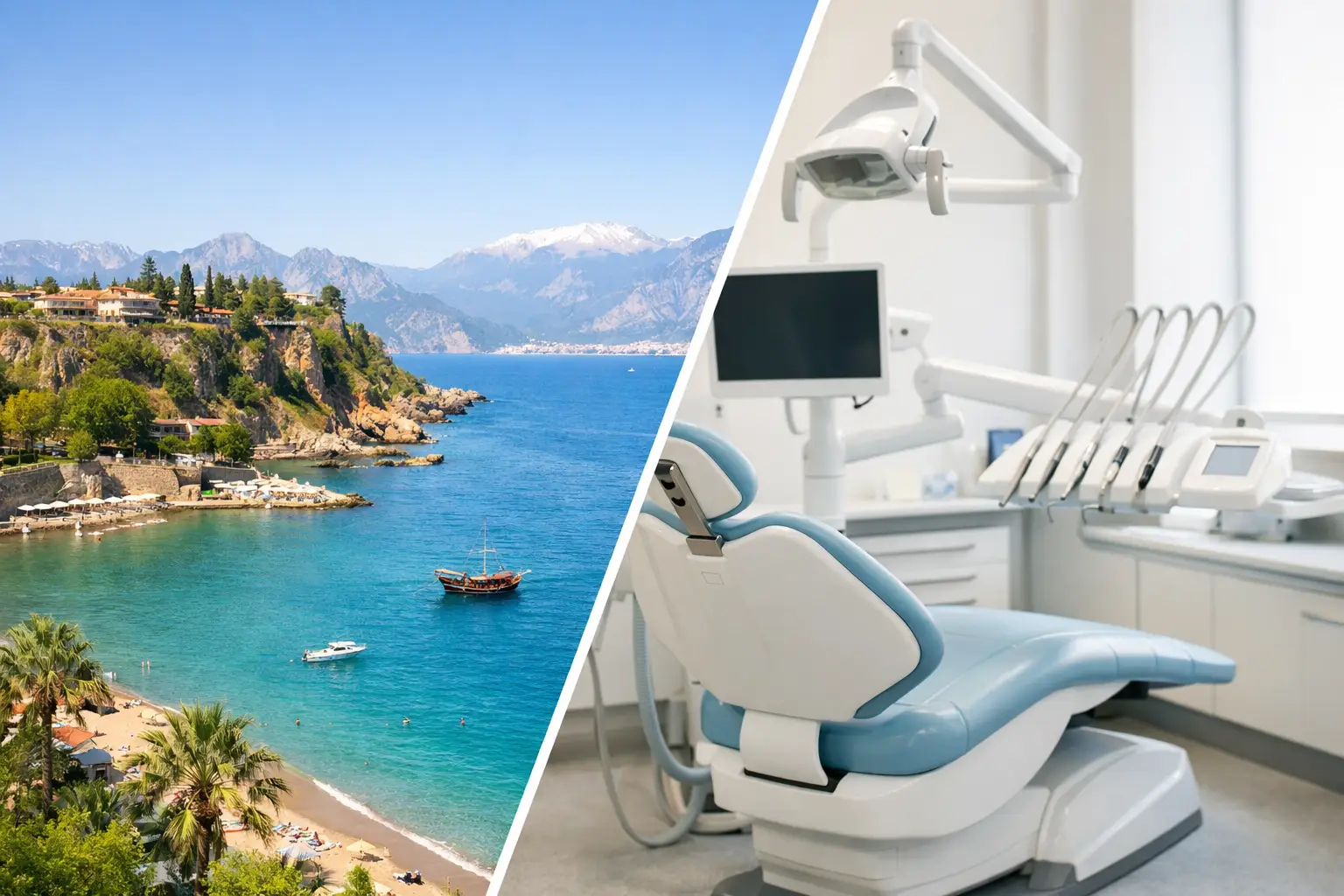
Antalya versus Istanbul dental clinics is not really a question of which city has better dentists. Both have excellent clinicians, advanced laboratories and far too many businesses selling a cheap smile before they have properly assessed the patient. The meaningful difference is the type of trip, the clinic market and how easy it is to separate a serious provider from a polished Instagram account.
I would not choose either city based on a package price or a hotel photo. For crowns, veneers, implants or full-mouth work, the quality of diagnosis, the treating dentist and the laboratory matter much more than the postcode.
Antalya versus Istanbul dental clinics: the short answer
For a straightforward cosmetic case, Antalya is often the easier choice. It is compact, heavily geared towards international dental visitors and generally less stressful to navigate. Many patients can stay close to their clinic, make a holiday of the trip and keep appointments manageable.
Istanbul offers a much deeper pool of specialists, hospitals and multidisciplinary clinics. That makes it my stronger pick for complex cases: extensive implant rehabilitation, advanced bone grafting, periodontal disease, orthodontics combined with restorative work, or a situation where the diagnosis is not obvious.
That does not mean every Istanbul clinic is superior, or that Antalya cannot handle major treatment. It means Istanbul gives you more options when a case needs more than a cosmetic dentist and a fast-turnaround lab. Antalya usually wins on convenience. Istanbul can win on clinical depth.
The clinic markets are different
Antalya’s dental tourism industry is concentrated around visitors who want a fixed, efficient treatment trip. Clinics are used to arranging transfers, hotels, translators and tightly scheduled appointments. For patients travelling from the UK or Ireland for 5 to 7 days, that can be genuinely useful.
The downside is that this market attracts volume operators. Some clinics treat patients as a production line: scan, shave teeth, fit temporary crowns, collect payment, move on. A driver and a luxury hotel do not make that safer. I am wary of any provider that seems more interested in your flight dates than your X-rays, medical history and reasons for treatment.
Istanbul is larger and less uniform. You will find large dental tourism brands, independent practices, university-connected specialists and hospital-based oral surgeons. The choice is wider, but so is the noise. A clinic in an expensive district is not automatically better, and a very low quote can hide poor materials, inexperienced clinicians or treatment that was never appropriate.
In practical terms, Antalya is easier to compare because many clinics offer similar visitor packages. Istanbul requires more research, but it may reward that effort if you need a specialist team.
Price: expect overlap, not a dramatic gap
Patients often assume Antalya is always cheaper. Sometimes it is, particularly for package-led veneer and crown cases, but the gap is usually smaller than the marketing suggests. Labour and laboratory costs vary more by clinic standard, material and case complexity than by city.
As a broad guide, reputable Turkish clinics may quote around £180 to £350 per zirconia crown, £250 to £450 per lithium disilicate veneer or crown, and roughly £450 to £900 for an implant fixture with the final crown depending on the implant system and the work required. Complex cases can be far higher. These are planning ranges, not promises.
An Antalya clinic may undercut an equivalent Istanbul provider by a modest amount. But if Istanbul’s quote includes a named implant system, a specialist surgeon, a proper CBCT scan and documented follow-up terms, it may be better value. Comparing a £2,500 Antalya package with a £3,200 Istanbul plan tells you very little unless the proposed treatment is genuinely the same.
I would be especially cautious with all-inclusive prices that cover 20 or 24 crowns without identifying the material, dentist or whether root canal treatment, gum work, temporary restorations and revisions are extra. Cheap dentistry becomes expensive when it has to be redone at home.
Travel and the reality of getting to appointments
Antalya is built for holidays. Its airport is close enough to the main hotel areas that transfers are usually simple, and many dental clinics are within a short drive of central accommodation. Outside peak season, it can feel calm and easy to manage.
The trade-off is seasonality. Summer heat can be uncomfortable after long clinical appointments, and popular areas become busy. Direct flight options may also be stronger at certain times of year than others, depending on where you live.
Istanbul has two major airports and far more year-round routes, which can be useful for patients travelling from regional UK airports or connecting from North America and Europe. Yet distance is the catch. Istanbul traffic is real. A journey that looks short on a map can take much longer, especially across the Bosphorus or at rush hour.
If you choose Istanbul, stay on the same side of the city as the clinic and ask where every appointment will take place. Do not book a bargain hotel near one airport without checking the journey to the practice. Saving £40 a night is pointless if you lose hours in traffic while dealing with temporary teeth.
Complex dentistry: where Istanbul has an edge
For routine crowns and veneers on otherwise healthy teeth, a well-run clinic in either city can deliver good work. The decision becomes more consequential when there is infection, bone loss, failing old bridges, bite problems, missing teeth or a history of gum disease.
I lean towards Istanbul for these cases because the city has a larger concentration of oral and maxillofacial surgeons, periodontists, prosthodontists and imaging facilities. A clinic that brings in the right specialist when needed is safer than one dentist attempting every procedure.
Ask directly who will place implants, who designs the final bite and who is responsible if the scan changes the original plan. If the answer is simply a brand name or a sales coordinator says, “our doctors will decide”, push further. You need names, roles and credentials before you travel.
Antalya has capable implant centres too. I would not rule it out for full-arch treatment if the clinic can show a properly staged plan, the surgeon’s experience, the implant brand and realistic healing time. What I would not accept is immediate full-mouth treatment presented as automatically suitable because it fits a five-day itinerary.
The aftercare question most adverts avoid
Neither Antalya nor Istanbul can provide local, hands-on aftercare once you are back in Manchester, Dublin or Glasgow. This is the central limitation of dental tourism, and no transfer package changes it.
Before committing, establish what happens if a crown fractures, a veneer debonds, an implant fails to integrate or your bite feels wrong after you return. A credible clinic should give clear written warranty terms, explain what it covers and say whether it pays towards remedial work abroad or expects you to fly back.
I also want to see a treatment record: pre-treatment X-rays or scans, the implant passport where relevant, material details, shades and a list of work completed. If you later need help from a UK dentist, vague invoices and WhatsApp messages are not enough.
For implants, build in the correct timeline. Implant placement and final crowns are commonly separated by months, particularly where grafting or healing is required. A clinic willing to slow down is often making the more responsible recommendation.
How I would choose between the two cities
Start with the clinical problem, not the destination. If you need a handful of well-planned restorations and want the simplest trip, Antalya is a sensible place to shortlist clinics. If your mouth needs reconstruction, specialist input or a second opinion on a complicated plan, put Istanbul at the top of your research.
Then assess individual providers on evidence. I would ask for the dentist’s name and specialty, a written plan based on current imaging, the exact materials and brands, photographs of comparable cases and a clear explanation of risks. I would also ask what teeth, if any, need root canal treatment or extraction and why. A clinic that cannot explain this in plain English is not one I would recommend.
Avoid making a decision from panoramic X-ray alone when extensive work is proposed. For implant treatment and major reconstruction, a CBCT scan is often necessary for safe planning. Equally, avoid clinics that prescribe 20 crowns from a few smile photographs. That is sales, not dentistry.
Choose the clinic that is prepared to protect your healthy tooth structure, even if its quote is not the lowest and its answer is less exciting than a perfect smile in 72 hours. Antalya and Istanbul both contain excellent care. Your job is to find the team that diagnoses first and sells second.