
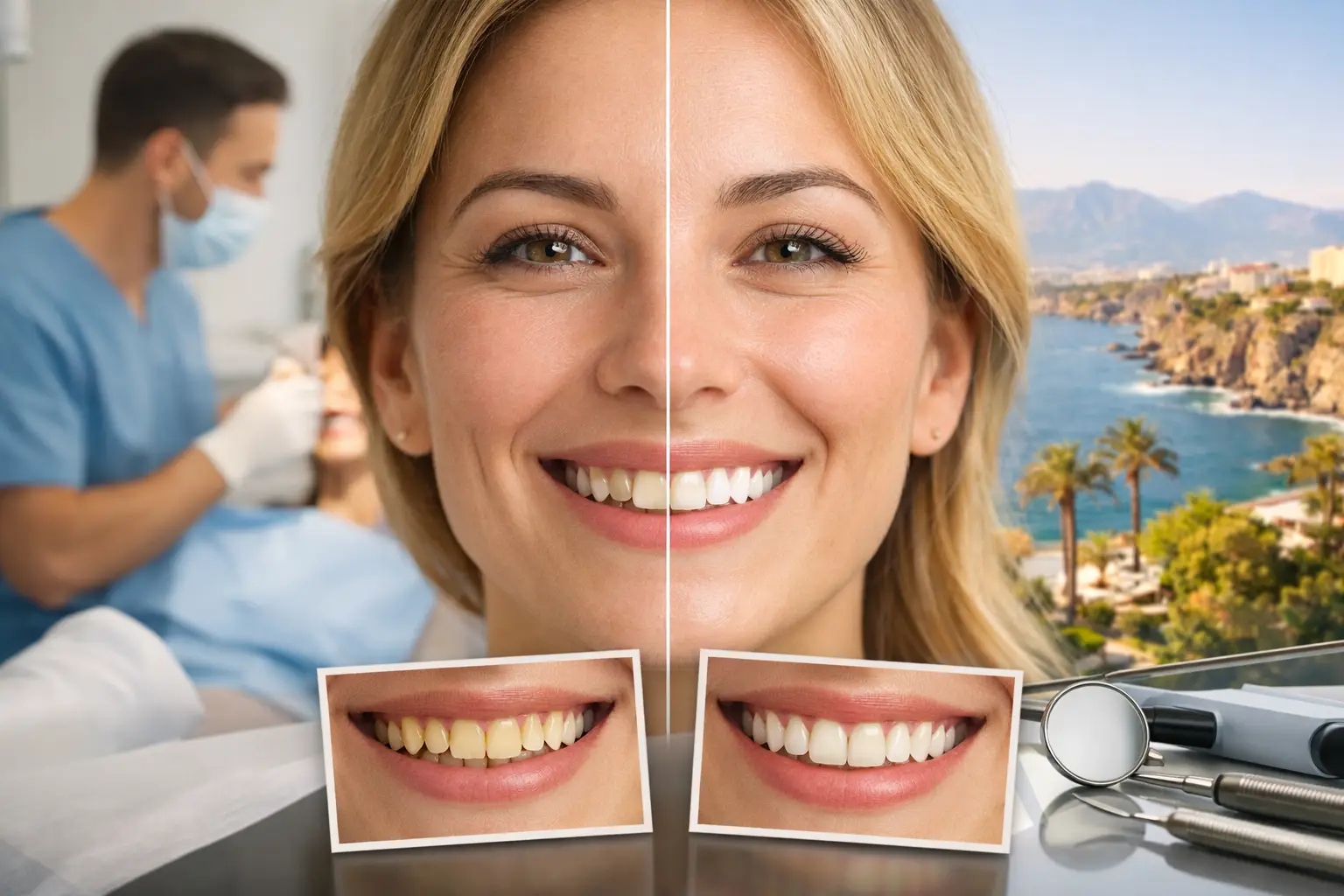
Most people start with Turkey dentist before after photos because they feel like proof. I get it. A gallery is quick, visual and easy to compare. The problem is that dental photos can be helpful and misleading at the same time, and a lot of clinics in Turkey know exactly how to use that to their advantage.
I’ve reviewed enough clinic websites and social feeds to say this plainly: before-and-after images are one of the easiest parts of dental marketing to manipulate. That doesn’t mean they’re useless. It means you need to read them properly, with a bit more scepticism than most patients bring to the first search.
What Turkey dentist before after photos can actually tell you
A good set of photos can show whether a clinic produces natural-looking work, whether they tend to over-whiten everything, and whether their dentists understand facial balance rather than just making teeth big and bright. You can sometimes spot if they are doing conservative veneer cases or aggressive full-mouth crown work. That matters.
Photos can also tell you whether the clinic treats cases similar to yours. If you have worn edges, crowding, a missing lateral incisor or old failing crowns, you want to see examples that match your starting point. A gallery full of perfect young patients with minor cosmetic tweaks won’t tell you much if your case is medically and structurally more complex.
What photos cannot tell you is just as important. They do not show bite function, long-term gum health, whether teeth were shaved excessively, whether the patient now has sensitivity, or whether the result still looks good after two years. They also won’t tell you if the patient needed remedial work back home.
That’s why I’d never judge a Turkish dental clinic on photos alone. If a clinic pushes images harder than qualifications, treatment planning and aftercare, I take that as a warning sign.
The biggest problem with before-and-after galleries
The industry has a bad habit of treating cosmetic dentistry like a beauty filter. Lighting changes. Camera angles change. Lip position changes. The patient smiles wider in the after shot. The teeth are dried before the final image so they look lighter. Sometimes the “before” is taken with an intraoral camera and the “after” with a proper DSLR. Same mouth, very different impression.
Then there’s case selection. Clinics naturally show their best work, not their average work. Again, that’s normal marketing. But when every result is ultra-white, ultra-even and strangely identical, I start to wonder whether I’m looking at genuine clinical variety or a production line.
I’m also wary of clinics that show dramatic transformations without explaining the treatment. If someone had minor staining and ended up with 20 opaque crowns, that is not a success story to me. It may photograph well. It may also be overtreatment.
How to judge before and after photos properly
The first thing I look at is whether the final result suits the patient’s face. Good dentistry is not copy-and-paste. The width of the front teeth, the way the smile follows the lower lip, the visibility of the gums and the overall proportion should look believable. If every patient ends up with the same square, bright white look, the clinic is selling a style rather than planning a case.
The second thing is whether the gums look healthy. Inflamed, puffy or irritated gum tissue in the after photo is a poor sign, especially if the clinic is presenting the result as finished work. Healthy gums frame good dentistry. You’d be surprised how many galleries ignore that completely.
The third thing is margin quality. You won’t always see this clearly in social media images, but close-up shots can reveal whether crowns or veneers sit neatly at the gumline. Bulky edges, dark shadows or flat-looking contours can suggest rushed lab work or poor preparation.
I also pay attention to whether the clinic shows more than one angle. A single front-on smile shot is weak evidence. Better galleries include retracted views, side angles and full-face photos. That usually means the clinic is more confident in the details and less reliant on flattering presentation.
Red flags in Turkey dentist before after photos
Some warning signs are obvious once you know what to look for.
If the before photo is low quality and the after photo is studio-grade, that’s a problem. If the patient’s head position, lip shape and lighting are completely different, comparison becomes unreliable. If the clinic heavily edits images, boosts whiteness or smooths everything to death, I’d discount the gallery almost entirely.
Another red flag is a page full of dramatic smile makeovers with no mention of what was done. Were those veneers, crowns, implants, composite bonding, whitening or orthodontics? The treatment matters because the trade-offs are very different. A result achieved with minimal prep veneers is not the same as one achieved by grinding healthy teeth for crowns.
I’m also cautious when clinics only show instant results. Final photos taken the same day as fitting can look polished, but they don’t show how the gums settle or whether bite adjustments were done properly. If a clinic never shows healed cases or longer-term follow-ups, they may not want you asking those questions.
And yes, stolen photos do happen. Reverse-image checking isn’t a bad idea if something feels off, especially when a newer clinic somehow has hundreds of perfect cases across every treatment category.
What good clinics do differently
The better clinics in Turkey tend to present cases with context. They explain the starting problem, the treatment choice, and sometimes why they rejected more aggressive options. That’s what I want to see. Dentistry is not just an aesthetic reveal. It’s diagnosis, planning and restraint.
A stronger clinic will usually have variety in its gallery. Not every case is Hollywood white. Some patients keep natural translucency. Some close spaces. Some correct wear. Some combine implant work with cosmetic treatment. That range often tells me more than ten flashy makeovers ever could.
I also trust clinics more when their photos are clinically consistent rather than over-produced. Clear, honest, well-lit images are enough. If the page looks like a fashion campaign, I start wondering what they’re compensating for.
Questions to ask after viewing the photos
Once you’ve found a few cases that look relevant, stop scrolling and start asking proper questions. Ask what procedure was used, how many teeth were treated, what shade was chosen and whether the result was temporary or final in the photo. Ask if any natural teeth were significantly reduced. Ask what the expected lifespan is and what maintenance is needed.
If you’re considering veneers or crowns, ask to see cases with a similar face shape and similar tooth proportions to yours. If you need implants, ask for timeline detail because implants are not a one-trip cosmetic quick fix in many cases. If the clinic becomes vague, defensive or overly salesy, that tells you more than the gallery did.
This is also where consultations matter. A clinic that promises the exact smile from another patient’s photo before properly assessing your bite, bone, gum health and expectations is not being careful. It’s selling you a template.
Photos matter, but they’re only one layer of evidence
If I were vetting a clinic, I’d treat before-and-after photos as one part of a wider check. I’d look at who is actually doing the treatment, whether the clinic explains options properly, whether they talk openly about limitations, and whether their treatment plans sound tailored rather than standardised. I’d also want clarity on materials, lab quality, guarantees and what happens if something goes wrong once you’re back in the UK or Ireland.
At Dental Guide Turkey, that’s the line I keep coming back to: attractive photos are easy to publish, but good treatment is harder to fake. The clinics worth shortlisting usually don’t rely on glamour alone. They can explain their work in plain English, show consistent standards and justify why a treatment is right for you, not just why it looks good on Instagram.
If you’re using Turkey dentist before after photos to choose where to go, use them as a filter, not a verdict. The right gallery should make you curious enough to ask better questions. If the photos only make you want whiter teeth without understanding the cost, compromise and long-term reality, you’re probably looking at marketing, not evidence.
The smartest patients I see aren’t the ones chasing the most dramatic transformation. They’re the ones who can look at a glossy smile photo and ask, quietly and correctly, what had to happen to get there.