
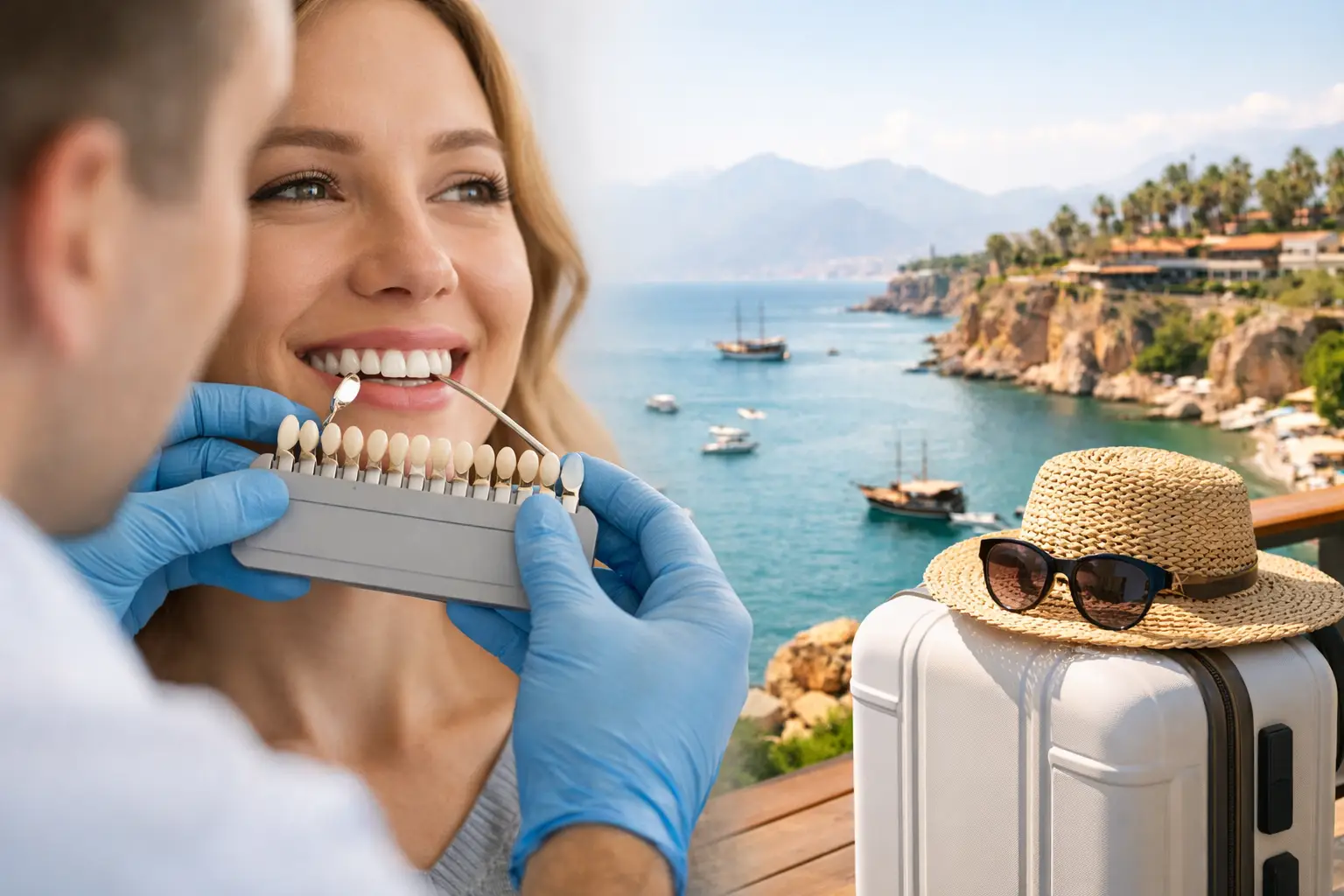
A bright, even smile is what most people picture when they search for dental veneers in Turkey. What worries me is how often the conversation starts and ends with before-and-after photos. Veneers are not a holiday beauty treatment. They involve permanent decisions about your teeth, and the wrong clinic can leave you with sensitivity, bulky teeth or a much larger repair bill at home.
I have seen excellent veneer work in Turkey. I have also seen clinics call full crowns “veneers” because that is the word patients search for. Those are not the same treatment, and you should not accept vague answers on a procedure that changes healthy tooth structure.
What dental veneers actually are
A veneer is a thin facing bonded to the front surface of a tooth, usually to improve colour, shape, minor alignment issues or small gaps. It should be planned tooth by tooth, with the aim of preserving as much enamel as possible. In a well-selected case, the tooth may need only light preparation. In some cases, no-prep or minimal-prep veneers are possible, although they are not suitable for everyone.
Crowns cover the whole tooth. They are often the right answer when a tooth is heavily filled, badly broken, root-treated or structurally weak. But fitting crowns to healthy front teeth simply to create a cosmetic makeover is an aggressive choice. It requires considerably more drilling, and it commits you to a restoration cycle for life.
If a clinic proposes 20 “veneers” but shows heavily reduced teeth in its videos, ask directly whether these are veneers or crowns. I would not book until the answer is in writing, including the proposed material for each tooth.
The material matters, but planning matters more
Most international patients will be offered composite resin, porcelain or lithium disilicate, commonly sold under the e.max name. Zirconia is also widely offered, particularly by high-volume Turkish clinics.
Composite veneers are the lower-cost option. They can often be completed quickly, repaired more easily and may involve less preparation. The trade-off is that composite can stain, chip and lose its polish sooner than ceramic. It is a reasonable choice for small corrections, but I would be cautious about a full composite smile makeover if you drink lots of tea, coffee or red wine and expect it to stay photo-white for years.
Porcelain and lithium disilicate veneers generally offer better translucency, colour stability and wear resistance. Lithium disilicate is especially popular for front teeth because it can look natural when it is designed properly. It is not automatically the best material, however. Tooth colour, bite forces, available space and the amount of enamel left all influence the decision.
Zirconia is very strong but more opaque. It can work well for crowns and for patients who need strength or are masking very dark teeth. For ultra-thin front veneers, it is not always my first choice aesthetically. A clinic that sells one material to every patient is selling a production system, not an individual treatment plan.
Who is a good candidate for veneers?
Veneers can be a sensible option if your teeth and gums are healthy, your expectations are realistic and the changes needed are mainly cosmetic. They can improve worn edges, uneven proportions, stubborn discolouration and small gaps without orthodontics in some cases.
They are not a shortcut for untreated dental disease. Active gum disease, decay, failing fillings, uncontrolled grinding and poor oral hygiene should be dealt with first. A patient who clenches or grinds heavily may still be suitable, but only with a properly assessed bite and a night guard afterwards. Ignoring bruxism is one of the quickest ways to chip ceramic work.
I would also think twice if the proposed treatment is being used to hide severe crowding. Sometimes veneers can create a good visual result, but only by making teeth too wide or removing more structure than is sensible. A short course of orthodontics, whitening and targeted bonding may be the more conservative route, even if it is less exciting on Instagram.
What dental veneers cost in Turkey
Prices vary sharply by city, clinic reputation, laboratory quality and material. As a broad guide, composite veneers in Turkey may be quoted from around £80 to £180 per tooth. Ceramic veneers, including porcelain or lithium disilicate, commonly fall around £180 to £400 per tooth. Premium clinics and complex cases can cost more.
Those figures may look dramatically cheaper than private UK pricing, but compare like with like. Ask whether the quote includes consultations, X-rays or scans, temporary veneers, gum contouring, bite adjustments, a night guard and follow-up visits. A low per-tooth figure can become less attractive once the clinic adds extras that were never mentioned in the first message.
Be equally wary of packages based solely on the number of teeth. Eight upper and eight lower veneers may suit one face and look absurd on another. The number should follow your smile line, tooth display, bite and budget. It should not be chosen because a package has a catchy name.
The checks I would make before paying a deposit
First, I would ask for a diagnosis, not a sales estimate. That means recent X-rays where appropriate, photographs, a bite assessment and a discussion of gum health. A remote consultation can be useful for an initial indication, but it cannot replace an in-person examination. Any clinic promising a final irreversible plan from a selfie is cutting corners.
Second, I would ask how much tooth reduction is anticipated and why. “Minimal prep” is not a technical guarantee. Request a wax-up or digital mock-up, then ask whether you can trial the proposed shape in your mouth before teeth are prepared. Digital smile design can be useful, but it is a communication tool, not proof that the final result will fit your bite.
Third, I would establish who is doing the clinical work. Some large clinics have impressive marketing teams but rotate patients between dentists. Ask for the treating dentist’s name, experience in cosmetic restorative work and whether the same dentist will handle preparation, fitting and review. I would also want to know which laboratory makes the restorations and whether material certificates are supplied.
Finally, read the guarantee carefully. A guarantee is not meaningful if it only applies when you fly back to Turkey within a few days, or if it excludes the common reasons restorations fail. No ethical dentist can promise veneers will last forever. What matters is whether the clinic gives clear aftercare guidance, documents your treatment and takes responsibility for genuine workmanship problems.
Timing your trip realistically
For a straightforward ceramic veneer case, I would allow five to seven days in Turkey. The first appointment normally covers examination, scans, shade discussion and preparation if you proceed. Temporaries may be fitted while the laboratory makes the final restorations. The fitting visit needs enough time for checking colour, shape, contacts and bite before bonding.
Rushing everything into two or three days is possible in selected cases with an in-house lab, but speed should not be the priority. Gums may need time to settle after contouring, and the dentist should not bond restorations while you are still unsure about their appearance. Once ceramic veneers are bonded, changing your mind is expensive and often means starting again.
Plan a quiet day after fitting rather than flying straight home if you can. Small bite adjustments are common, and it is better to have them done by the treating dentist than to hunt for help after you land.
The red flags I would not ignore
I would walk away from a clinic that will not distinguish crowns from veneers, refuses to discuss enamel reduction or recommends the same shade and shape for every patient. Uniform, ultra-white, square teeth may photograph well, but they can look artificial against your skin tone, age and facial features.
Another concern is pressure. “Today only” discounts, deposit deadlines and claims that every patient needs 20 teeth done are sales tactics, not clinical reasoning. Good cosmetic dentistry is collaborative. You should be able to say that you want a softer shade, fewer teeth treated or more time to think without being made to feel difficult.
I would also avoid anyone who dismisses aftercare in your home country. Veneers need normal dental monitoring, professional cleaning and prompt attention if a margin chips or a tooth becomes painful. Your UK dentist is not obliged to repair work completed abroad, so have a realistic plan before travelling.
The best veneer result is usually the one that does not announce itself from across the room. Choose a clinic because it can explain the conservative option, not because it promises the fastest, whitest transformation.