
A full-mouth restoration is not the moment to discover that a clinic’s idea of “pain-free dentistry” is two local injections and a playlist. Turkey dental sedation options vary sharply between clinics, procedures and patients. Most people do not need deep sedation, but some absolutely need more support than a standard numbing injection. The key is matching the method to the treatment and checking who is actually responsible for your safety.
I see too many dental tourism adverts using “sedation dentistry” as a vague comfort promise. Ask a direct question: what drug or technique will be used, who administers it, and what monitoring is in place? If the answer is fuzzy, I would look elsewhere.
Turkey dental sedation options at a glance
For routine veneers, fillings, crowns and single implants, local anaesthetic is the normal and usually sensible choice. It numbs the treatment area while you remain awake and able to respond. A good dentist can make this remarkably comfortable, especially when they allow enough time for the anaesthetic to work before starting.
For patients with genuine dental anxiety, a strong gag reflex, lengthy implant surgery or several procedures in one visit, clinics may offer oral sedation, inhalation sedation, intravenous sedation or, less commonly, general anaesthesia. These are not interchangeable upgrades. Each carries different practical limits, costs and safety requirements.
The best option is not necessarily the strongest one. It is the lightest level of sedation that safely allows the planned treatment to be completed without distress or unnecessary risk.
Local anaesthetic
Local anaesthetic is the workhorse of dentistry in Turkey and everywhere else. You are conscious, but the treated teeth, gums or jaw should be numb. For most international patients having a smile makeover, this is enough.
Its advantages are straightforward: recovery is quick, there is no need for a recovery escort, and it adds little or nothing to the treatment bill. The limitation is obvious. It does not calm severe anxiety, and it will not make a four-hour surgical appointment feel short.
Do not confuse pressure or vibration with pain. You may feel both during implant placement or tooth preparation. Sharp pain is different, and you should tell the dentist immediately. A clinic that pushes on regardless is failing a basic standard of care.
Oral sedation
Oral sedation generally means taking an anti-anxiety tablet before treatment. You remain conscious, though relaxed and often drowsy, and may remember little of the appointment afterwards. It can suit nervous patients having moderate treatment, provided the clinic has assessed their medical history properly.
The drawback is that the effect can be less predictable than IV sedation. It takes time to work, cannot be finely adjusted minute by minute, and may leave you groggy for the rest of the day. You will need someone to accompany you back to your hotel and you should not drive, drink alcohol or make important decisions afterwards.
I would be cautious about clinics offering tablets without a proper pre-treatment questionnaire. Sedatives can interact with prescription medicines, alcohol, recreational drugs and some health conditions. “It’s only a pill” is not a safety protocol.
Inhalation sedation
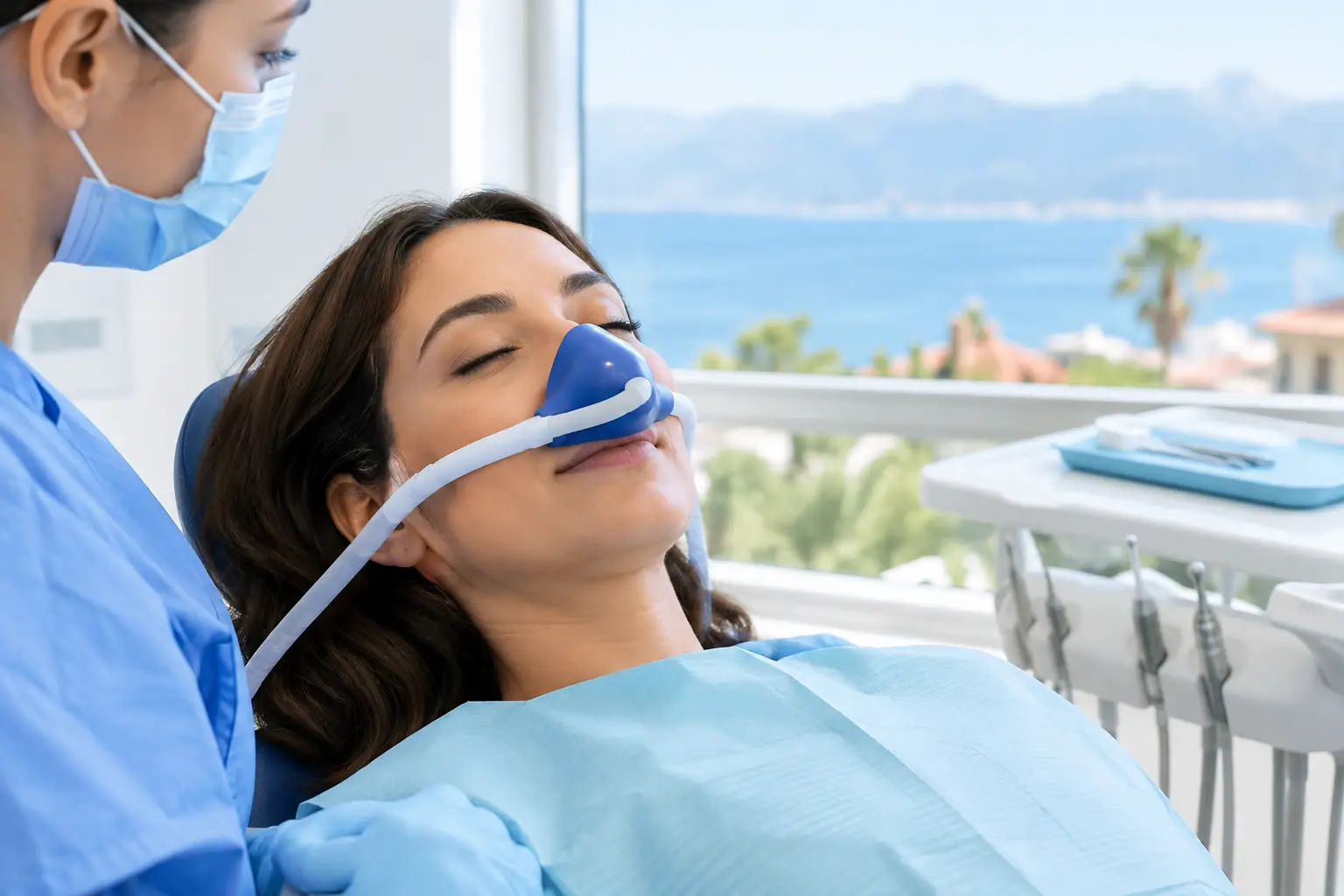
Some clinics offer inhalation sedation, often called laughing gas. You breathe a carefully controlled gas mixture through a nosepiece while local anaesthetic still handles pain control. It can reduce anxiety quickly, and the effects usually wear off faster than with tablets.
Availability is patchy in Turkish dental clinics. Do not assume a clinic that advertises painless dentistry has this option. It is particularly useful for mild to moderate anxiety and a pronounced gag reflex, but it may not be enough for extensive implant surgery or a patient with severe dental phobia.
IV sedation
IV sedation is the option many anxious dental tourists are really asking about. A sedative is administered through a vein, usually producing deep relaxation and partial or complete memory loss of the procedure. You still normally breathe independently and can respond to instructions, which means it is not the same as general anaesthesia.
For multiple implants, bone grafting, surgical extractions or patients who simply cannot tolerate long appointments awake, IV sedation can be a sensible choice. It is also more controllable than an oral tablet because the dose can be adjusted during treatment.
But it needs proper infrastructure. I would expect pre-operative assessment, continuous monitoring of oxygen levels, pulse and blood pressure, trained personnel focused on sedation rather than simultaneously doing the dentistry, emergency equipment and a monitored recovery period. For deeper sedation, ask whether a qualified anaesthetist is present. A glossy clinic reception proves none of this.
Expect IV sedation to add a meaningful amount to the bill. A realistic guide is roughly £250 to £600 or more, depending on duration, the medication used, whether an anaesthetist is required and the city. If a quote looks implausibly cheap, find out what has been excluded. Some clinics quote the sedative but not the clinician, monitoring or extended theatre time.
General anaesthesia
General anaesthesia renders you unconscious and is normally reserved for complex surgical cases, special clinical circumstances or patients who cannot be treated safely another way. It should be delivered in an appropriately equipped hospital or surgical setting, not treated as a routine add-on in an ordinary dental room.
For a typical veneer package, I would not recommend it. The risk, preparation, recovery and cost are disproportionate. It may be appropriate for major reconstructive work, significant disability or extreme phobia, but that decision should follow a proper medical assessment rather than a sales conversation over WhatsApp.
How I would choose between sedation methods
Start with the actual procedure, not your fear of the dentist. Two crowns and a cleaning are very different from six implants with sinus lifting. Then consider your anxiety level, previous reaction to anaesthetic or sedation, medical history and how much time you have in Turkey to recover.
A patient having 20 crowns over several days may benefit more from shorter appointments, a dentist who communicates well and reliable local anaesthetic than from IV sedation every day. Conversely, somebody facing multiple surgical extractions and immediate implants may reasonably decide that IV sedation makes the trip manageable.
If you have obstructive sleep apnoea, significant heart or lung disease, liver or kidney problems, are pregnant, have had adverse reactions to sedatives, or take regular medication, declare it early. The clinic may request medical clearance or recommend a different setting. That is not an inconvenience. It is competent risk management.
Questions to ask before you book
Before paying a deposit, get the sedation plan in writing. Ask which method is proposed, the name and role of the person administering it, how you will be monitored, what the all-in cost is, and whether an escort is mandatory afterwards. Also ask what happens if treatment runs longer than planned or if the sedation cannot be used on the day.
For IV sedation or general anaesthesia, ask where it takes place and what emergency arrangements exist. I would also want confirmation that the clinic has reviewed your medical questionnaire before travel, not when you are already sitting in the chair. A remote consultation cannot replace an examination, but it should identify obvious red flags well in advance.
Be wary of any provider promising that you will feel “nothing” without explaining the method. Pain control, anxiety control and unconsciousness are different things. Marketing deliberately blurs them because “sleep dentistry” sells.
Plan your recovery around your trip
Sedation affects travel planning. After oral or IV sedation, keep the rest of the day clear and arrange a responsible adult to take you to your hotel. Do not book a same-evening flight, plan a long solo journey across Istanbul, or assume you will be fit for sightseeing.
You should also separate sedation recovery from surgical recovery. Even when the sedative wears off, swelling, soreness and fatigue after implants or extractions may continue for several days. Build slack into your itinerary. Cheap flights are not worth rushing a clinical decision.
The right sedation should make treatment safer and more tolerable, not help a clinic cram too much dentistry into too little time. If a provider treats it as a sales extra rather than a clinical decision, I would keep looking.