
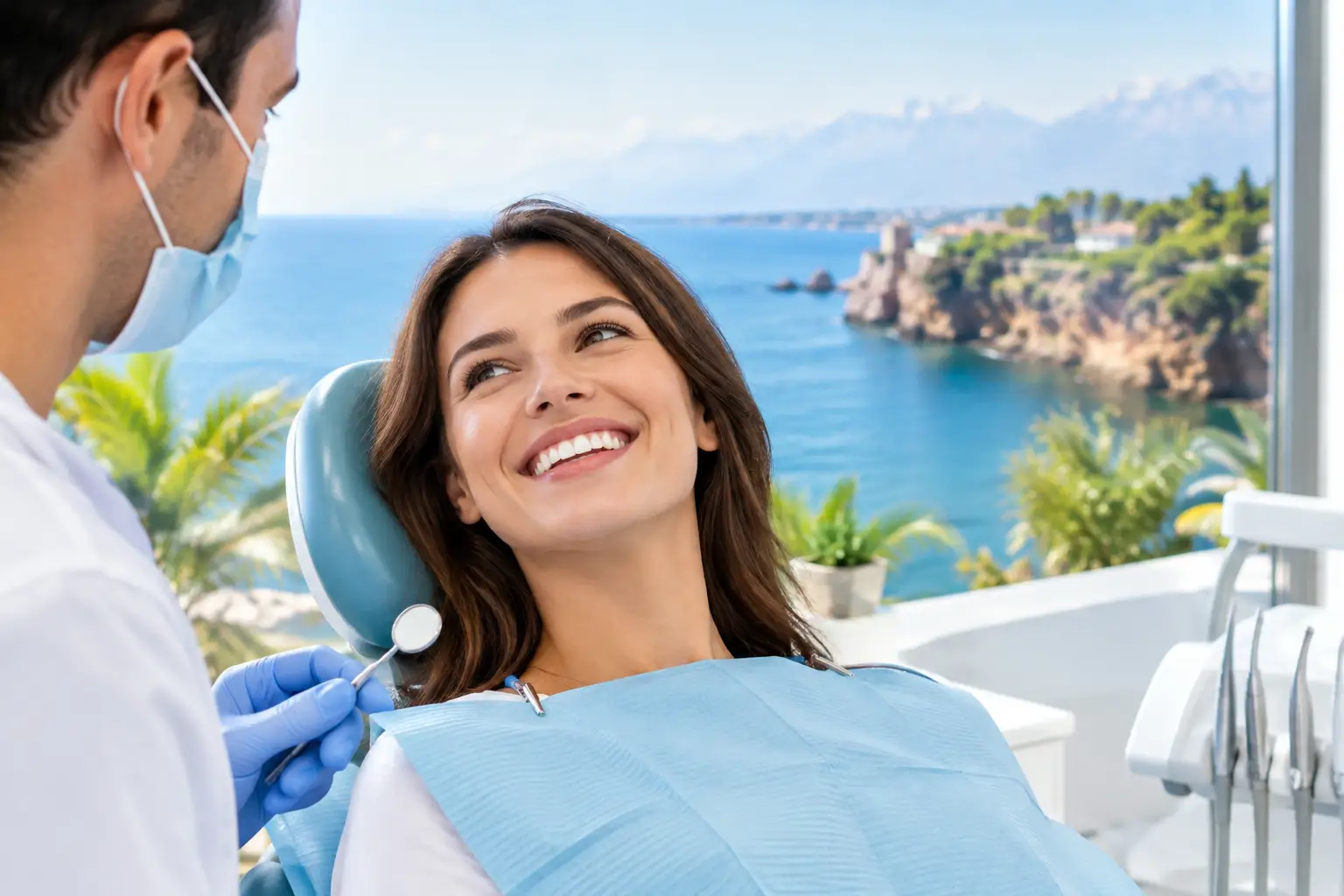
Dental tourism is not really about combining a holiday with a dentist appointment. For most people considering Turkey, it is about accessing treatment they cannot comfortably afford at home. That can be a sensible decision. It can also go badly wrong when patients choose a clinic from a heavily edited Instagram video, accept a treatment plan within ten minutes, and mistake a luxury transfer for evidence of clinical quality.
I have spent enough time looking at Turkish clinics and treatment plans to be blunt about this: Turkey has excellent dentists and very competitive prices. It also has high-volume clinics that sell cosmetic makeovers too aggressively. The country is not the risk. The clinic, the diagnosis and the plan are what matter.
Why dental tourism in Turkey is so popular
The price gap is real. A single implant in the UK can cost £2,500 to £3,500 or more once the implant, abutment and crown are included. In Turkey, a comparable package commonly sits around £450 to £900, depending on the implant system, crown material and complexity. A zirconia crown may cost £180 to £350 rather than £800 or more at home.
Lower operating costs, laboratory costs and dentist fees explain much of that difference. It is not automatically a sign that corners are being cut. Turkey also has a large, experienced private dental sector built around international patients, particularly in Istanbul, Antalya and Izmir.
But low prices create the wrong incentive for some providers. A clinic that earns its money from volume may prioritise fast turnaround and large cosmetic cases. That is why patients are sometimes advised to crown teeth that could have been restored more conservatively, or to have dozens of teeth prepared when a smaller treatment plan would make more clinical sense.
The biggest decision is not the destination
Before booking flights, establish whether the proposed treatment is actually necessary. This is especially important if you are considering veneers, crowns or a full-mouth makeover. Teeth filed for conventional crowns do not grow back. A cheap price does not make irreversible treatment low-risk.
I would ask for a written treatment plan that identifies every tooth, the proposed procedure, material and price. If the clinic says you need 20 crowns but cannot explain why each tooth needs one, stop there. Good clinicians can show decay, cracks, old failing restorations, bite problems or severe wear on scans and photographs. They do not rely on vague claims that your teeth need a Hollywood smile.
For implants, ask whether the quote includes the surgical implant, healing cap, abutment, final crown, scans and any bone grafting. An attractive headline price can exclude several of those items. You should also know the implant brand before you travel, not after surgery. Established systems with reliable component availability are generally a safer bet if you later need maintenance in the UK or Ireland.
What I would check before choosing a clinic
A professional-looking website proves very little. Some of the least convincing clinics clinically are excellent at content marketing. I would focus on evidence that is harder to manufacture.
First, find out who will examine you and carry out the treatment. Ask for the dentist’s full name, qualifications and role. For complex implant, gum or root canal cases, ask whether a relevant specialist is involved. A general dentist may be perfectly capable of routine work, but it is reasonable to expect specialist input when the case calls for it.
Then look at the diagnostic process. A credible clinic should request recent X-rays, clear photographs and medical history before giving a reasonably detailed estimate. For implant planning, a CBCT scan is often necessary. No responsible provider can guarantee that you are suitable for implants from a selfie and a WhatsApp message.
Finally, ask how many visits are needed and what happens between them. Crowns and veneers can often be completed in five to seven days, although complex bite changes may warrant more time. Implants usually require two trips, with three to six months of healing before final crowns are fitted. Any clinic promising permanent implant teeth in a few days without discussing your bone, gum health and bite deserves serious scrutiny.
The trade-off behind fast cosmetic treatment
Turkey is very good at efficient treatment, but speed has limits. Patients often arrive with a tight schedule and a fixed return flight, which can push clinics to finalise work before it has been properly tested. A crown can look excellent in photographs and still feel wrong when you bite, cause sensitivity, or make cleaning more difficult.
Temporary crowns and a proper trial stage are particularly valuable in extensive cases. They allow the dentist to check speech, bite, tooth length and appearance before the final ceramic work is made. That process takes time. I would rather see a patient make a second trip than have 20 permanent crowns fitted because the clinic wants the case completed before Friday.
This does not mean every treatment needs multiple visits. A straightforward set of veneers or crowns may be completed safely in one trip when the diagnosis is sound and enough time is allowed for adjustments. The point is that the clinical timetable should drive your travel plans, not the other way round.
Budget for more than the advertised price
Treatment cost is only one part of dental tourism. Flights, accommodation, local transport, prescriptions, travel insurance and a contingency fund all belong in the calculation. If you need a second visit for implants or a correction, the apparent saving narrows quickly.
I also recommend asking exactly what the clinic’s guarantee covers. A ten-year warranty sounds reassuring, but it may cover only the ceramic crown, not dental work that fails because of gum disease, bite forces or poor hygiene. It may also require you to return to Turkey for any remedial work. That can still be fair, but you need to understand it before paying a deposit.
Aftercare at home is the awkward part many clinics barely discuss. Your local dentist is not obliged to repair treatment completed abroad, especially if records are limited or complications arise. Before travelling, obtain copies of your X-rays, treatment plan, implant passport where relevant, and details of materials used. Keep them. They may save your local dentist a great deal of guesswork later.
Red flags I would not ignore
There are several patterns that should make you cautious. The first is pressure to pay a large non-refundable deposit immediately. A modest deposit can be normal, particularly for laboratory work, but urgency is a sales tactic, not a clinical one.
I would also avoid clinics that quote one fixed price for every patient before reviewing records, refuse to name their dentists, or frame extensive crowns as the answer to every concern. Be wary of all-inclusive packages that focus more on five-star hotels, VIP cars and influencers than diagnostics, materials and aftercare.
Another concern is treatment carried out by people who are not qualified dentists. Dental assistants have important roles, but tooth preparation, injections, impressions and fitting decisions should be handled under appropriate professional responsibility. If you cannot tell who is doing what, ask directly.
When Turkey may not be the best option
Dental tourism is not right for every case. If you have active periodontal disease, uncontrolled diabetes, complex jaw issues, severe dental anxiety requiring sedation, or a history of difficult healing, continuity of care may be worth more than a lower upfront bill. The same applies if you cannot realistically return for review appointments.
I would be especially careful with full-mouth rehabilitation. These cases can be life-changing when planned properly, but they are not a bargain-hunting exercise. They involve bite analysis, gum health, provisional stages and long-term maintenance. A clinic offering a dramatic transformation at the lowest possible price is not necessarily offering value.
For simpler, well-defined work, Turkey can be a strong option. A patient who has had an independent examination, understands the limitations and chooses a clinic on evidence rather than social media can receive high-quality treatment for far less than in the UK.
The useful question is not whether Turkey is safe for dental treatment. It is whether the specific plan protects your natural teeth, fits your health needs and gives you a realistic route to aftercare. If a clinic makes that easy to understand before it asks for your money, you are looking in the right place.