
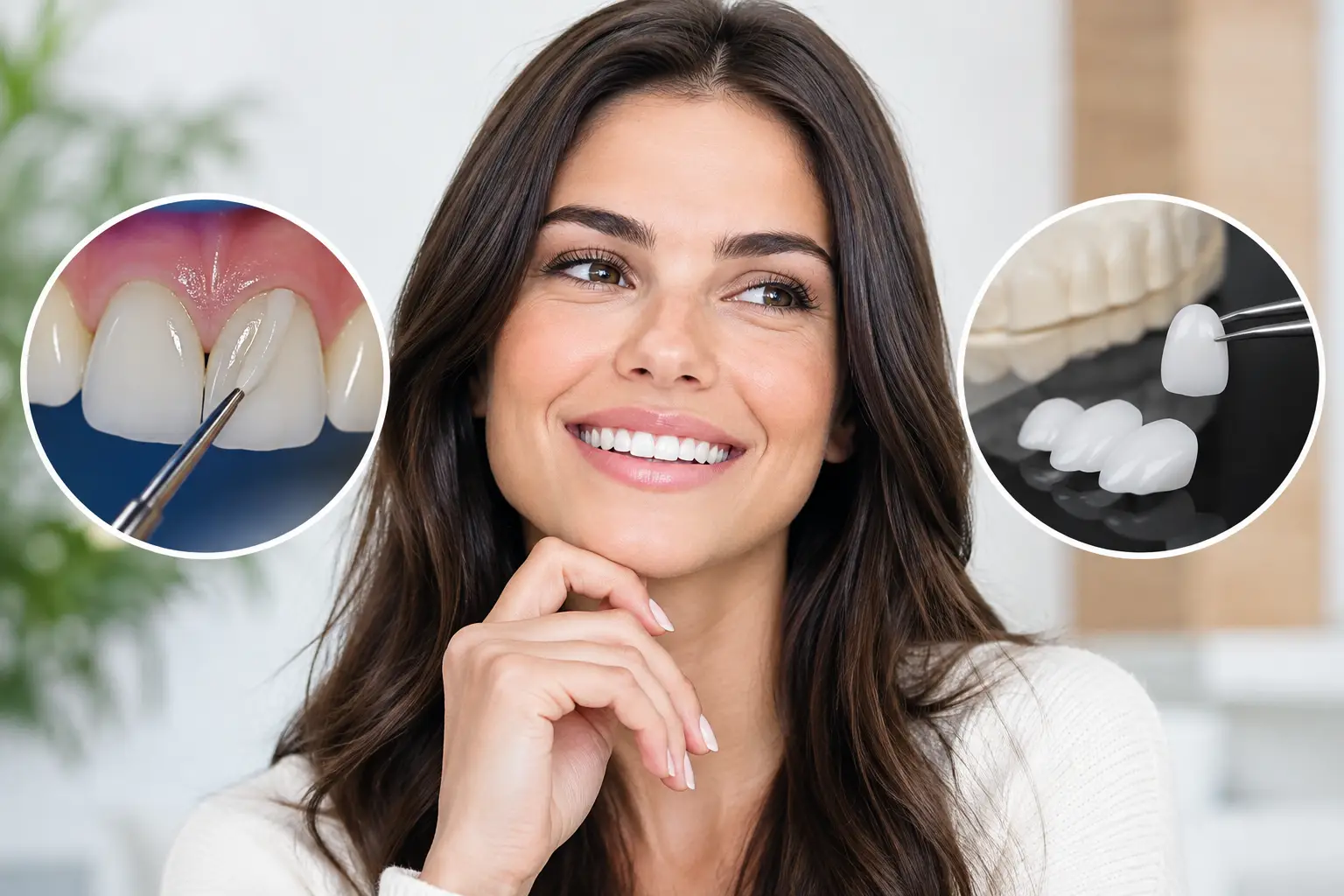
A smile that looks good in a clinic’s Instagram reel can be a very expensive mistake six months later. Composite bonding versus veneers is not really a contest between a cheap option and a premium one. They solve different problems, demand different compromises, and are too often sold in Turkey as if every patient needs a full set of one or the other.
My view is simple: preserve healthy tooth structure whenever you can. That does not mean composite bonding is always the answer. It means a clinic should be able to explain, tooth by tooth, why it is proposing drilling, adding material, changing colour or changing bite position.
Composite bonding versus veneers: the core difference
Composite bonding is a tooth-coloured resin applied directly to the tooth and shaped by the dentist. It is commonly used to repair chips, close small gaps, build up worn edges or improve minor unevenness. In the right hands, it can make a meaningful improvement with little or no enamel removal.
Veneers are thin custom shells bonded to the front of teeth. Porcelain veneers, often made from lithium disilicate and marketed as E-max, are the version most international patients mean when they say “veneers”. They are made in a laboratory, then bonded to teeth after preparation. That preparation may be minimal, but it is not always minimal. The amount removed depends on tooth position, the shade change required and the final shape being planned.
There are also composite veneers, where resin covers more of the front surface of each tooth. They sit between small-scale bonding and porcelain veneers in both scope and cost. Clinics sometimes blur these terms. Ask exactly what material is being used and whether it is being built directly in the mouth or made in a laboratory.
When composite bonding is the sensible choice
I would look first at composite bonding if your teeth are generally healthy and you want to correct modest cosmetic issues: small chips, triangular gaps, slightly short teeth, mild edge wear or uneven contours. It is also useful where a patient wants to test a more balanced smile before committing to porcelain.
The biggest advantage is reversibility, or at least relative reversibility. Composite can usually be repaired, adjusted or replaced without continually taking more tooth away. That matters if you are in your twenties or thirties. A veneer is not a one-off purchase. Once a tooth is prepared for a conventional veneer, it will need a restoration for the rest of your life.
Bonding is not invincible, though. Resin can stain, lose polish and chip, particularly if you smoke, drink a lot of tea or coffee, bite pens, chew ice or grind your teeth. A good dentist can often repair a small chip in one visit. That convenience is a genuine benefit for patients who live outside Turkey.
Composite also has limits. It is less convincing than high-quality porcelain for major colour changes, severe wear or substantial reshaping across many front teeth. Trying to make very dark, worn or poorly aligned teeth look like bright, long Hollywood veneers with thick layers of composite often produces bulky results. I would not recommend that compromise simply because it is cheaper.
When veneers earn their higher price
Porcelain veneers tend to make more sense where the desired change is substantial and stable: a significant shade improvement, pronounced shape discrepancies, multiple old fillings, persistent discolouration or teeth that need a coordinated redesign. Good porcelain has a depth and translucency that composite rarely matches over a larger area.
They also hold their surface finish better. With sensible care, well-made porcelain veneers commonly last 10 to 15 years and sometimes longer. Composite bonding may look excellent for several years, but usually needs polishing, repair or replacement sooner. The exact timetable depends far more on bite, hygiene and habits than a clinic’s warranty card.
The trade-off is biological. Veneers can require enamel reduction, and aggressive preparation raises the risk of sensitivity, gum irritation and future restorative work. “No-prep veneers” are heavily marketed, but they are not universally conservative. If teeth already project forwards, placing shells without preparation can make them look thicker and alter the bite.
A dentist who suggests 20 veneers without discussing alignment, whitening or selective bonding is not giving you a treatment plan. They are selling a package.
Cost in Turkey: compare the whole plan, not the per-tooth advert
Turkey is cheaper than the UK for both treatments, but advertised starting prices are often designed to get you into a WhatsApp conversation rather than tell you what you will pay. As a broad guide, direct composite bonding in reputable Turkish clinics may sit around £80 to £180 per tooth. Porcelain veneers commonly fall around £180 to £350 per tooth, with premium clinics and complex cases going higher.
Those figures can change sharply depending on the city, dentist, ceramic system, temporary restorations, digital planning and whether gum contouring, fillings or bite guards are needed. A very low veneer quote may also exclude X-rays, hotel transfers, provisional veneers or follow-up work.
For a patient considering eight, 10 or 20 teeth, the material difference becomes substantial. But choosing bonding purely because it lowers the initial bill can be false economy if you actually need a more durable correction. The reverse is just as true: paying thousands for porcelain when a few carefully placed composite additions would do the job is overtreatment.
I would ask for an itemised written plan before booking flights. It should state the number of teeth, material brand, whether treatment is direct composite or laboratory-made porcelain, preparation expected on each tooth, total price and what happens if additional work is found necessary.
Your bite matters more than the shade chart
The front teeth are not ornaments. They meet, guide jaw movement and take force every time you eat. This is why the best cosmetic outcome on photographs can fail early if the bite has been ignored.
If you grind or clench, tell the clinic before it designs anything. You may need a night guard, and in some cases a more conservative approach or orthodontic assessment is wiser. If your teeth are crowded, rotated or positioned far forwards, moving them with orthodontics before adding material can preserve more enamel and produce a less artificial result.
Gum health is equally non-negotiable. Bleeding gums, untreated decay and poor cleaning do not disappear because the teeth have been made whiter. Cosmetic work should come after disease control, not instead of it.
Red flags I see in Turkish smile-makeover quotes
The clinic does not need to examine you in person before giving a preliminary range, but it should be cautious. A promise of a fixed 20-veneer plan from two filtered selfies is a warning sign. So is a claim that every case can be completed in a few days without acknowledging assessment, temporary stages or bite checks.
Be wary of language such as “shaving” being harmless or “crowns and veneers are basically the same”. They are not. A crown covers the whole tooth and generally requires considerably more reduction than a veneer. Some clinics advertise veneers then recommend crowns on arrival because that is what their workflow is set up to deliver.
Ask to see unedited cases similar to yours, including side views and gumlines, not just front-facing before-and-afters. Ask who will prepare the teeth, who will place the restorations and whether the dentist is available for adjustments before you fly home. A clinic that becomes evasive around these questions is not one I would trust with irreversible work.
How I would make the decision
Start by defining the smallest change that would make you happy. If it is closing a tiny gap and restoring worn edges, composite bonding is often the more proportionate treatment. If you want to change the colour, proportions and surface appearance of several teeth in a predictable long-term way, porcelain veneers may justify the commitment.
Then consider your ability to maintain it at home. Bonding is easier for a local dentist to repair, though colour matching old resin can be imperfect. Veneers are durable but may require specialist replacement if one fails years later. Neither option excuses poor brushing, smoking, grinding or skipping hygiene appointments.
The right choice should feel slightly boring after it is explained: a clear diagnosis, a conservative plan, realistic limits and a price that does not change once you arrive. If a proposed smile makeover sounds too dramatic, too cheap or too fast, pause. Your natural enamel is the one thing no clinic can put back.