
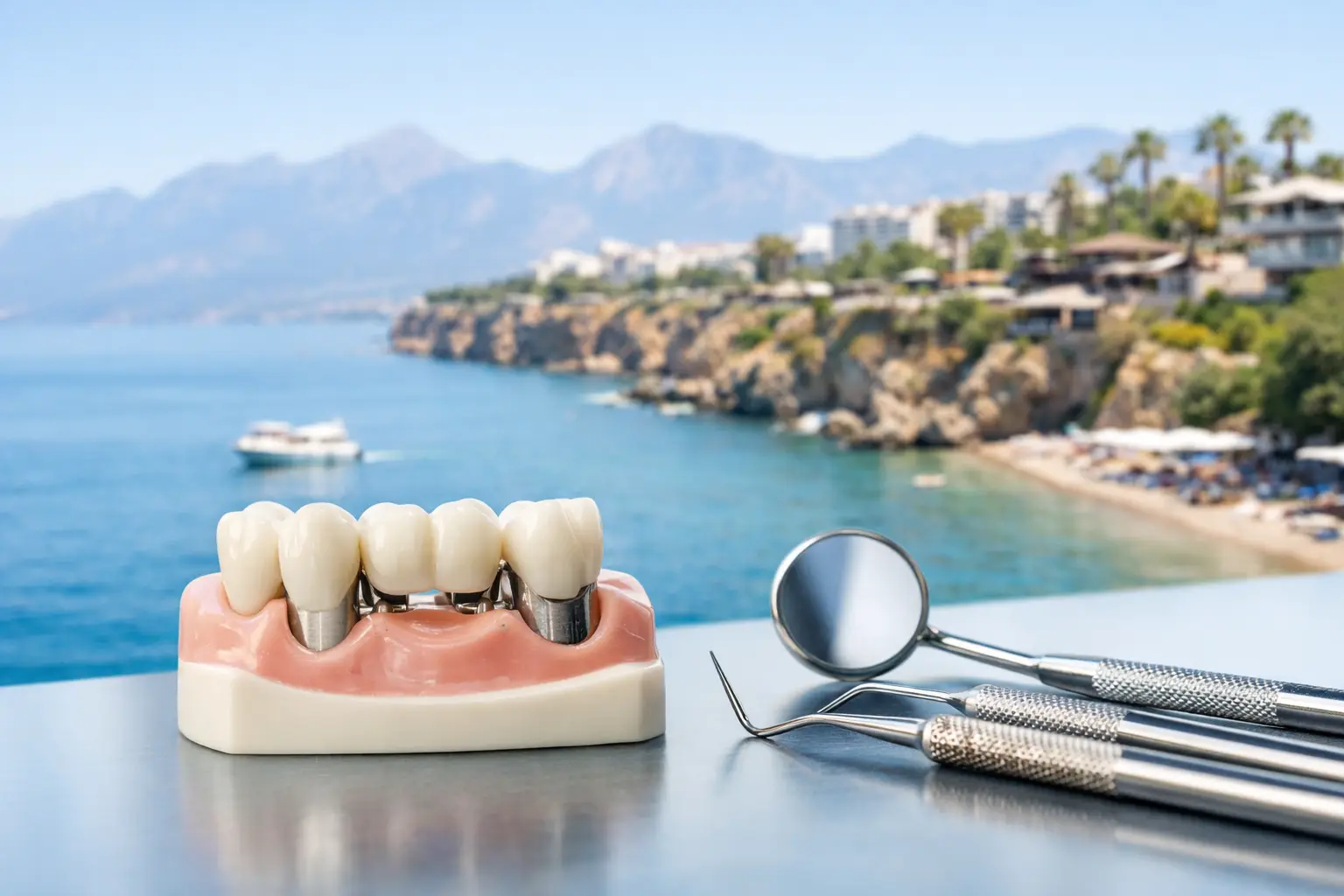
A bridge can be a sensible way to replace a missing tooth, but it is also one of the treatments most easily oversold in Turkish dental tourism. In this Turkey dental bridge guide, I will focus on the questions that matter before you book: whether a bridge is right for your mouth, what a fair price looks like, and how to avoid a treatment plan built around speed rather than long-term function.
A dental bridge is not simply a row of attractive teeth. It relies on the teeth or implants supporting it, the bite forces going through it, and the quality of the fit at the gumline. Get those parts right and a good bridge can last well over a decade. Get them wrong and the low upfront cost becomes irrelevant.
What a dental bridge actually does
A conventional bridge replaces a missing tooth by attaching an artificial tooth, called a pontic, to crowns on the teeth either side of the gap. For a single missing tooth, this is commonly a three-unit bridge: crown, replacement tooth, crown. The supporting teeth are prepared, scanned or moulded, and covered with the finished bridge.
This is why I would not treat a bridge as the automatic alternative to an implant. A bridge means reducing healthy enamel on the adjacent teeth. If those teeth already have large fillings, old crowns or cracks, that can be a reasonable trade-off. If they are completely sound, an implant may preserve more natural tooth structure, albeit at a higher cost and with a longer treatment timeline.
There are also implant-supported bridges for patients missing several teeth. These do not rest on natural teeth, but they are a different category of treatment. They require surgery, planning and often a healing period. Do not compare the price of a three-unit conventional bridge with a full implant bridge and assume the cheaper quote is equivalent.
Turkey dental bridge costs: what you are really paying for
For a conventional three-unit bridge in Turkey, I would expect indicative clinic prices of roughly £450 to £1,100, depending on the material, city, laboratory and complexity. A lower figure may be possible for porcelain fused to metal. A well-made zirconia bridge usually sits in the middle to upper part of that range, while premium lithium disilicate options can cost more.
The confusing part is that many clinics quote per unit. A three-unit bridge has three units, so a price of £180 per crown is not an £180 bridge. It is a £540 bridge before any extra treatment. Ask for the full price for the entire restoration, including scans, temporary work, fitting and any adjustments.
Prices can rise sharply if you need a root canal, post and core build-up, gum treatment, or replacement of failing crowns on the supporting teeth. These are not necessarily signs of a dishonest clinic. The red flag is being promised a fixed, all-inclusive price before anyone has reviewed clear X-rays or an in-person examination.
As a broad comparison, the same three-unit bridge may cost £1,500 to £3,000 or more privately in the UK. Turkey can offer a real saving, but it is not magic. Good laboratories, skilled technicians and reputable materials still cost money. A quote that is dramatically below every credible competitor deserves scrutiny, not celebration.
Which bridge material should you choose?
For most back teeth, monolithic zirconia is the practical default I tend to favour. It is strong, metal-free and suits the heavy forces of chewing. Its appearance has improved significantly, although highly translucent zirconia may not be the best choice for someone who grinds their teeth heavily.
For visible front teeth, lithium disilicate, often referred to by the trade name Emax, can produce excellent translucency. It is not automatically the superior material, though. A long bridge or a patient with a powerful bite may need zirconia for strength. A dentist should explain this choice in relation to your bite and the bridge span, not just tell you that one material is “the best”.
Porcelain fused to metal remains functional and is often cheaper, but I would be cautious about it for the front of the mouth. Over time, gum recession can reveal a dark metal edge. It may still be a sensible budget option for a molar bridge where appearance is less critical.
Material branding is another area where marketing gets ahead of evidence. Ask what material is being used, which laboratory makes the bridge, and whether you will receive a material certificate. A clinic does not need to use the most expensive branded block to produce good work, but it should be able to answer these basic questions clearly.
How long will treatment take in Turkey?
A straightforward conventional bridge can often be completed in five to seven days. At the first appointment, the dentist assesses the teeth, takes X-rays and digital scans, prepares the supporting teeth, and fits a temporary bridge. The laboratory makes the final restoration, which is tried in, adjusted and cemented later in the week.
That timeline works only if the supporting teeth and gums are healthy. If a root canal is required, the tooth has an infection, or the gumline needs stabilising, rushing to a permanent bridge is poor dentistry. I have seen clinics force complex cases into a five-day holiday schedule because that is what the patient bought. I would not recommend it.
For implant-supported bridges, allow substantially longer. Implants may need three to six months to integrate with the bone before the final bridge is fitted, although some cases are suitable for immediate temporary teeth. A clinic promising every patient permanent implant teeth in one visit is selling a timetable, not an individual plan.
The checks I would make before committing
A polished social media feed tells you little about bridge quality. Crowns look good on the day they are fitted. The more useful questions concern diagnosis, materials, bite planning and what happens if a problem appears after you return home.
Before paying a deposit, I would ask for the following:
- A written plan showing the number of bridge units, proposed material, named teeth involved and whether temporary restorations are included.
- An explanation of why a bridge is preferable to an implant, removable option or leaving the space alone in your specific case.
- Confirmation of what diagnostic records are needed before travel, including recent X-rays, photographs or a CBCT scan where appropriate.
- A transparent list of exclusions, particularly root canals, build-ups, gum treatment, sedation and any extra nights required.
- A clear policy on repairs, recementing and clinical complications once you are back in the UK or Ireland.
I would also want to know who is doing the work. In larger Turkish clinics, the consultation dentist may not be the dentist preparing or fitting your bridge. That is not automatically a problem, but you should know the clinician responsible and their relevant experience.
Common bridge mistakes I see patients make
The biggest mistake is treating a bridge as a cosmetic purchase. Shade matters, particularly in the front teeth, but fit and bite matter more. A bridge that is slightly too high can cause jaw discomfort, tooth sensitivity or repeated chipping. A poor margin can retain plaque and compromise the supporting teeth.
The next mistake is accepting unnecessary treatment. If a clinic recommends crowning many healthy teeth to create a larger smile transformation, ask why each tooth needs preparation. A bridge should solve a defined functional gap, not become an excuse to drill otherwise healthy enamel.
Finally, do not ignore hygiene. You will need to clean beneath the pontic daily using interdental brushes, floss threaders or a water flosser. A bridge cannot get decay itself, but the natural teeth holding it can. If you are not willing or able to maintain it, an implant is not automatically easier either, but the discussion needs to be honest.
A well-planned bridge in Turkey can be good value and a reliable restoration. Choose the clinic that asks difficult questions about your teeth and bite, rather than the one that sends the quickest quote. That small difference in approach is usually where the real quality begins.