
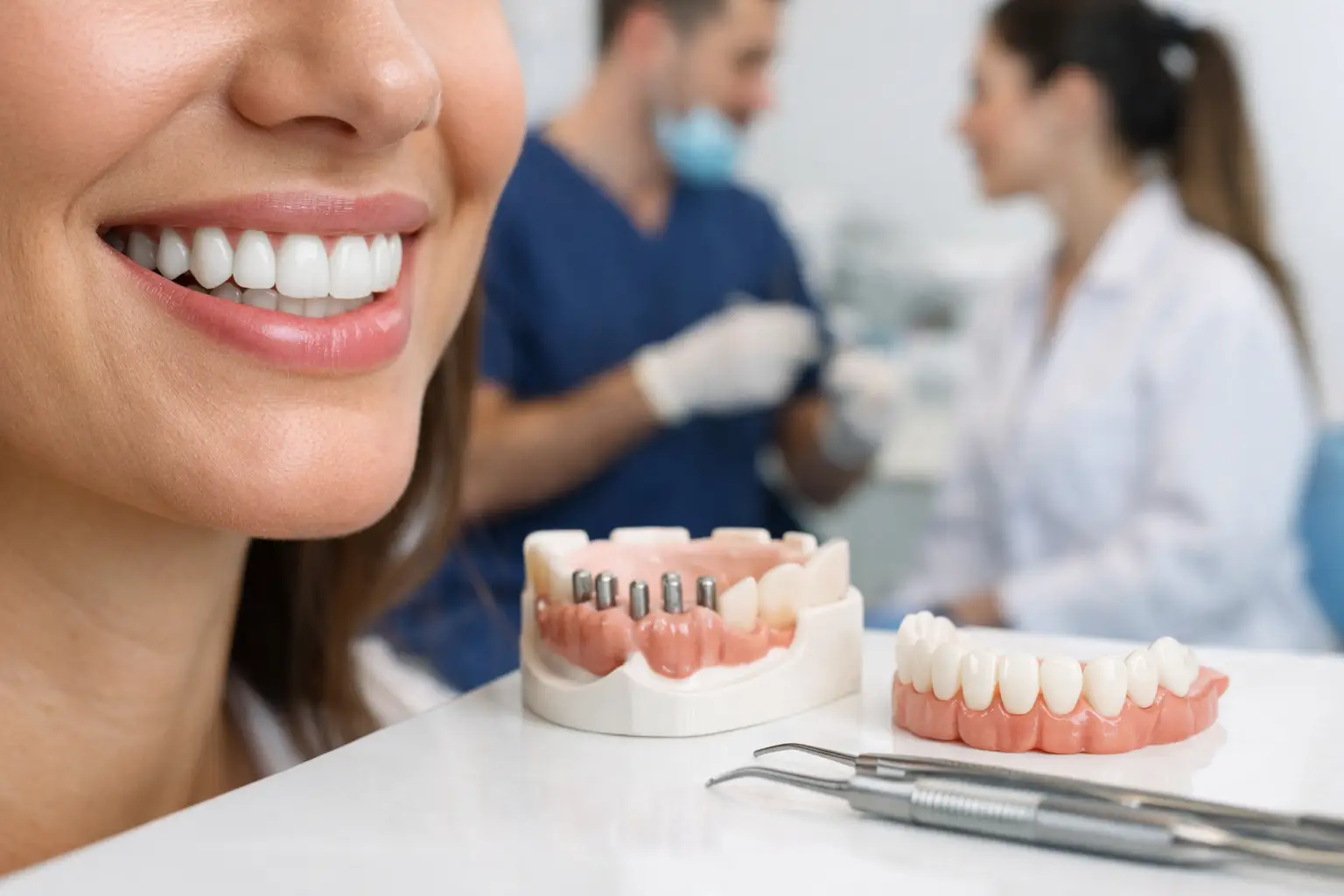
If you are researching Turkey temporary teeth before implants, the question is usually more personal than it sounds: “Will I be left with a visible gap when I fly home?” The honest answer is that you should not be, if the treatment has been planned properly. But a temporary tooth is not automatic, and the type you are offered should match your mouth, implant timeline and how much pressure the area will take.
I have seen clinics treat temporaries as a throwaway line in a package quote. That is not good enough. A temporary restoration affects how you look, speak, eat and protect the surgical site while the implant integrates with bone. Ask about it before paying a deposit, not while sitting in the dental chair after an extraction.
Turkey temporary teeth before implants: what does it mean?
The phrase can describe two different situations. First, a tooth may be extracted and you need something temporary while the site heals before an implant is placed. Second, an implant may already be placed, but you need a temporary crown or bridge while it heals before the final restoration is fitted.
These are not interchangeable. If a clinic says you will receive “temporary teeth”, ask exactly when they will be fitted, whether they are removable or fixed, and whether they are included in the price. A decent written treatment plan should make this clear.
For a single front tooth, a temporary is often sensible because the gap is obvious. For a back molar, some patients choose no temporary at all, particularly if it would be removable and awkward. That can be perfectly reasonable, provided the dentist confirms the neighbouring teeth will not drift significantly during the healing period.
The main temporary options
A removable acrylic partial denture
Often called a flipper, this is the basic and usually lowest-cost option. It replaces one or more missing teeth with acrylic and clips around neighbouring teeth. It can look acceptable in photographs and social settings, but it is not designed for heavy chewing.
I would view a flipper as a practical short-term solution, not a premium one. It must be removed for cleaning and usually at night. Some patients find it bulky at first, especially in the upper jaw, and it can rub if it has not been adjusted well. It is still a sensible option where a tooth has been removed and the implant will be placed months later.
An Essix-style clear retainer with a tooth
This is a clear plastic tray with a tooth built into the gap. It is discreet, lightweight and commonly used for a single visible missing tooth. It can be an excellent option for travelling home after treatment, particularly when the alternative is a denture with metal clasps.
The drawback is durability. Clear retainers crack, stain and do not tolerate chewing forces well. You normally remove them to eat. Anyone promising that this is a fixed-feeling, all-day chewing solution is overselling it.
A temporary bridge fixed to neighbouring teeth
A temporary bridge can be bonded to adjacent teeth or supported by them in various ways. It feels more secure than a removable appliance, but the trade-off matters. If it requires substantial drilling of healthy neighbouring teeth merely to cover a gap during implant healing, I would question the plan.
There are situations where a temporary bridge is appropriate, especially where adjacent teeth already need crowns. But it should not become an excuse to prepare healthy teeth because the clinic wants an easier cosmetic result.
A temporary crown on the implant
In selected cases, the dentist can place an implant and fit a temporary crown shortly afterwards, sometimes on the same day. This is often called immediate provisionalisation or immediate loading. It is most common in the aesthetic front zone.
The temporary crown is normally kept out of heavy bite contact while healing takes place. It is there to maintain appearance and help shape the gum, not to function like a permanent tooth. Whether this is safe depends on implant stability, bone quality, infection risk, bite forces and whether you grind your teeth.
This is where social-media dentistry becomes misleading. Same-day teeth can be excellent treatment for the right patient. They are not a universal upgrade that every implant patient should demand.
When will you actually need one?
A temporary is most valuable when a missing tooth is visible when you smile or speak, when several teeth have been removed, or when the gap could affect confidence at work. It may also help maintain the appearance of the gum line around a front tooth.
You may not need one where the missing tooth is at the back, the gap is short-term, and chewing on the other side is manageable. Some people would rather avoid a removable appliance than pay for something they will use for only a few months. There is no prize for having the most elaborate temporary solution.
The decision also depends on whether the implant is being placed immediately after extraction. If there is active infection, insufficient bone, a large extraction defect or a need for bone grafting, the dentist may recommend a staged approach. In that case, you could need a temporary for several months before the implant is even placed.
How long do temporary teeth last before implants?
For uncomplicated implant treatment, healing commonly takes around three to six months before the final crown is fitted. The lower jaw can sometimes heal faster than the upper jaw, but individual biology matters more than package timelines.
If bone grafting or a sinus lift is required, the wait can be longer. That is inconvenient for international patients, but it is not a reason to rush into placing an implant before the foundation is ready. A clinic that promises every patient final teeth in one visit is selling a timetable, not necessarily the right treatment.
Most patients travelling from the UK have either two trips or a longer first stay followed by a return visit. The first visit may include extraction, grafting, implant placement and a temporary. The final crown is then fitted after healing. Confirm who will handle adjustments if the temporary breaks once you are home. A Turkish clinic may remake it during your stay, but it cannot tighten or repair it in Manchester or Dublin.
What do temporary teeth cost in Turkey?
Prices vary by city, lab quality and the complexity of the case, but I would expect a simple removable temporary for one or two teeth to sit roughly around £100 to £250. An Essix-style temporary may fall in a similar range. A more complex temporary bridge or a temporary crown made for an implant can cost more, often around £150 to £400 per unit depending on materials and planning.
For full-arch implant cases, provisional bridges can add several hundred pounds or more. They should not be treated as a minor extra. A properly designed fixed provisional has a major role in testing speech, bite and appearance before the final bridge is made.
Be careful with very cheap “free temporary teeth” offers. They may mean a basic removable plate, not a fixed temporary bridge. There is nothing wrong with a basic plate if that is clinically appropriate. The red flag is vague wording, not the price alone.
Questions I would ask before booking
Ask the clinic whether your temporary will be removable or fixed, what it is made from, and whether it is included in the quoted implant price. Ask whether you can eat with it, whether it will be in contact with your opposing teeth, and how long they expect you to wear it.
Also ask what happens if the implant is not stable enough for an immediate temporary crown. A responsible clinic will have a fallback plan. They may use a clear retainer or removable temporary instead. A clinic that guarantees same-day fixed teeth before seeing your scans is making promises it has not earned.
Finally, ask to see the plan based on your CBCT scan, not a WhatsApp photograph of your smile. The scan determines bone volume, nerve position and whether immediate placement is realistic. Your front-facing photo does not.
Red flags with temporary teeth in Turkey
I would be wary if a clinic cannot explain the difference between a temporary denture and a temporary implant crown. I would also be cautious if it plans to fit a temporary crown that takes heavy bite pressure immediately after implant surgery, particularly if you have a history of clenching or grinding.
Another poor practice is extracting teeth and sending a patient home with nothing, despite knowing the gap is highly visible, without discussing alternatives in advance. It may be clinically safe, but patients deserve a choice and clear expectations.
The best temporary is not necessarily the prettiest one on day one. It is the one that protects healing, does not overload the implant, fits comfortably enough for daily life and gives you a realistic bridge to your final teeth. Get that part agreed in writing, and you will avoid one of the most common surprises in Turkish implant treatment.