
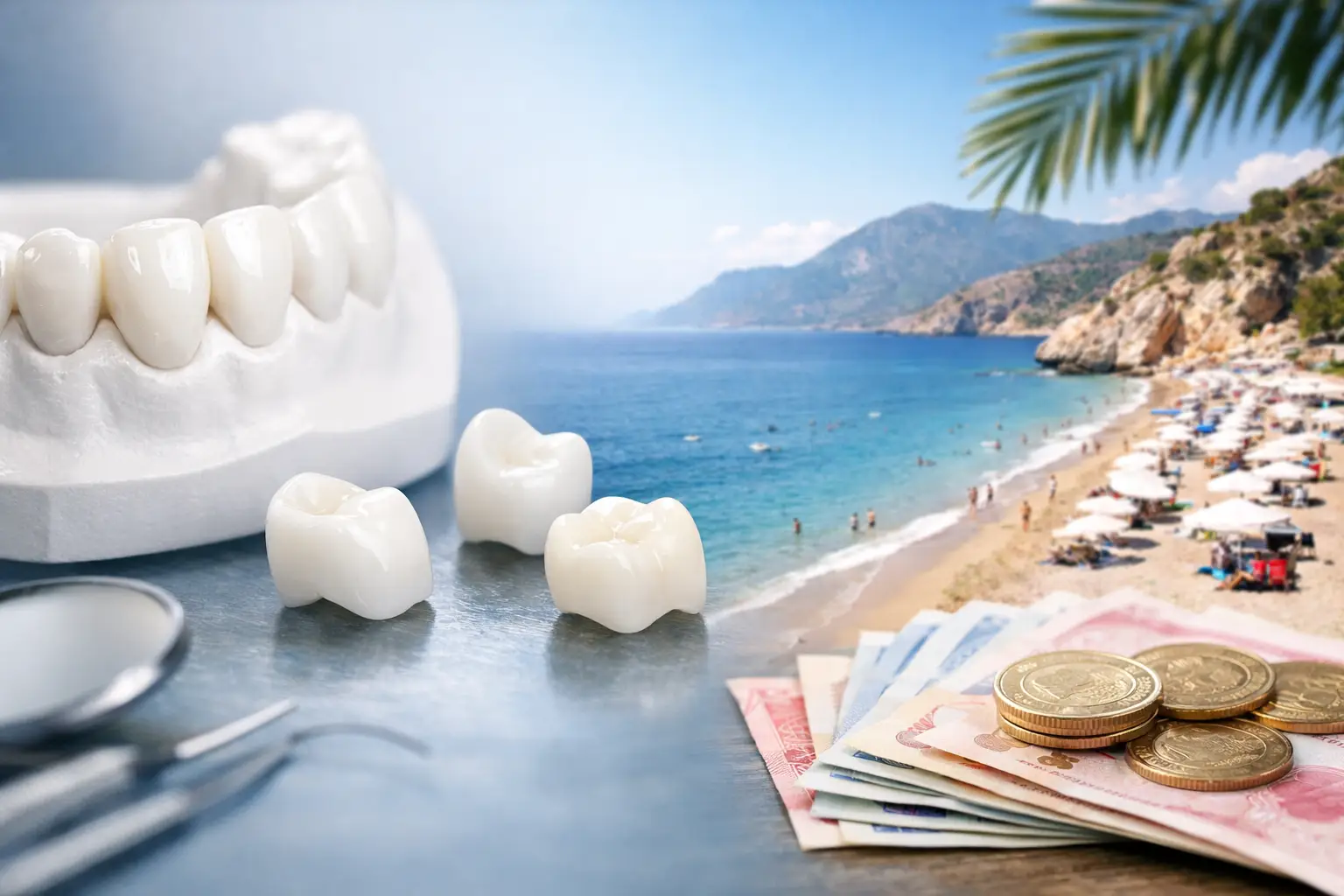
A zirconia crown can be an excellent restoration. It can also become an expensive lesson in why material choice is only one part of good dentistry. When people search for zirconia crowns Turkey, they are usually comparing a far lower price with the uncertainty of travelling abroad. That is sensible. The problem is that too many clinics make every case sound identical, when it clearly is not.
I would not choose a clinic because it says it uses zirconia. Most established Turkish clinics can obtain decent zirconia. The questions that matter are whether you actually need crowns, how much tooth will be removed, which type of zirconia is being used, and who is responsible if something goes wrong after you return home.
What zirconia crowns actually are
A zirconia crown is a full-coverage cap made from zirconium dioxide, a very strong ceramic. It is fitted over a prepared tooth to restore its shape, strength and appearance. Unlike older porcelain-fused-to-metal crowns, zirconia has no dark metal substructure that may show as the gum recedes.
There are two broad approaches. Monolithic zirconia is milled from one solid block. It is exceptionally strong and often a sensible option for back teeth, where biting forces are highest. Layered zirconia has a stronger zirconia core with porcelain added for a more natural-looking surface. It can look better on front teeth, but the porcelain layer is more prone to chipping than solid zirconia.
That trade-off matters. A clinic offering the same highly opaque, ultra-white monolithic crown for every tooth is simplifying a clinical decision into a sales product. I would expect a proper plan to distinguish between visible front teeth, heavily loaded molars and teeth with limited remaining structure.
Zirconia crowns Turkey prices: what is realistic?
For international patients, a single zirconia crown in Turkey commonly falls around £130 to £250. Higher-end clinics, complex aesthetic work and premium laboratory systems can push the figure above that range. A full set naturally produces a large headline total, but the per-crown price is only useful once you know exactly what is included.
The lower cost compared with the UK or Ireland is real. Labour, laboratory overheads and operating costs are generally lower. But the cheapest quote is often cheap for a reason. It may exclude root canal treatment, build-ups, temporary crowns, gum treatment, scans, sedation, transfers or future adjustments. Sometimes the quoted price is simply designed to get you through the door.
I would be cautious with packages that promise 20 or 28 crowns at one fixed price without a detailed examination. Teeth do not arrive in identical condition. One patient may need straightforward replacements on already crowned teeth; another may have active decay, failing root canals, gum disease and a bite that needs managing before any cosmetic work begins. Those cases should not receive the same plan.
The biggest issue is tooth preparation
A crown requires space. To create it, the dentist removes enamel and sometimes more tooth structure. That is irreversible. If a tooth genuinely needs a crown because it is cracked, heavily filled, root-treated or badly worn, this can be a sound long-term restoration. If a healthy tooth only needs a small colour or shape change, a crown may be unnecessarily aggressive.
This is where dental tourism marketing gets uncomfortable. Some clinics use the word “crown” when patients assume they are receiving conservative cosmetic treatment. Others promote dramatic before-and-after results without explaining that natural teeth were reduced substantially to achieve them.
I would ask for a written explanation of why each tooth needs a crown. If the answer is vague, or based entirely on photographs sent over WhatsApp, pause. Remote photos can support an initial estimate. They cannot replace X-rays, a bite assessment and an in-person examination.
How long does treatment take?
Most crown cases are completed over five to seven days, usually with two main appointments. At the first appointment, the dentist examines the teeth, takes X-rays or scans, prepares the teeth and fits temporary crowns. The laboratory makes the final restorations, then the dentist tries them in, checks the bite and permanently cements them at the second appointment.
That timetable can work well for uncomplicated cases. It becomes less reliable when root canal treatment, gum treatment, extractions or extensive bite changes are needed. A rushed clinic may still try to finish on the original schedule. I would rather see a dentist extend the stay, fit proper temporaries and be honest about what cannot safely be completed than force a complicated case into a five-day itinerary.
What good clinics do differently
The strongest clinics do not lead with a dazzling smile design. They start with diagnosis. I expect current X-rays, photographs, digital scans where appropriate and a conversation about medical history, clenching, previous dental work and what the patient actually dislikes about their teeth.
For larger cases, a mock-up or trial smile is valuable. It gives you a chance to assess tooth length, bulk, speech and appearance before the final crowns are made. You should also be able to see the shade in normal light, not solely under bright surgery lighting or a filtered phone camera.
The dentist should check your bite carefully after fitting. Crowns that are even slightly too high can create sensitivity, jaw discomfort, headaches or chipping in the opposing teeth. This is not a cosmetic finishing detail. It is basic functional dentistry.
Red flags I would not ignore
I would walk away from a provider that guarantees a fixed number of crowns before examining you, refuses to identify the dentist, or treats every question about preparation as a nuisance. The same goes for clinics that use only glamour photos as proof of quality.
Be especially wary if you are told that all teeth must be crowned for a “Hollywood smile” despite having healthy teeth. Full-mouth crown work may be justified in severe wear, widespread damage or complex rehabilitation. It is not automatically the best answer for someone who wants whiter teeth.
A few other warning signs tend to travel together: pressure to pay a large non-refundable deposit immediately, no written treatment plan, no explanation of additional fees, and a vague lifetime guarantee with no workable route for aftercare in your home country. A guarantee does not repair a crown from 1,500 miles away.
Questions worth asking before you book
Ask whether the proposed crowns are monolithic or layered zirconia, and why that material is recommended for your particular teeth. Ask how much tooth reduction is anticipated, whether a mock-up is available, and what happens if decay or root canal problems are found after preparation.
You should also ask who makes the crowns, whether the clinic uses an in-house or external laboratory, and how the dentist will manage your bite. Request an itemised quote covering diagnostics, temporaries, root canal treatment if needed, final crowns and any follow-up. If the clinic cannot answer plainly in writing, I would not rely on verbal assurances.
Are zirconia crowns right for you?
Zirconia is often a strong choice for teeth that already need full coverage, particularly back teeth and heavily restored teeth. It may also suit front teeth when aesthetics, translucency and shade selection are handled properly. But zirconia is not a magic upgrade over every alternative.
A veneer can preserve more tooth structure in the right cosmetic case. Composite bonding is cheaper and more reversible, though it stains and chips more easily. Whitening may solve the problem without any drilling at all. For a missing tooth, an implant-supported crown is a different treatment entirely, not a substitute for crowning adjacent healthy teeth.
The best outcome is rarely the most dramatic one on social media. It is the plan that fixes the real problem while removing the least healthy tooth structure possible. If a Turkish clinic gives you that level of honesty, zirconia crowns can be very good value. If it sells you a uniform smile before it has properly diagnosed your mouth, keep looking.