
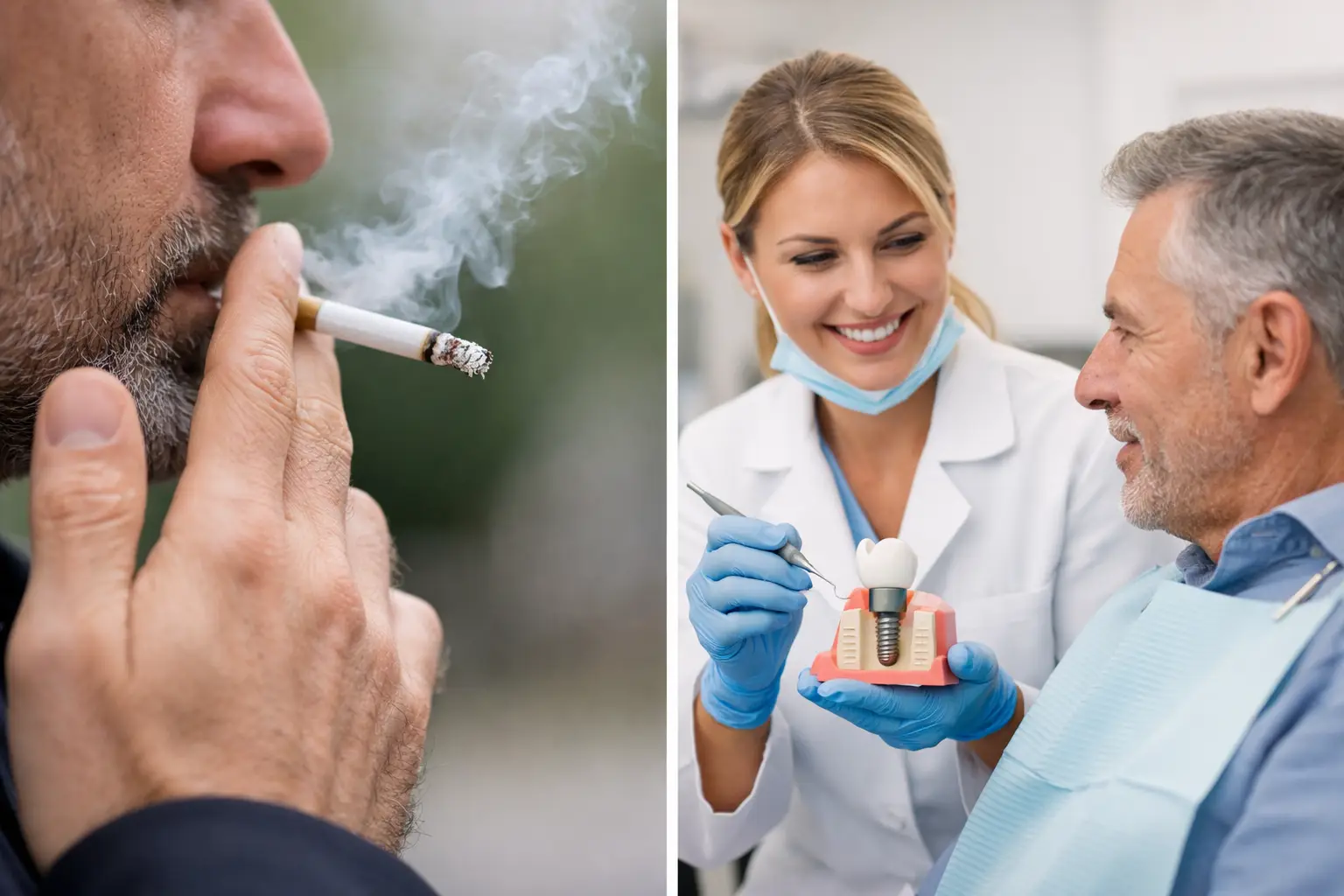
A dental implant is not just a screw placed in the jaw. It has to bond with living bone, then survive years of chewing forces and bacterial exposure. So, can smokers get dental implants? Yes, often they can – but smoking puts them in a higher-risk category, and any clinic pretending otherwise is not giving you the full picture.
I have seen Turkish clinics accept smokers for implant treatment without much discussion beyond a tick-box medical form. That is not good enough. Smoking status should affect the treatment plan, the healing timetable and, in some cases, whether treatment should go ahead at all.
Can Smokers Get Dental Implants in Turkey?
Smoking is not an automatic ban on dental implants. Plenty of smokers have successful implants. The issue is probability: smokers are more likely to have complications during healing and more likely to lose an implant over time than non-smokers.
The implant needs a process called osseointegration, where bone grows tightly around its surface. Tobacco smoke reduces blood flow, restricts oxygen delivery and interferes with the body’s inflammatory and healing response. In plain English, the jaw has a harder job repairing itself after surgery.
Smoking also raises the risk of gum disease around implants, known as peri-implantitis. This can cause bleeding, swelling and gradual bone loss around the implant. Left untreated, it can eventually make an otherwise well-placed implant fail.
The risk is not identical for every smoker. Someone who smokes one or two cigarettes occasionally and has excellent gum health is different from a person smoking 20 cigarettes a day with untreated periodontitis. But there is no genuinely safe level of smoking for implant healing. Less is better. Stopping is better still.
Why Smoking Changes the Implant Plan
A responsible dentist should look beyond whether you smoke. They should assess how much you smoke, how long you have smoked, the condition of your gums, bone volume, medical history and oral hygiene. A CBCT scan is normally needed to assess the bone properly before implants are placed.
Smokers with active gum disease should not be rushed into implant surgery. The gum disease needs to be stabilised first. Placing implants into a mouth with persistent bleeding, deep periodontal pockets and poor plaque control is not value for money. It is paying for a problem later.
Bone grafting also deserves extra caution. A graft needs reliable healing and blood supply. Smoking can reduce the predictability of graft integration, particularly for larger grafts or sinus-lift procedures in the upper jaw. That does not mean grafting is impossible, but I would expect a surgeon to explain the additional risk clearly.
Immediate implants and immediate-load teeth can be attractive to international patients because they appear to shorten the trip. For a smoker, however, they may not be the sensible default. Immediate placement can work in selected cases, but it requires stable bone, good surgical technique and careful bite management. Adding smoking to an already ambitious treatment plan is a trade-off worth questioning.
The first few weeks matter most
The period around surgery is where stopping smoking has its greatest practical value. Many surgeons ask patients to avoid smoking for at least several weeks before and after implant placement. The exact timeframe varies according to the procedure and your health, but a longer smoke-free period is generally more favourable than merely skipping cigarettes on the day of surgery.
Do not assume vaping solves the problem. Nicotine can still constrict blood vessels, while vaping may irritate oral tissues and dry the mouth. Heated tobacco products are not a clean workaround either. Tell the clinician exactly what you use, including vapes, nicotine pouches and cannabis. Hiding it helps nobody and can lead to an unrealistic plan.
If you are using nicotine replacement to stop smoking, ask your surgeon how they want you to manage it around the procedure. The right answer depends on the individual, and stopping cigarettes remains a substantial health gain. This is a conversation for the surgical team, not a blanket internet rule.
What a Good Turkish Clinic Should Ask
Dental tourism can make smokers vulnerable to oversimplified treatment plans. Some high-volume clinics are set up to sell a fixed package: a certain number of implants, a short stay and a polished before-and-after photograph. Your smoking history can be treated as an inconvenience because a cautious plan may require extra appointments, delayed loading or even a recommendation to quit before proceeding.
I would expect a reputable clinic to ask about your daily tobacco or nicotine use, previous gum treatment, diabetes, medications and history of slow healing. They should examine the gums, take appropriate imaging and explain whether bone grafting, staged treatment or a longer healing period is likely.
There are four red flags I would not ignore:
- A clinic says smoking has no effect on implant success.
- You are offered implants without a proper gum assessment or 3D scan.
- The plan promises fixed teeth in a few days without explaining whether immediate loading is clinically suitable.
- Nobody discusses aftercare once you have returned to the UK or Ireland.
Turkey has excellent implant dentists and oral surgeons, but it also has clinics that sell speed rather than clinical judgement. The country is not the issue. The planning standard is.
Is It Better to Quit Before Travelling?
Yes. If you are considering implants and are willing to stop smoking, do it before you start contacting clinics. It gives your gums and circulation time to improve, makes surgery more predictable and may expand the treatment options available to you.
Do not treat quitting as a pass-or-fail test, though. Some people cannot stop immediately, and an honest clinician can still assess whether implants are reasonable. The point is informed consent. You should understand that continuing to smoke may increase the chance of delayed healing, infection, gum problems and future implant loss.
For patients travelling to Turkey, I would also consider the practical side. You may need a first visit for implant surgery and a second visit several months later for permanent crowns, depending on the case. That interval is not wasted time. It allows integration to be checked before the final teeth are fitted. A smoker with a complicated case may benefit more from this staged approach than from a rushed all-in-one itinerary.
If You Continue Smoking After Implants
An implant is not maintenance-free, particularly for smokers. You will need diligent brushing, interdental cleaning and regular hygiene appointments. Bleeding around an implant is not normal to ignore just because there is no natural tooth nerve causing pain.
Smoking can mask gum bleeding by reducing blood flow, which makes self-monitoring less reliable. That is another reason professional checks matter. Your local dentist or hygienist should be comfortable monitoring implants placed abroad, although you should confirm this before travelling rather than assuming it will be straightforward.
If you have full-arch implant work, cleaning becomes even more important. Food and plaque can accumulate beneath bridges, and poor hygiene around a large restoration can turn an expensive result into a long-term problem. A clinic should show you how to clean around the design it is proposing, not simply hand you a generic leaflet.
The Straight Answer
Smokers can get dental implants, but they should not be sold the same carefree promise as a non-smoker with healthy gums and good bone. The sensible route is a proper assessment, a realistic discussion of risk and a plan that does not sacrifice healing for a shorter dental holiday.
If a clinic in Turkey pushes you towards immediate implants without asking serious questions about smoking and gum health, I would keep looking. The best time to protect an implant is before it is placed – and reducing or stopping smoking is one of the few factors you can directly control.