
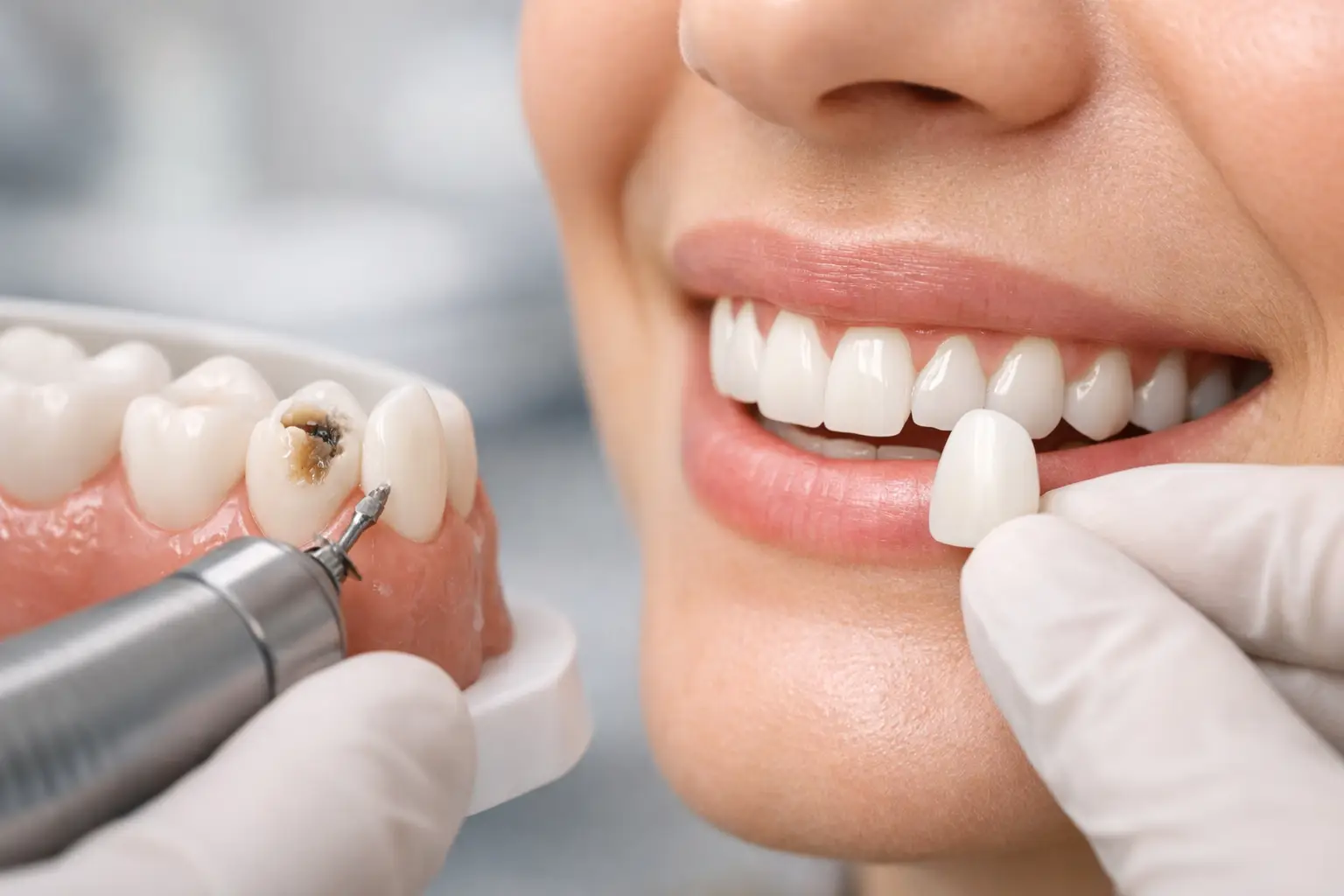
The short answer to “can veneers damage natural teeth” is yes – but the damage is not inevitable, and it is usually linked to poor planning, aggressive tooth preparation or bad aftercare rather than veneers themselves. A well-designed veneer treatment should preserve as much healthy tooth structure as possible. A rushed smile makeover can do the opposite.
I have seen the same issue repeatedly in dental tourism: patients are told that veneers are a simple cosmetic upgrade, then discover that their natural teeth have been heavily filed down to make room for crowns. That is not a minor technical detail. It changes the treatment completely and can leave you committed to restorative dentistry for life.
Can veneers damage natural teeth?
Porcelain veneers require some alteration to the front surface of a tooth in many cases. The dentist removes a thin layer of enamel so the veneer does not look bulky and can bond securely. Enamel does not grow back. Once it has been removed, that tooth will always need a veneer or another restoration.
That does not mean every prepared tooth is damaged in the everyday sense. Conservative preparation of around 0.3mm to 0.5mm can be clinically appropriate, particularly where teeth are stained, slightly uneven or have small gaps. The problem starts when preparation becomes excessive, poorly controlled or unnecessary.
If a dentist cuts deeply into dentine, the softer layer beneath enamel, the tooth may become more sensitive and bonding can be less predictable. In more serious cases, heat, vibration or over-reduction can irritate the dental pulp – the living tissue inside the tooth. A small percentage of heavily prepared teeth may later need root canal treatment. No ethical dentist should pretend that risk is zero.
The key distinction is this: minimally prepared veneers are a cosmetic restoration; teeth filed into small stumps are usually being prepared for crowns. Clinics sometimes call both options “veneers” because patients search for that word. I would not accept vague language here. Ask exactly what restoration is proposed for every tooth.
The risks are broader than enamel removal
Natural teeth can be harmed after veneers are fitted even if the initial preparation was sensible. The most common causes are poor margins, a bad bite and inadequate hygiene around the restoration.
A veneer should meet the tooth smoothly, ideally with the edge placed where it can be cleaned and monitored. If there is a ledge, gap or rough finish around the margin, plaque can accumulate. Decay can then develop underneath or beside the veneer without being obvious in the mirror. Veneers do not decay; the tooth beneath them absolutely can.
Gum problems are another warning sign. Bulky veneers that sit too far over the gumline can trap plaque and create persistent inflammation. Some clinics solve this by making the teeth look very white and very large on photographs, but an over-contoured smile is not good dentistry. Red, bleeding gums around a new set of veneers are not something to simply wait out.
Bite design matters just as much. If veneers are too long, too thick or poorly balanced against the lower teeth, you may chip porcelain, loosen a veneer or put damaging forces on your own teeth. This is especially relevant if you clench or grind at night. A night guard is often sensible after veneer treatment, but it cannot correct a bite that was wrong from day one.
Composite, porcelain and no-prep veneers are not equal
Composite bonding usually needs little or no enamel removal. It is a useful option for small gaps, worn edges and minor shape changes, and it is easier to repair than porcelain. The trade-off is that composite stains, chips and loses its polish sooner. It normally needs more maintenance.
Porcelain veneers are more colour-stable and can look exceptionally natural when they are planned properly. They also tend to last longer than composite, commonly around 10 to 15 years with good care, though longevity varies with bite, hygiene, material and workmanship. They are not reversible once enamel has been prepared.
No-prep veneers sound appealing because they may avoid drilling. Sometimes they are appropriate, particularly for naturally small, spaced or slightly worn teeth. But they are not a universal solution. Adding porcelain without creating space can make teeth look thick and can irritate the gums. A dentist who offers no-prep veneers to everyone is following a sales angle, not a diagnosis.
Why this matters when choosing veneers in Turkey
Turkey has excellent cosmetic dentists and high-quality laboratories. It also has clinics built around volume, social media and quick turnaround. The country is not the risk. The business model can be.
A patient flying in for five or six days may be offered 16 or 20 “veneers” before anyone has properly assessed their bite, gum health, old fillings, grinding habits or tooth vitality. That is where I become cautious. A smile design based mainly on photos and a WhatsApp message is not a treatment plan.
Before teeth are prepared, a responsible clinic should take X-rays where clinically required, examine your gums, record your bite and discuss whether orthodontics, whitening or composite bonding could achieve the result with less intervention. For a larger case, I would also expect a mock-up or trial smile. It lets you see the proposed shape and gives the dentist a guide for conservative preparation.
Be particularly wary if a clinic promises “zero shaving” while showing photos of teeth that clearly appear to have been crowned, or if it recommends the same number of restorations for every patient. Natural teeth are not templates. Neither are faces.
Questions I would ask before agreeing to treatment
You do not need dental training to ask direct questions. I would want clear answers to these points before booking flights:
- Are these porcelain veneers, composite veneers, crowns, or a mixture of restorations?
- How much enamel will be removed from each tooth, and will any teeth be prepared into dentine?
- What X-rays and bite assessments will be done before treatment starts?
- If a tooth becomes painful after preparation, who pays for root canal treatment and how is follow-up handled?
- What material and laboratory are being used, and will I receive a written treatment record?
A good clinic will answer without becoming defensive. If the reply is mostly about discounts, celebrity smiles or a limited-time package, that tells you enough.
When I would not recommend veneers
I would not recommend veneers as the first step for untreated gum disease, active decay or badly unstable bite problems. Fix the foundation first. Placing expensive porcelain over unhealthy teeth is not cosmetic dentistry; it is postponing trouble.
I would also be cautious where someone wants a dramatic colour change but has healthy, straight teeth. Professional whitening may be enough. If the concern is minor spacing or small chips, composite bonding could preserve far more tooth tissue. Orthodontics may take longer, but moving teeth can be a better choice than cutting healthy enamel to disguise their position.
For patients with significant grinding, veneers are possible, but only with careful material selection, bite management and a commitment to wearing a guard. Anyone promising that veneers are indestructible is selling fantasy.
How to protect your teeth after veneers
After treatment, brush twice daily with fluoride toothpaste, clean between teeth every day and attend regular dental examinations at home. Avoid using your veneers to open packaging or bite hard objects. If you grind, wear the night guard provided or have one made by your own dentist.
More importantly, keep copies of your X-rays, treatment notes and the shade and material details. If you ever need repair work in the UK or Ireland, another dentist will need to know what was fitted and how the teeth were prepared. This is often overlooked by overseas clinics, yet it is basic continuity of care.
Veneers can be an excellent treatment when they solve a genuine cosmetic problem with the smallest reasonable amount of intervention. But a bright, uniform smile is not worth sacrificing healthy teeth for. Choose the dentist who is willing to say no to unnecessary drilling – that is usually the person worth listening to.