
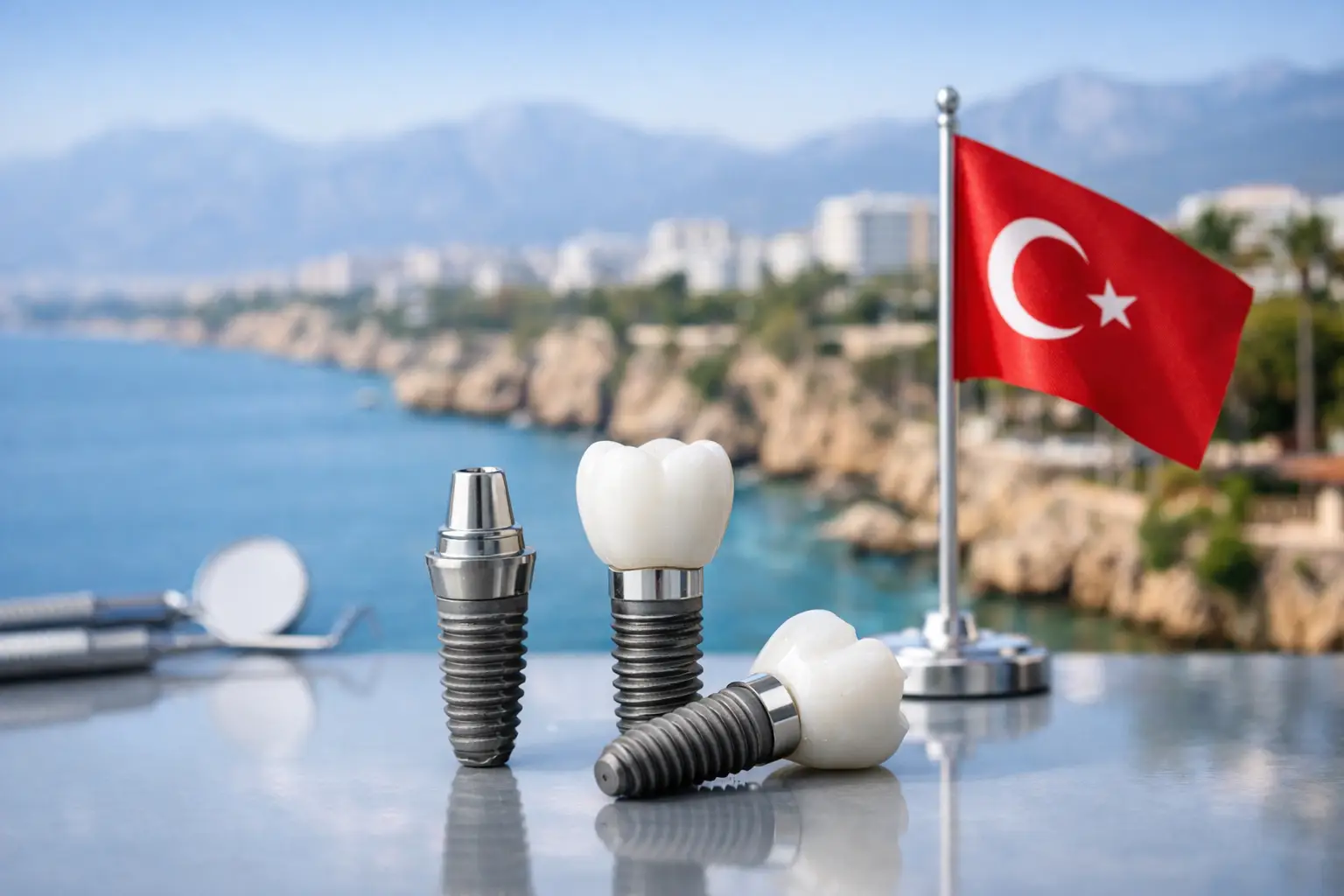
If a clinic in Istanbul or Antalya is pushing an implant package before telling you which implant system they use, I’d slow right down. When people research Turkey dental implant brands, they’re usually trying to answer a bigger question: am I paying for real quality, or just for good marketing?
That’s the right question. In Turkey, the brand of implant does matter – but not in the simplistic way many clinics present it. A premium implant placed badly is still a bad implant. A mid-range implant placed by a skilled surgeon with proper planning can do very well. What I look at is the whole chain: implant brand, prosthetic components, surgical planning, aftercare, and whether the clinic is honest about what’s actually going into your mouth.
Why Turkey dental implant brands matter at all
An implant brand is not just a logo stamped on a box. It usually tells you something about manufacturing standards, research history, spare part availability, and how easy it will be to maintain the implant later if you need work done back home.
This matters more than many patients realise. If you have an implant placed in Turkey and then a crown screw loosens in Manchester two years later, your local dentist needs to identify the system and source compatible parts. That’s much easier with established global brands than with obscure private-label systems or regional brands with patchy distribution.
The other reason brand matters is accountability. Well-known manufacturers tend to have clearer documentation, more training support for clinicians, and better consistency between batches. That does not guarantee success, but it reduces one major variable.
The main dental implant brands used in Turkey
Turkey’s dental market is mixed. You’ll find globally recognised premium systems, respectable mid-market brands, and some budget options I would question if a clinic cannot justify them properly.
Premium brands you’ll see in stronger clinics
Straumann is one of the strongest names in implant dentistry. It is widely used, backed by long-term data, and generally easy to restore internationally. If a clinic uses genuine Straumann components and can prove it, that is a positive sign. It usually comes with a higher fee, and sometimes that premium is justified.
Nobel Biocare sits in a similar bracket. It has a long history, broad international recognition, and good prosthetic support. If you are having more complex work – full-arch cases, angled implants, or advanced restorative planning – clinics using Nobel often have a more serious implant workflow. Not always, but often.
Zimmer Biomet and Astra Tech also appear in some Turkish clinics, though less often than Straumann and Nobel in the dental tourism market. They are established names with real clinical history. If a clinic offers these brands and can discuss why they prefer them, that is usually a better sign than a receptionist simply reading from a price list.
Mid-range brands that can still be reasonable
Megagen, Osstem and Hiossen come up regularly. These are not bargain-bin names. They are large manufacturers with decent market presence, especially in Asia and Europe, and some clinics in Turkey use them well. I would not dismiss them automatically just because they are cheaper than Straumann.
This is where nuance matters. A well-run clinic using Megagen with proper CBCT planning, a competent surgeon, and honest aftercare may be a better choice than a flashy clinic selling Straumann in a rushed, high-volume setting. Brand hierarchy is real, but it is not the whole story.
Budget and lesser-known systems
There are also Turkish-made or lesser-known implant systems in circulation. Some are acceptable. Some are used mainly because they are cheap and improve clinic margins. That’s the blunt truth.
If a clinic offers an implant brand you’ve never heard of, I wouldn’t panic immediately. I would ask harder questions. How long has the company existed? Is there published clinical data? Can parts be sourced in the UK or Europe? Will the clinic provide implant passport details and batch information? If the answers are vague, that’s a problem.
What matters more than the brand alone
The biggest mistake I see is patients treating implant shopping like buying a phone. Pick the best-known brand, assume the rest follows, and stop asking questions. Dentistry does not work like that.
Surgeon skill and case planning
Implants succeed or fail on planning and execution. Was a CBCT scan used? Was bone volume measured properly? Was gum condition assessed? Was the bite analysed, especially in full-mouth cases? These things matter more than whether the implant came in a premium box.
I’ve seen clinics advertise top-tier brands while doing dangerously fast treatment planning for international patients. If your consultation is little more than a WhatsApp quote and a promise that “everything can be done in 3 days”, I don’t care what brand they mention – I’d treat that as a red flag.
Genuine components versus mixed systems
Another issue patients miss is component mixing. A clinic may advertise a premium implant brand, then use third-party abutments or cheaper restorative parts. That does happen.
Sometimes third-party components are acceptable if used properly, but clinics should be transparent about it. If you are paying a premium-brand fee, I think you are entitled to know whether every key component is genuine and documented.
Laboratory quality
The implant itself sits in the bone, but what you live with day to day is the crown, bridge or denture on top. If the lab work is poor, the final result can still be ugly, uncomfortable, or mechanically weak.
This is why I tell patients not to get hypnotised by brand names. An excellent implant with a rushed crown is still a frustrating outcome.
How clinics use implant brands in their marketing
Some Turkish clinics are honest about implant systems. Others use brand names as bait.
The usual pattern is simple. They advertise “European implants” or “premium German implant” without naming the system clearly. Or they mention Straumann in the headline and then switch patients to a different brand once they arrive, usually dressed up as a “better value option”. I’ve seen enough of this to say plainly: if the paperwork changes on arrival, walk away unless the change is explained properly and agreed in writing.
Another trick is quoting a low per-implant price and leaving out key parts of the final treatment. You may be quoted for the fixture only, then charged separately for abutments, temporary teeth, sinus lifts, bone grafts or sedation. That is not unique to Turkey, but it is common enough that patients need to be careful.
Questions I’d ask before choosing between Turkey dental implant brands
If you are comparing clinics, I would ask these questions directly and expect clear answers in writing:
- Which exact implant brand and model will be used?
- Will I receive an implant passport or batch sticker after treatment?
- Are the abutments and restorative components genuine from the same manufacturer?
- Is this brand commonly supported in the UK and Europe?
- Who places the implants, and how many implant cases do they handle each month?
- What happens if an implant fails early?
A serious clinic should not struggle with these questions. If replies are evasive, overly salesy, or keep circling back to price, that tells you plenty.
Are premium implant brands worth paying more for?
Sometimes yes. Sometimes no.
If you are having a straightforward single implant and the clinic has a very good surgeon using a reputable mid-range brand with proper records, the price jump to a premium brand may not change your outcome enough to justify the extra cost. On the other hand, if you are having full-arch treatment, need long-term maintainability in the UK, or have a medically or anatomically complex case, paying more for a globally established system can make sense.
What I would not do is pay premium-brand prices to a clinic that cannot demonstrate premium standards. Fancy reception area, influencer videos and airport transfers are not clinical quality indicators.
My view on choosing the right brand in Turkey
If you want the simplest answer, I’d generally feel more comfortable with clinics using Straumann, Nobel Biocare, Astra Tech, Zimmer Biomet, or credible mid-tier systems like Megagen and Osstem – provided the clinic is transparent and the clinician is experienced.
I’d be more cautious with unknown house brands, suspiciously cheap packages, and any clinic that avoids giving exact implant details before you book. That’s where patients get burned. Not because every lesser-known brand is bad, but because poor clinics hide behind technical language and assume international patients won’t push back.
The safest mindset is this: choose the clinic first, then judge the implant brand in context. If the surgeon is strong, the planning is careful, the records are clear, and the brand is traceable and maintainable, you’re probably looking at a sensible option. If the whole pitch rests on one famous brand name, you’re probably being sold to.
If you’re still comparing options, ignore the glossy package language and ask what a local dentist would need to know about your implant five years from now. That question cuts through a lot of nonsense.